Discover the story of Saint André Dũng-Lạc and the Vietnamese martyrs, courageous witnesses to the Christian faith, fidelity to Christ and hope.
Saint Andrew Dũng-Lạc and the Martyrs of Vietnam: a faith that remained steadfast even unto the sacrifice of self
The Church celebrates Saint Andrew Dũng-Lạc, priest, and his fellow martyrs of Vietnam. This feast day honours 117 saints, whose lives, backgrounds and vocations were diverse, yet who were united by a shared fidelity to Christ.
Among them are bishops, priests, missionaries, catechists, fathers of families, young people, consecrated persons and laypeople. Many were Vietnamese; others came from France or Spain. All chose to remain steadfast in their faith amidst persecution that was at times extremely violent.
Their memory does not merely turn our thoughts to the sufferings of the past. Above all, it reminds us that the Christian faith is a force for peace, truth and hope. It invites every believer to rediscover the value of what has been handed down to them and to live out the Gospel with courage, gentleness and faithfulness.
A long history of the Christian faith in Vietnam
The proclamation of the Gospel in Vietnam dates back to the first missionaries who arrived in Asia from the 16th century onwards. Gradually, Christian communities began to form. Families embraced the faith, catechists guided the newly baptised, and Vietnamese priests were ordained to serve their people.
This growth did not come without difficulties. Depending on the period and the authorities in power, Catholics were sometimes viewed with suspicion. Their faith was sometimes perceived as a threat to the social order or to local traditions. Christians were then required to publicly renounce their commitment to Christ, to abandon their religious practices, or to perform acts contrary to their conscience.
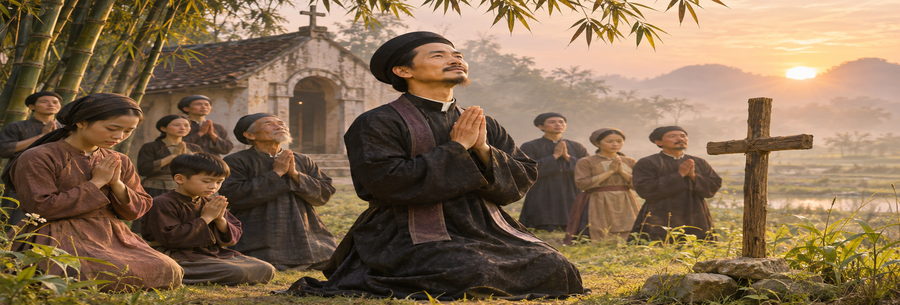
Between the 18th and 19th centuries, persecution intensified. Churches were destroyed, communities scattered, priests arrested and families forced to practise their faith in secret. Yet, despite their fear, many continued to pray, to spread the Gospel and to support the most vulnerable.
It is against this painful yet profoundly inspiring backdrop that the witness of Saint Andrew Dũng-Lạc and his companions is set.
Saint Andrew Dũng-Lạc, a priest close to the poor
Saint Andrew Dũng-Lạc was born towards the end of the 18th century into a modest family in northern Vietnam. Baptised whilst still young, he received a solid Christian upbringing and gradually discovered his calling to the priesthood. He became a priest with a simple yet profound desire to proclaim Christ to his people.
His ministry was characterised by his care for the most humble. He visited families, accompanied the sick, encouraged Christians facing hardship and cared for those living in poverty. At a time when persecution made travel dangerous, he continued to carry out his pastoral ministry with caution, but without renouncing his mission.
Arrested once, he was released thanks to the help of the faithful who rallied to his defence. He could then have withdrawn, sought safety or abandoned his ministry. Yet he chose to continue his service to the Christian communities. This decision reveals the depth of his vocation: for him, being a priest meant remaining with the people entrusted to him by God, even when danger was imminent.
He was arrested once more and died a martyr. His name has come to symbolise all those in Vietnam who have chosen to remain faithful to the Gospel without responding to violence with violence.
One hundred and seventeen martyrs, a multitude of faces
The martyrs of Vietnam do not form a uniform group. They represent the vibrant diversity of the Church. Among them are bishops, priests from the Paris Foreign Missions Society, Dominican religious, Vietnamese priests, catechists, laypeople, fathers of families and one woman.
This diversity is very significant. It reminds us that holiness is not reserved for a few exceptional individuals or for those who have been entrusted with a particular mission within the Church. All the baptised are called to follow Christ wherever they are – in their homes, at work, in their parishes, in their countries and in the responsibilities entrusted to them.
The martyrs of Vietnam found themselves in very different circumstances. Some openly proclaimed the Gospel. Others protected priests or welcomed Christians into their homes. Some were young catechists; others were fathers or grandfathers. They did not seek out suffering, but they refused to deny the One they had learnt to love.
Their witness shows us that faith is often passed on through quiet gestures: a prayer learnt in childhood, a word of encouragement in the midst of trial, a family that remains united, a community that supports those under threat.
Martyrdom: a testimony of love, not of hatred
The word ‘martyr’ means ‘witness’. In the Christian tradition, a martyr is one who bears witness to Christ to the very end, even when this demands an immense sacrifice.
It is essential to understand that martyrs are not celebrated for the violence they have suffered. The Church never glorifies suffering for its own sake. It honours the faithfulness, inner freedom and love that enabled these men and women not to renounce their faith.
The martyrs of Vietnam did not respond with hatred towards those who persecuted them. Their strength lay in prayer, forgiveness and trust in God. This attitude is profoundly evangelical. Jesus himself rejected violence and prayed for those who condemned him.
The martyrs’ witness gently challenges us: what really matters in our lives? What choices are we prepared to make to remain faithful to our conscience, to the truth and to love for our neighbour?
Even without having experienced the persecutions endured by the martyrs of Vietnam, we too may be called to live out a courageous faith. This may mean refusing to give in to lies, defending someone who is vulnerable, holding on to hope in the face of adversity, or choosing forgiveness when holding a grudge seems easier.
A faith rooted in families and communities
One of the great lessons left by the martyrs of Vietnam is the vital role played by Christian families. Faith was not passed on solely in large churches or by priests. It flourished in homes, centred on daily prayer, trust in God and mutual support amongst neighbours.
Parents taught their children the sign of the cross, prayers, the stories of the Gospel and the beauty of forgiveness. Laypeople were willing to take risks to protect priests, welcome believers or support families gripped by fear.
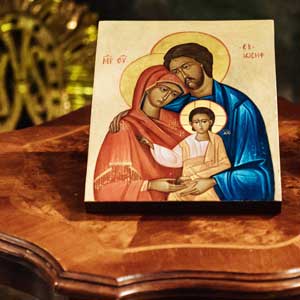
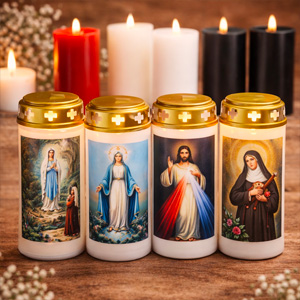
This story reminds every Christian household that it is called to become a ‘little Church’. Within a family, faith can take very simple forms: a moment of prayer in the evening, a word of encouragement, a candle lit for a particular intention, a visit to someone who is lonely, a request for forgiveness, or showing concern for those who are suffering.
The martyrs’ faithfulness did not spring from isolated acts of heroism. It was nourished by vibrant communities, shared prayers and a faith passed down from generation to generation.
The martyrs of Vietnam: a light for the universal Church
Saints Andrew Dũng-Lạc and his companions were canonised together by Pope Saint John Paul II. Their recognition by the universal Church shows that their witness extends beyond the borders of Vietnam.
They have become companions on the journey for all Christians. Their faithfulness reminds us that the Church is one great family gathered together across languages, cultures and nations. The faith lived out by a community can bear fruit far beyond its own history.
Their memory also invites us to pray for Christians who still live today in fear, injustice or persecution. In many parts of the world, believers are unable to practise their faith freely. Some are rejected, threatened or prevented from gathering together.
To pray for them is to recognise that they are part of our spiritual family. It is also to ask for the grace never to take our religious freedom for granted.
How can we follow the example of Saint André Dũng-Lạc today?
The lives of Saint André Dũng-Lạc and his companions can shed light on our daily lives in a very practical way. Their example calls us, first and foremost, to rediscover the value of our faith. Prayer, the Gospel, the sacraments and parish life are not merely habits: they are sources of strength to help us navigate both joys and trials.
They also invite us not to be ashamed of our faith. Bearing witness to Christ does not mean imposing one’s convictions. Rather, it is about living with integrity, respect and kindness. A Christian bears witness when they choose peace over violence, truth over lies, and generosity over indifference.
Finally, the martyrs of Vietnam encourage us to pray for one another. In times of doubt, weariness or discouragement, we need to remember that faith is also a community. No one should have to bear their trials alone.
Prayer to Saint Andrew Dũng-Lạc and the Martyrs of Vietnam
Saint Andrew Dũng-Lạc
and all of you, Martyrs of Vietnam,
you kept your faith
in the midst of trials and fear.
Teach us to love Christ
with a faithful and peaceful heart.
Give us the strength to choose the truth,
to serve the most vulnerable
and never to repay evil with evil.
Support persecuted Christians,
comfort those who are suffering
and help our families to pass on the faith
with gentleness, courage and hope.
May your witness help to deepen within us
our trust in God
and our love for all our brothers and sisters.
Amen.