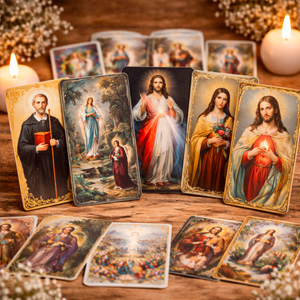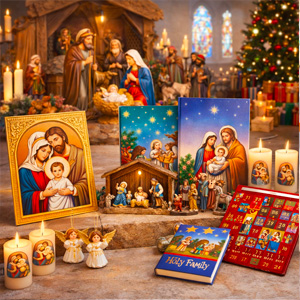
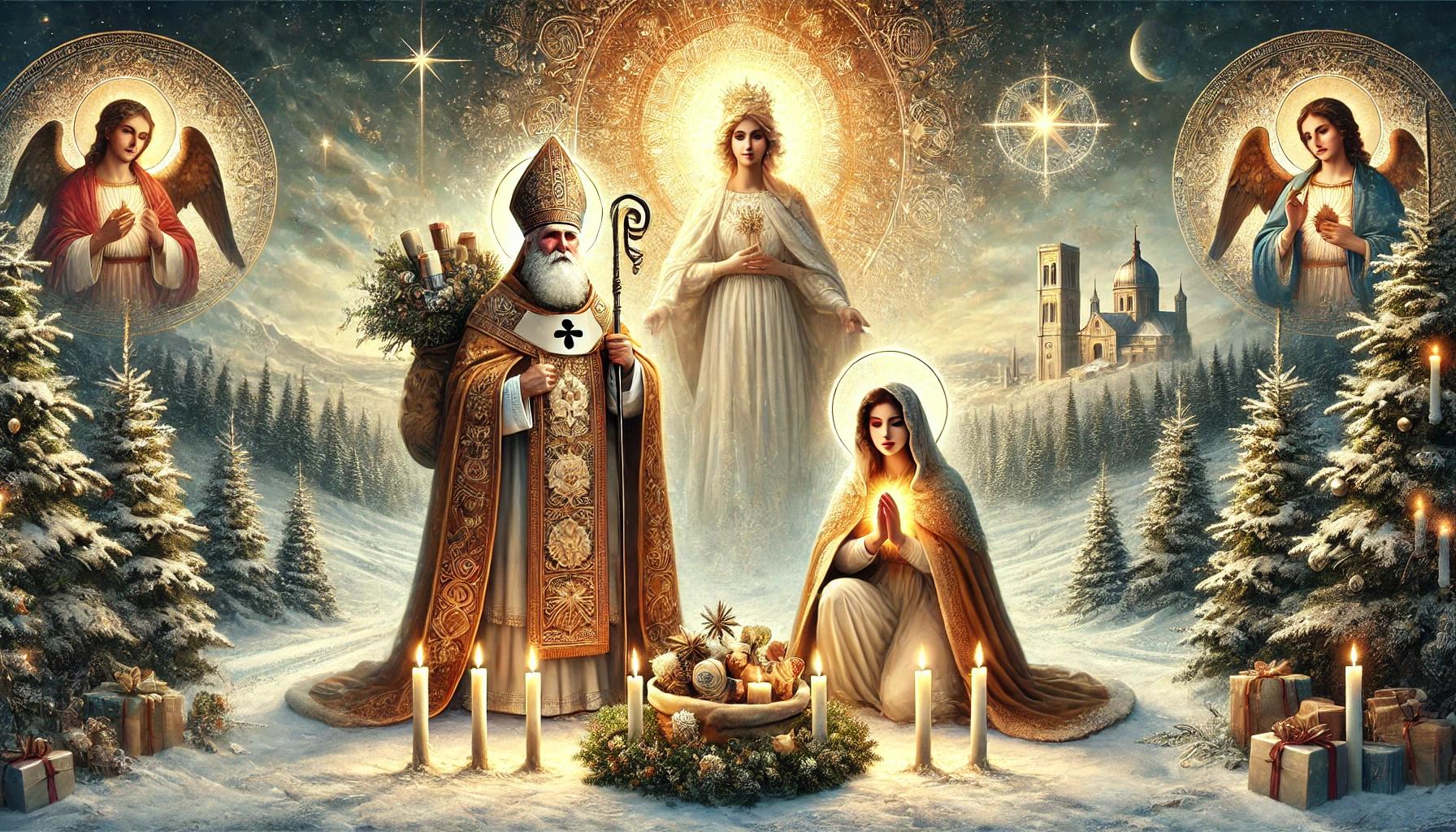
Advent, a period of spiritual preparation for Christmas, is marked by the celebration of several saints whose exemplary lives and virtues illuminate the path towards the birth of Jesus Christ. These spiritual figures, celebrated throughout the liturgical calendar, remind believers of the importance of charity, faith and light in a period of expectation and joy. Each saint, through his or her history and associated traditions, plays a unique role in preparing for Christmas.
1. St Andrew (30 November)
St Andrew, one of the twelve apostles, is often regarded as the saint who opens the Advent season. The brother of Saint Peter, he is known for immediately following Jesus after hearing his call. His feast day marks a time of reflection on conversion and obedience to God.
His story:
A native of Bethsaida, he was a fisherman before becoming one of Jesus' first disciples.
According to tradition, he preached in Greece and died a martyr, crucified on an X-shaped cross.
His role in Advent:
St Andrew embodies the call to spiritual preparation, reminding us that Advent is a time to respond to Jesus' invitation to follow his path.
In some regions, his feast day is accompanied by specific prayers and traditions marking the beginning of Advent.
2. St Nicholas (6 December)
St Nicholas, bishop of Myra in the IVᵉ century, is one of the most beloved and celebrated saints of Advent. He is known for his generosity and protection of children, qualities that inspired the modern figure of Father Christmas.
His story:
Born in Lycia (now Turkey), he became a bishop at a young age and distinguished himself by his charity.
He is said to have saved young girls from poverty by giving them a dowry and performed several miracles.
He died on 6 December, the date that became his liturgical feast day.
His role in Advent:
A symbol of generosity and love of neighbour, Saint Nicholas inspires sharing and care for the most vulnerable.
His feast day is marked by traditions in many countries, particularly in Europe, where children receive gifts or sweets.
3. Saint Lucia (13 December)
Saint Lucia, a Sicilian martyr from the IVᵉ century, is venerated as a symbol of light in darkness. Her name, which means "light", makes her a particularly important figure as the winter solstice approaches.
Her story:
From a noble family, Lucia dedicated her life to God and refused an arranged marriage.
She is said to have been persecuted for her faith and died a martyr during the reign of Diocletian.
According to legend, she wore candles on her head so that her hands would be free to serve the poor.
Her role in Advent:
In Sweden and the Scandinavian countries, the feast of Saint Lucia is celebrated with illuminated processions in which a young girl wears a crown of candles.
She symbolises hope and light as we await the coming of Christ, the light of the world.
4. The Immaculate Conception (8 December)
The celebration of the Immaculate Conception honours the Virgin Mary, conceived without original sin. Although she is not a "saint" in the traditional sense, she is central to the Catholic faith and to the Advent season.
History:
Proclaimed a dogma in 1854 by Pope Pius IX, the mystery of the Immaculate Conception emphasises that Mary was preserved from sin from the moment of her conception, in preparation for her role as mother of the Saviour.
Her role in Advent:
Mary is a model of purity, humility and faith, essential qualities for welcoming Jesus into our lives.
Her feast day is marked by prayers, processions and Marian vigils, particularly in Catholic countries such as Italy and Spain.
5. Saint John of the Cross (14 December)
Saint John of the Cross, a Spanish mystic from the XVIᵉ century, is celebrated for his reflection on spiritual purification and the search for God. His message finds particular resonance during Advent, a time of inner preparation.
His story:
A member of the Discalced Carmelite order, he worked for the reform of the Church alongside Saint Teresa of Avila.
His writings, such as The Dark Night of the Soul, explore the spiritual journey and union with God.
His role in Advent:
He invites believers to divest themselves of worldly distractions in order to focus on what is essential: the encounter with Christ.
His teachings encourage deep contemplation of the mystery of the Incarnation.
The importance of the saints in Advent traditions
The saints of Advent play a fundamental role in reminding us of the Christian values of faith, hope and charity. Through their lives, they guide us towards an authentic spiritual preparation, centred on the joyful expectation of the birth of Jesus.
Models of virtues: The saints embody qualities that are essential for living Advent, such as the generosity of St Nicholas, the light of St Lucy and the purity of Mary.
Rich cultural traditions: The feasts of these saints have given rise to popular traditions that enrich Christmas celebrations.
Invitation to conversion: their stories remind us that Advent is a time to turn to God with a renewed heart.
Conclusion
The Advent saints are not just historical figures, but spiritual guides to accompany us in the period of preparation for Christmas. By honouring them and following their example, believers are invited to deepen their faith, live in the light of hope, and share Christ's love with those around them. Their spiritual heritage enriches Advent traditions and illuminates the path towards the joy of the Nativity.