Every year, on 2 November, the day after All Saints’ Day, the Catholic Church invites us to experience a particularly profound moment of reflection and spiritual communion: the Commemoration of All the Faithful Departed, also known as All Souls’ Day or the Feast of the Dead.
This day holds a central place in the Christian tradition. It reminds us that the bonds of love that unite us to our loved ones do not disappear with death. Beyond separation and the pain of loss, the Christian faith offers us a greater hope: that of the resurrection and eternal life with God.
2 November is therefore a day set aside for prayer for the souls of our departed loved ones, in remembrance of those who have gone before us and in trust in God’s infinite mercy.
Whether they are our parents, grandparents, children, friends or people who passed away long ago, each one holds a special place in our thoughts and prayers.
It is also an opportunity to remember the forgotten dead, those who died in solitude, without family or anyone to pray for them.
What is the origin of All Souls’ Day, celebrated on 2 November?
Praying for the dead is a very ancient tradition, deeply rooted in the history of the people of God.
In the Old Testament, the Second Book of Maccabees already refers to prayer and offerings made on behalf of the dead, in the hope of their resurrection (2 Maccabees 12:43–46).
From the earliest centuries of Christianity, the faithful took to praying for their departed brothers and sisters. The early Christian communities celebrated the Eucharist in their memory, convinced that communion in Christ transcends the boundaries of death.
It was in the 10th century that the commemoration on 2 November took on particular significance thanks to Saint Odilon of Cluny.
Around the year 998, this Benedictine abbot established in the monasteries of Cluny a day specifically dedicated to prayer for all the faithful departed, on the day after All Saints’ Day.
This practice gradually spread throughout monastic communities, and then throughout the Latin Church.
Even today, 2 November remains a major date in the Catholic liturgical calendar. In churches around the world, Masses are celebrated to commend the departed to the Lord’s mercy.
What is the difference between All Saints’ Day on 1 November and All Souls’ Day on 2 November?
These two celebrations are closely linked, but their spiritual significance is different.
On 1 November, All Saints’ Day celebrates all the saints, known and unknown, who now live in the glory of God. This solemnity reminds us that holiness is a universal vocation and that everyone is called one day to share in the joy of the Kingdom of Heaven.
On 2 November, the Church prays for all the faithful departed, particularly for those souls who still need to be purified before entering fully into God’s presence.
All Saints’ Day is therefore a celebration of holiness fulfilled, whilst All Souls’ Day is a day of intercession, remembrance and hope.
Together, these two dates express one of the most beautiful mysteries of the Catholic faith: the communion of saints.
This communion spiritually unites the faithful living on earth, the souls in purgatory and the saints who already contemplate God in his glory.
Thus, when we pray for our departed, we express our conviction that Christian love knows no bounds, not even death.<
Why do Catholics pray for the dead?
Praying for the dead is, above all, an act of love, fidelity and charity.
When we lose a loved one, we often feel a deep sense of helplessness. We can no longer speak to them as before, share everyday moments with them or show them our affection through our usual gestures.
Yet our faith teaches us that we can continue to show our love for them through prayer.
By entrusting a soul to God, we ask the Lord to grant them His forgiveness, His peace and the joy of eternal life.
Prayer for the dead is also based on our trust in divine mercy.
The Church teaches that certain souls, although assured of their salvation, still require purification before they can fully contemplate God. This state is called purgatory.
This is not a second chance after death, but the completion of the purification of those who die in God’s favour.
Our prayers, our acts of charity and the Masses offered for the deceased are all ways in which we ask God to guide them towards the fullness of his love.
This belief lends a special depth to All Souls’ Day: we do not merely remember those who have passed away; we continue to love them by praying for them.
The Resurrection of Christ, the foundation of our hope
At the heart of this day lies one of the fundamental truths of Christianity: the Resurrection of Jesus Christ.
For Christians, death is not the final word on human existence.
Through his death on the Cross and his resurrection on Easter morning, Jesus opened the way to eternal life for humanity.
In the Gospel according to Saint John, Jesus declares:
‘I am the resurrection and the life. Whoever believes in me, even if they die, will live. ” (John 11:25)
These words take on a special resonance when we are faced with the loss of a loved one.
They do not take away the pain of grief. Jesus himself wept at the tomb of his friend Lazarus, thus revealing the full depth of his love and his humanity.
But they remind us that our hope does not rest solely on memories of the past.
It is rooted in the promise of a new life, in which God will wipe away every tear and where death will be no more, as proclaimed in the Book of Revelation (Revelation 21:4).
All Souls’ Day therefore invites us to look beyond our present separation, trusting in this promise.
Christian traditions on 2 November: acts of remembrance and faith
For centuries, numerous traditions have accompanied the Commemoration of the Faithful Departed.
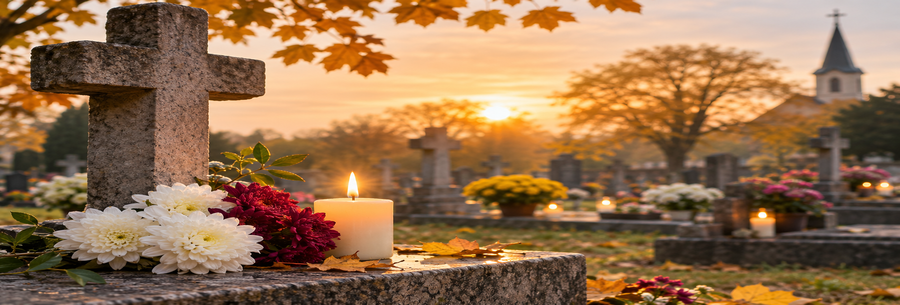
Visiting cemeteries is one of the most widespread practices. Families come to pay their respects at the graves of their loved ones, tidy the graves, lay flowers and say a prayer.
These simple gestures express the enduring nature of our remembrance and the respect due to those who have gone before us.
In France, chrysanthemums are traditionally associated with this time of year. Their autumnal bloom and their resilience to the first chill of autumn have made them a particularly common sight in cemeteries.
But beyond family traditions, 2 November is, above all, an invitation to embark on a journey of inner reflection.
Visiting a grave can become a genuine moment of prayer, in which we entrust to God our memories, our regrets, our gratitude and sometimes even the words we did not have time to say.
It is also an opportunity to pass on the family history to the younger generation, to tell them about those they never knew, and to help them discover the Christian meaning of death and the resurrection.
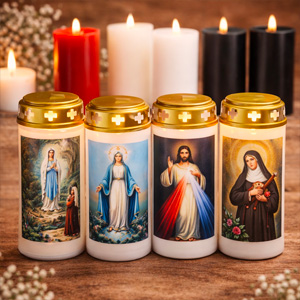
Why light a candle for the deceased?
Light plays a fundamental role in Christian spirituality.
Since the early centuries of the Church, candles have been a part of religious celebrations, times of prayer and the major milestones of Christian life.
Lighting a candle for the deceased is a particularly meaningful gesture.
The flame represents the light of the risen Christ, a light that darkness cannot overcome.
It also symbolises our prayer, which remains alive even when we leave the church or place of worship.
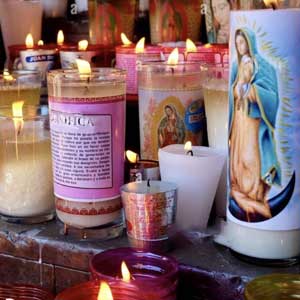
A lit candle placed before a religious image, in a church or on a grave thus becomes a visible sign of an inner intention.
This gesture does not replace prayer, but accompanies it and gives it concrete expression.
Some families, in particular, choose to recite a novena – that is, a prayer repeated over nine days – to entrust a loved one to God’s mercy.
The flame thus reminds us that love and prayer continue to unite the living with those who have gone before them.
The Mass for the dead: a prayer at the heart of the Church’s life
Among all forms of prayer for the dead, the celebration of the Eucharist occupies a central place in Catholic tradition.
During Mass, the Church commemorates the death and resurrection of Christ and entrusts both the living and the deceased to God.
Having a Mass celebrated for a deceased person is an act of faith of particular depth.
It is not merely a matter of honouring their memory, but of asking the Lord to welcome them into his peace.
On 2 November, parishes often hold services specifically dedicated to the departed, sometimes accompanied by the reading of the names of those who have died during the year.
These moments are particularly precious for bereaved families.
They allow them to grieve within the communion of the Church, surrounded by others who share the same hope.
The Mass also reminds us that we never pray alone. Our personal intention is united with that of the whole Christian community.
Praying for forgotten souls: a work of mercy
All Souls’ Day is not just about those we have known personally.
It also invites us to extend our prayers to all souls, and particularly to those who seem to have been forgotten.
How many people have died without family, without friends, or without anyone to keep their memory alive?
How many graves are no longer visited?
How many men and women have left this world in solitude, poverty, war or indifference?
Catholic tradition teaches us that praying for the dead is one of the spiritual works of mercy.
On this 2nd November, we can therefore entrust to the Lord those who have passed away and whose names are no longer spoken.
This universal prayer reminds us that every human life possesses infinite dignity in the eyes of God.
No life is insignificant; no one is forgotten by His love.
How can we observe All Souls’ Day spiritually as a family?
2 November can become a genuine opportunity to pass on the faith within the family.
There is no need to organise a long ceremony to give meaning to this day.
A few moments of silence, a shared prayer or a memory recalled together may be enough to create a moment of deep communion.
Parents can explain to children why Christians pray for the dead, using simple words appropriate to their age.
They can remind them that the sadness felt when someone passes away is natural, but that the Christian faith invites us to keep our trust in God’s love.
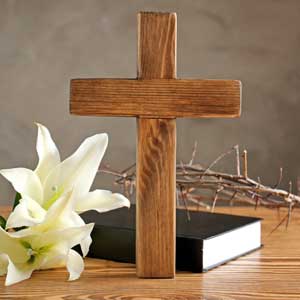
You could also set up a small prayer corner in the home, with a cross, an image of the Risen Christ and a lit candle, under adult supervision.
Everyone can then say the first name of a deceased person and entrust them to the Lord.
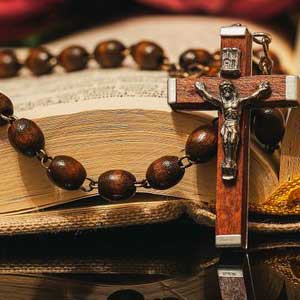
Reciting an ‘Our Father’, a ‘Hail Mary’ or a decade of the Rosary also allows us to experience this moment in a simple way.
These gestures, repeated over the years, help to make the remembrance of the deceased a deeply Christian family tradition.
The Virgin Mary, consolation for bereaved families
In times of mourning, many Catholics naturally turn to the Virgin Mary.
At the foot of the Cross, Mary experienced the suffering of seeing her Son die.
She therefore understands, in a very special way, the pain of those who lose a loved one.
But Mary is also a witness to Christ’s victory over death.
Her maternal presence invites us to remain hopeful, even when our hearts are filled with sadness.
Praying the Rosary can be a valuable source of support during times of mourning.
By meditating on the mysteries of the life, Passion and Resurrection of Jesus, we gradually learn to entrust our sufferings to God.
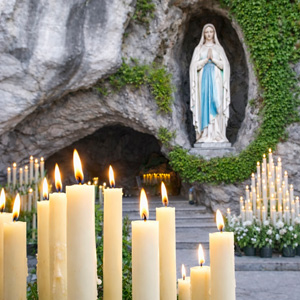
At Lourdes, a shrine deeply associated with prayer, consolation and hope, many pilgrims also come to offer their prayers for their departed loved ones.
What matters most is always the sincerity of prayer and the trust placed in the Lord’s mercy.
Prayer for our dear departed on 2 November
Lord Jesus Christ,
On this day dedicated to the memory of our departed, we turn to You with faith and hope.
We entrust to You those whom we have loved and who have left this earth.
Welcome them into the light of Your Kingdom, forgive their sins and enfold them in Your infinite mercy.
May their souls find rest, peace and eternal joy with You.
We also pray for all the souls in Purgatory, particularly those who are forgotten and for whom no one prays.
May our prayer bring them the comfort of Your love.
Comfort the families in their grief, sustain those who are going through the ordeal of bereavement, and soothe the hearts wounded by loss.
Teach us to live each day in faith, charity and the hope of the Resurrection.
Lord, grant them eternal rest, and may the light shine upon them for ever.
May they rest in peace.
Amen.
On 2 November, an invitation to reflect on the meaning of our own lives
The Commemoration of All Souls also invites us to reflect on our own existence.
Death reminds us of the fragility of human life and the preciousness of the time we are given.
Far from trapping us in fear, this reflection can help us rediscover what really matters.
Have we shown enough affection to those we love?
Do we know how to forgive, ask for forgiveness and be reconciled?
Do we take the time to listen to, support and comfort those around us?
The memory of our departed loved ones reminds us that what truly endures from a life are the traces of love, kindness and faithfulness it leaves behind.
2 November is therefore an invitation to live out our Christian vocation more fully, by cultivating charity, peace and trust in God.
The memory of our departed loved ones lives on in God’s love
All Souls’ Day is not merely a day of sadness.
It is also, and above all, a day of hope.
Our departed loved ones continue to live on in our memories through their words, their actions, the values they passed on to us and the moments we shared.
But for Christians, their destiny is not limited to this earthly remembrance.
We believe that God calls every human being to share in his eternal life and that Christ’s resurrection has opened a path of hope beyond death.
On this 2nd November, let us therefore take the time to pause, to pray and to entrust our departed loved ones to the Father’s loving care.
May this day help us to transform our grief into prayer, our remembrance into gratitude and our waiting into hope.
For whilst death separates us from those we love, faith reminds us that God’s love is stronger than death.