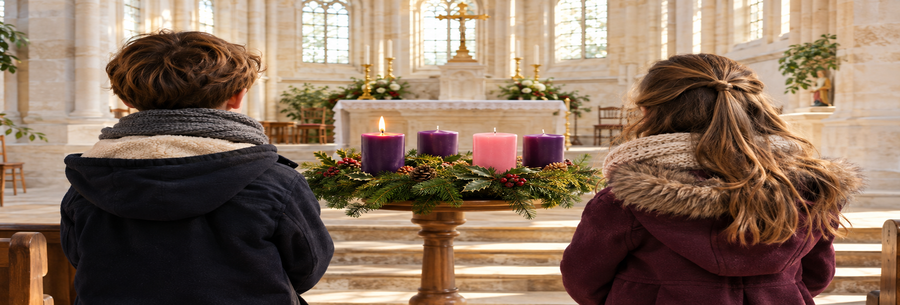
Get ready for Christmas as a family with four Advent activities. A candle, a short prayer and an act of kindness to share with your children every Sunday.
How can families observe the four Sundays of Advent together?
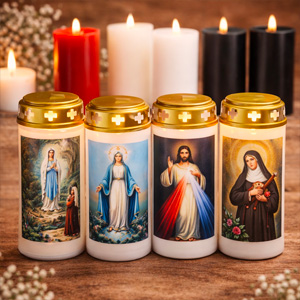
A lit candle, a few moments of silence and a short prayer are all it takes to bring the family together during Advent. This tradition gives children a framework for understanding what Christians look forward to at Christmas. Each Sunday, the light grows brighter and the family chooses a way to welcome Jesus into their daily lives.
Setting up a prayer corner at home
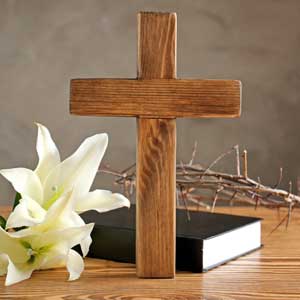
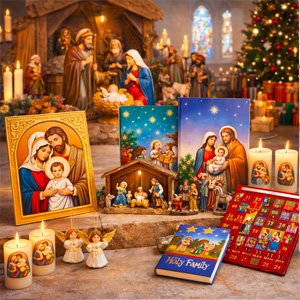
Place the Advent wreath in a spot where the whole family can gather. A corner of the table can hold the wreath, a Bible and, if you wish, a small nativity scene. Choose a time that is easy to stick to from one week to the next, for example before Sunday lunch.
An adult lights the candles. The children can set up the prayer corner, choose an intention or open the Bible. You can follow the same routine each week: light the candle, take a moment of silence, say the prayer and decide together on an action for the days ahead.
First candle: making space for silence
To begin Advent, let everyone say what they are looking forward to at Christmas. You can then explain to the children that Christians are preparing to celebrate the birth of Jesus and that they take this time to welcome him into their lives.
Observe a brief moment of silence together in front of the first candle. Everyone can then name someone they would like to pray for. During the week, try to find this moment of calm at least once, before a meal or at bedtime.
Lord Jesus, teach us to wait for you with confidence and to make room for your presence in our daily lives. Amen.
Second candle: taking a step towards reconciliation
As you light the second candle, invite everyone to think of a time when it was difficult to listen to one another. With the children, find a simple phrase that can open up the discussion: ‘I’d like to talk to you about what happened’ or ‘I’m sorry for hurting you.’
This week’s action could be to calmly resume a conversation, make amends for a wrong, or ask for forgiveness. Let everyone choose what they can do. A gesture chosen freely means more than an apology given on command.
Lord Jesus, help us to listen before we reply and give us the courage to take the first step towards peace. Amen.
Third candle: sharing joy
The third Sunday of Advent is marked by the joy of the Lord’s coming. As a family, everyone can share some good news or thank someone for a kind gesture they’ve recently received.
Then choose someone to pass this joy on to. Children can draw a picture, take part in a phone call or bring a card when visiting. Ask them to think of someone who would particularly appreciate receiving this token of friendship.
Lord Jesus, thank you for the joys of this week. Teach us to share them, especially with those who feel lonely. Amen.
Fourth candle: praying together before the nativity scene
Once all four candles are lit, gather together before the nativity scene. Look back with the children on the journey you have made since the first Sunday. Which activity did they enjoy the most? Who else would they like to entrust to Jesus?
You can leave the manger empty until Christmas. In the meantime, let the children take a moment to speak to Jesus in their own words. A simple phrase of trust or gratitude may be enough to bring these four weeks of anticipation to a close.
Lord Jesus, we are preparing to celebrate your birth. Grant our family an attentive heart and a home open to those in need of a welcome. Amen.
SEO Title — Shepherds in the nativity scene: where to place them and what do they symbolise?
Meta description — Discover the role of the shepherds in the Gospel of Luke and how to arrange your nativity figures to tell the story of the Nativity in your Christmas nativity scene.
Why are shepherds included in the Christmas nativity scene?
A shepherd leaning on his staff, a lamb carried on his shoulders, a small flock by the wayside: the shepherds bring the Christmas nativity scene to life. Their inclusion stems from the Nativity story in the Gospel according to Saint Luke. They were tending their flocks near Bethlehem when they learnt of the birth of Jesus. Placing them in the nativity scene illustrates the path that led them from the fields to the manger.
What does the Gospel tell us about the shepherds of Bethlehem?
In the Gospel according to Saint Luke (Lk 2:8–20), the shepherds spend the night outdoors with their flocks. An angel announces to them the birth of a Saviour and gives them a sign by which to recognise him: they will find a newborn baby, swaddled and lying in a manger.
The shepherds set off for Bethlehem and find Mary, Joseph and the child. They recount what they have heard, then set off again, giving glory to God. It all begins in the midst of their everyday work. This is what gives their presence in the nativity scene a special significance: the Christmas message reaches them where they live and sets them on their way.
How can we depict the shepherds’ journey to the manger?
For a family nativity scene, place a shepherd facing towards the stable. A small clear space between two rocks, a few tufts of moss or a strip of sand can suggest the path he is taking. Position the figure facing the Child so that the movement is easy to understand at a glance.
If you have several figurines, position one of the shepherds near the Holy Family and place another figure slightly further back, as if he had just arrived. The flock can remain to one side. This arrangement keeps the manger clearly visible whilst giving the scene a sense of depth.
Where should the shepherd, the lamb and the flock be placed in a small nativity scene?
In a small nativity scene, a single shepherd and a lamb are enough to convey the whole scene. Place them slightly to one side, facing the baby Jesus. If you have an extra sheep, place it in the foreground or near the path to give the impression that the shepherd is arriving from the pastures.
In a nativity scene featuring Provençal santons, the shepherds can be placed alongside the village figures. The baker, the washerwoman or the woodcutter evoke the trades and daily life of the region. The shepherd acts as a link between this familiar setting and the biblical story of Bethlehem.
How can you tell the Nativity story to children using santons?
Start by placing the shepherd and his lamb some distance from the stable. Describe the night in the fields, the angel’s announcement and the journey to Bethlehem. Then let the children move the shepherd to the manger. This way, they can follow the stages of the story they have just heard with their own hands.
Once the figurine has arrived, ask them what the shepherds discovered and what they did on their way back. You could finish with a short prayer in front of the nativity scene, entrusting to Jesus those who work at night, those who feel lonely and those who are waiting for good news.