Discover the main Christian festivals in December: Saint Nicholas, the Immaculate Conception, Our Lady of Guadalupe, Christmas, Saint Stephen and the Holy Family. History, traditions and spiritual significance.
Christian festivals in December: a journey of faith, light and hope towards Christmas
The month of December holds a special place in the Catholic Church’s liturgical calendar. It is deeply marked by the anticipation of the birth of Jesus Christ, by prayer and by the great celebrations that accompany the mystery of the Incarnation.
As the days grow shorter and winter sets in, Christians prepare to welcome the One whom the Gospel presents as the light of the world.
December is first and foremost the month of Advent and Christmas, but it is also rich in numerous feasts dedicated to the Virgin Mary, the apostles, the martyrs and the saints who have shaped the history of Christianity.
On 6 December, Saint Nicholas reminds us of the importance of generosity and of protecting the most vulnerable. On 8 December, the Church celebrates the Immaculate Conception of the Virgin Mary, a major Marian solemnity. On 12 December, Our Lady of Guadalupe holds a special place in Catholic devotion, particularly in the Americas.
Then come the final days of Advent, the celebration of the Nativity of the Lord on 25 December, the feast of Saint Stephen, that of Saint John the Evangelist and the feast of the Holy Family.
The month draws to a close with preparations for the transition to a new calendar year, in an atmosphere of gratitude and hope.
Through all these celebrations, the Church invites us to rediscover the true meaning of Christmas: God became man in Jesus Christ to come to meet humanity and bring it salvation.
1. Advent: four weeks to prepare for the birth of Jesus
The month of December is marked first and foremost by the season of Advent.
The word ‘Advent’ comes from the Latin adventus, which means ‘coming’ or ‘arrival ’.
This period marks the beginning of a new liturgical year and prepares Christians to celebrate the birth of Jesus in Bethlehem.
It also serves as a reminder that the Church awaits the glorious return of Christ at the end of time.
When does Advent begin?
The first Sunday of Advent falls between 27 November and 3 December.
In 2026, Advent begins on Sunday 29 November.
The four Sundays of Advent 2026 are:
29 November: First Sunday of Advent.
6 December: Second Sunday of Advent.
13 December: third Sunday of Advent, known as Gaudete Sunday.
20 December: fourth Sunday of Advent.
Each Sunday marks a new stage in the spiritual preparation for Christmas.
The significance of the four Sundays of Advent
The first Sunday invites the faithful to watch and prepare for the coming of the Lord.
The second Sunday places particular emphasis on the call to conversion, notably through the figure of Saint John the Baptist.
The third Sunday, known as Gaudete Sunday, is marked by the joy of Christmas drawing near. The priest may wear pink vestments, the liturgical colour permitted on that day.
The fourth Sunday directs contemplation more directly towards the events preceding the birth of Jesus, particularly the role of the Virgin Mary.
The Advent wreath and its four candles
The Advent wreath is a Christian tradition particularly cherished by families.
It is usually made up of fir branches and four candles.
Each Sunday, an additional candle is lit.
This gradually increasing light serves as a reminder that the birth of Christ is drawing near.
The wreath provides a lovely framework for family prayer.
In particular, it helps children to understand that Christmas is a festival prepared for through anticipation, patience and faith.
How can we observe Advent in a Christian way?
The season of Advent invites us to slow down and make room for God in our daily lives.
The faithful can attend Sunday Mass, read the Gospels, receive the sacrament of reconciliation, or set aside a few minutes each day for prayer.
Acts of charity also play an important role.
Helping someone who is isolated, supporting a family in difficulty or performing an act of forgiveness are concrete ways of preparing one’s heart for the birth of the Saviour.
2. 3 December: Saint Francis Xavier, a great missionary of the Church
On 3 December, the Church commemorates Saint Francis Xavier, one of the greatest missionaries in the history of Christianity.
Born in 1506 in Navarre, Francis Xavier met Saint Ignatius of Loyola whilst studying in Paris.
He became one of the first members of the Society of Jesus, the Jesuits.
A life devoted to proclaiming the Gospel
Francis Xavier set out on a mission to Asia in the 16th century.
He proclaimed the Gospel notably in India, the Malay Archipelago and Japan.
His missionary work was extensive.
He sought to pass on the Christian faith to people of very different cultures and languages.
His life’s journey bears witness to a deep desire to make Jesus Christ known.
Why is Saint Francis Xavier important?
Saint Francis Xavier reminds us of the universal nature of Christianity.
The Gospel is intended for all peoples.
His example invites the faithful to bear witness to their faith with courage, whilst recognising the importance of encountering and respecting others.
He is recognised as one of the patron saints of Catholic missions.
His feast day, at the beginning of December, reminds us that the coming of Jesus concerns the whole of humanity.
3. 6 December: Saint Nicholas, the saint of generosity and children
Saint Nicholas is one of the most popular Christian figures in December.
His feast day is celebrated every year on 6 December.
He is particularly venerated in many European countries, notably in France, Belgium, the Netherlands, Germany and several regions of Central and Eastern Europe.
Who was Saint Nicholas?
St Nicholas was a bishop of Myra, in what is now Turkey, in the 4th century.
Reliable historical information about his life is relatively limited, but many traditions have developed around his generosity.
He is particularly known for his care for the poor, children and those in need.
The legend of the three young girls
One of the most famous traditions tells how Nicholas is said to have secretly brought money to a poor family to enable three young girls to escape a situation of great distress.
This story has helped to make him a symbol of generosity.
It serves as a reminder that Christian charity should be practised discreetly, without seeking honour.
Saint Nicholas and Christmas traditions
In many regions, Saint Nicholas traditionally brings sweets or small gifts to children.
Over the centuries, his figure has also influenced certain traditions associated with Father Christmas.
However, Saint Nicholas is, above all, a Christian figure who encourages us to live out generosity and love for our neighbour.
How can you celebrate Saint Nicholas as a family?
6 December can be an opportunity to tell children his story.
You could also suggest that they do a good deed, prepare a present for someone who is lonely, or share something with a child in need.
This celebration is a wonderful spiritual preparation for Christmas.
It reminds us that the joy of giving is often deeper than that of receiving.
4. 7 December: Saint Ambrose, bishop and Doctor of the Church
On 7 December, the Church commemorates Saint Ambrose of Milan.
Born around 339, Ambrose became Bishop of Milan in 374.
He occupies a major place in the history of Western Christianity.
A bishop in the service of the faith
Saint Ambrose is known for his theological teaching, his pastoral courage and his defence of the Christian faith.
He exerted a significant influence on Saint Augustine, who was baptised in Milan in 387.
Ambrose also contributed to the development of liturgical chant in the West.
A defender of justice
Saint Ambrose did not hesitate to remind the political authorities of their moral responsibilities.
He emphasised the need to respect human dignity and to defend the most vulnerable.
His life serves as a reminder that the Christian faith must guide both personal and collective decisions.
As Christmas approaches, his example invites us to seek truth, justice and charity.
5. 8 December: The Immaculate Conception of the Virgin Mary
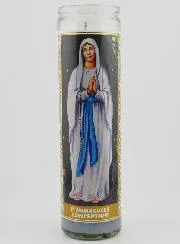
On 8 December, the Catholic Church celebrates one of the most important feasts dedicated to the Virgin Mary: the Immaculate Conception.
This feast has a profound theological significance and holds a special place in Catholic spirituality.
What does the Immaculate Conception mean?
The Immaculate Conception refers to the privilege granted to the Virgin Mary of having been preserved from original sin from the very first moment of her conception, by a grace from God and in view of the merits of Jesus Christ.
It is important not to confuse this doctrine with the virgin birth of Jesus.
The Immaculate Conception concerns Mary herself.
It expresses the special preparation of the one who was to become the Saviour’s mother.
When was this dogma proclaimed?
The dogma of the Immaculate Conception was solemnly proclaimed on 8 December 1854 by Pope Pius IX, in the bull *Ineffabilis Deus*.
This proclamation confirmed a belief and devotion that had long been present in the Catholic tradition.
The link between the Immaculate Conception and Lourdes
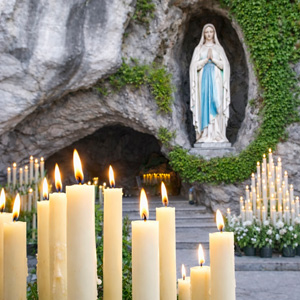
In 1858, four years after the proclamation of the dogma, the Virgin Mary appeared, according to the faith and recognition of the Catholic Church, to Bernadette Soubirous in Lourdes.
During the apparition on 25 March 1858, the Lady introduced herself with these words in the local dialect: ‘Que soy era Immaculada Councepciou’, meaning ‘I am the Immaculate Conception’.
This declaration occupies a central place in the message of Lourdes.
Today, 8 December is a great day of Marian prayer, particularly significant in shrines dedicated to the Virgin Mary.
How can we observe this feast day?
Catholics can attend Mass, recite the Rosary or entrust their families to the protection of the Virgin Mary.
This solemnity invites us to contemplate Mary’s faith and her total openness to God’s will.
It also prepares the faithful to welcome the birth of Jesus with a renewed heart.
6. 9 December: Saint Juan Diego, witness to the apparitions at Guadalupe
On 9 December, the Church commemorates Saint Juan Diego Cuauhtlatoatzin.
Born around 1474 in what is now Mexico, Juan Diego is associated with the Marian apparitions at Guadalupe in 1531.
A humble man chosen to convey a message
According to Catholic tradition, the Virgin Mary appeared to Juan Diego on Tepeyac Hill, near Mexico City.
She asked him to convey a message to the bishop and to have a place of prayer built.
Juan Diego thus became the messenger of a Marian devotion that would go on to take on considerable importance.
An example of simplicity and trust
Saint Juan Diego is renowned for his humility and faith.
His story reminds us that God can entrust great missions to simple people.
He was canonised by Saint John Paul II in 2002.
His feast day directly precedes that of Our Lady of Guadalupe, celebrated three days later.
7. 12 December: Our Lady of Guadalupe, a major Marian feast day
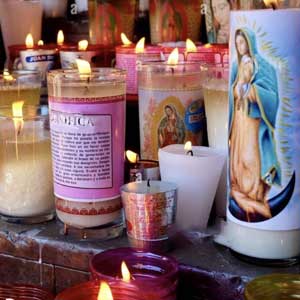
On 12 December, the Church celebrates Our Lady of Guadalupe.
This feast day is particularly important in Mexico and throughout the Americas.
It commemorates the apparitions of the Virgin Mary to Saint Juan Diego, recognised in Catholic tradition.
The story of Our Lady of Guadalupe
According to the traditional account, in December 1531, the Virgin Mary appeared to Juan Diego near Mexico City.
She asked him to convey to the bishop her wish to have a shrine built.
An extraordinary sign is associated with these events: the image of the Virgin that appeared on Juan Diego’s cloak, known as a tilma.
This image is now preserved in the Basilica of Our Lady of Guadalupe in Mexico City.
A Virgin close to the people
Our Lady of Guadalupe is particularly venerated as a figure of consolation and protection.
Her message is associated with Mary’s maternal tenderness and her closeness to the most humble.
She is recognised as the patroness of the Americas.
The spiritual message of Guadalupe
Devotion to Our Lady of Guadalupe invites Christians to place their trust in the Virgin Mary and to turn to her Son, Jesus.
It reminds us that the Christian faith is meant to reach out to all peoples and all cultures.
With Christmas just a few days away, this feast day once again highlights Mary’s role in the history of salvation.
8. 13 December: Saint Lucy, the saint of light
On 13 December, the Church celebrates Saint Lucy of Syracuse.
This young Christian is said to have been martyred in the early 4th century, during the persecutions against Christians.
Her name comes from the Latin lux, meaning ‘light’.
A young martyr faithful to Christ
Traditions concerning Saint Lucy recount that she is said to have refused to renounce her faith.
She has become a symbol of courage and fidelity.
Her veneration has spread widely throughout the Church.
Saint Lucy and the traditions of light
In several Northern European countries, particularly in Sweden, the feast of Saint Lucy gives rise to celebrations centred on light.
Processions of young girls dressed in white, carrying candles, symbolically evoke the light.
These traditions take on a special significance during the long December nights.
The light of Christ in the heart of winter
The feast of Saint Lucy fits naturally into the spirituality of Advent.
It reminds us that Jesus is the light of the world.
Amidst difficulties, trials and uncertainties, the Christian faith invites us to hold on to hope.
Saint Lucy teaches us that God’s light can continue to shine even in the darkest times.
9. 14 December: Saint John of the Cross, master of the spiritual life
On 14 December, the Church commemorates Saint John of the Cross, a Carmelite priest and Doctor of the Church.
Born in Spain in 1542, he is one of the great figures of Christian mysticism.
Together with Saint Teresa of Ávila, he played a part in the reform of the Carmelite Order.
A life of prayer and self-denial
Saint John of the Cross emphasises the need to purify one’s heart in order to grow in the love of God.
His spiritual writings describe the inner trials a soul may undergo on its journey towards union with God.
He is notably the author of *The Dark Night of the Soul*, *The Spiritual Canticle* and *The Ascent of Mount Carmel*.
A spirituality particularly suited to Advent
The season of Advent invites the faithful to prepare themselves inwardly for the coming of Christ.
The teaching of Saint John of the Cross reminds us that this preparation sometimes requires us to be still, to renounce the superfluous and to rediscover what is essential.
His feast day is an invitation to deepen our prayer and to make more room for God in our lives.
10. 17–23 December: the Great Antiphons of Advent
From 17 December, the Advent liturgy enters a period of more immediate preparation for Christmas.
These final days are marked by the Great ‘O’ Antiphons, sung or recited in the Liturgy of the Hours.
What are the Great ‘O’ Antiphons?
They are seven invocations addressed to Christ.
Each one takes up a biblical title of the expected Messiah.
They are traditionally used from 17 to 23 December, before the Magnificat at Vespers.
The seven invocations are:
17 December: O Wisdom.
18 December: O Adonai.
19 December: O Branch of Jesse.
20 December: O Key of David.
21 December: O Orient.
22 December: O King of the Nations.
23 December: O Emmanuel.
These invocations express the anticipation of the Saviour and the longing for his coming.
Spiritual preparation for Christmas
The final days of Advent invite Christians to intensify their prayer.
One may re-read the accounts of the Annunciation, the Visitation and the birth of Jesus.
Families may also finish setting up the nativity scene and prepare a time of prayer for Christmas Eve.
11. 24 December: Christmas Eve and Midnight Mass
24 December marks the culmination of the Advent season.
Throughout the day, the faithful continue their spiritual preparation.
Then, in the evening, the celebrations of the Nativity of the Lord begin.
Why is the Christmas Midnight Mass celebrated at night?
The Midnight Mass recalls the account in the Gospel according to Saint Luke.
The shepherds were keeping watch in the fields when the angels announced the birth of the Saviour to them.
The night also has symbolic significance.
It evokes the darkness of the world into which the light of Christ shines.
The tradition of Midnight Mass is an ancient one, but nowadays the celebrations may take place earlier in the evening.
The account of the birth of Jesus
During Midnight Mass, the Church proclaims the Nativity narrative according to Saint Luke.
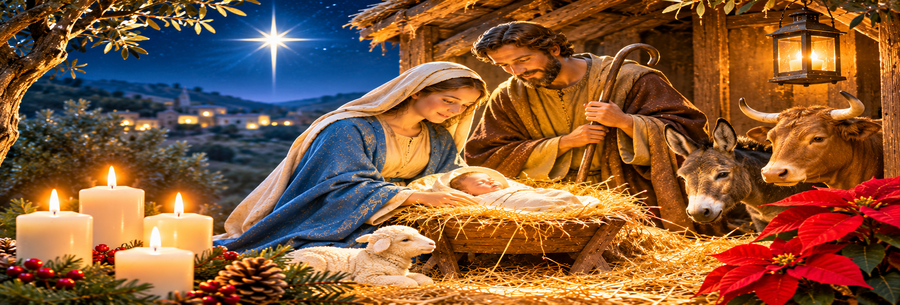
Mary and Joseph are in Bethlehem.
Mary gives birth to her first-born son, wraps him in swaddling clothes and lays him in a manger.
Some shepherds receive the news of this birth and go to see the child.
This simple yet profound story lies at the heart of the Christmas celebration.
An evening of family prayer
Before or after Mass, families can gather around the nativity scene.
They might read a passage from the Gospel, sing a Christmas carol or say a prayer.
In some families, the Baby Jesus is placed in the manger on the evening of 24 December.
This gesture reminds us that all the preparation during Advent leads to the birth of the Saviour.
12. 25 December: Christmas, the Solemnity of the Nativity of the Lord
On 25 December, the Church solemnly celebrates the birth of Jesus Christ.
Christmas is one of the most important feasts of the Christian faith.
It commemorates the mystery of the Incarnation: the eternal Son of God became man.
Why was Jesus born in Bethlehem?
According to the Gospel of Saint Luke, Mary and Joseph travelled to Bethlehem for a census.
It was in this town, associated with King David, that Jesus was born.
In the Christian interpretation of the Scriptures, his birth fulfils the messianic promises foretold by the prophets.
The significance of the manger
Jesus was born in humble circumstances.
He lay in a manger, as there was no room in the inn where Mary and Joseph might have stayed.
This simplicity has a profound spiritual significance.
It reminds us that God chose to come amongst humankind in humility.
Christ was not born surrounded by wealth and power.
He came to share in the fragility of the human condition.
Christmas Masses
The Catholic liturgy provides several forms for celebrating the Nativity.
The Mass on Christmas Eve, the Midnight Mass, the Dawn Mass and the Day Mass allow us to contemplate different aspects of the mystery of Christmas.
The Day Mass features, in particular, the prologue to the Gospel according to Saint John.
This text proclaims that the eternal Word of God became flesh and dwelt amongst us.
Christmas, a festival of peace and charity
The birth of Jesus invites Christians to live in love, brotherhood and generosity.
Presents, meals and family traditions can express this joy.
But they must not make us forget the religious significance of the festival.
Christmas reminds us that God loves humanity and that he calls upon each of us to welcome his love.
13. 26 December: Saint Stephen, the first Christian martyr
On Boxing Day, the Church celebrates Saint Stephen, recognised as the first Christian martyr.
His story is recounted in the Book of Acts.
Who was Saint Stephen?
Stephen was one of the seven men chosen by the early Christian community to serve the faithful.
He stood out for his faith and courage.
His witness provoked fierce opposition.
He was eventually condemned and stoned to death.
Forgiveness at the heart of martyrdom
As he was dying, Stephen prayed for those who were persecuting him.
His attitude recalls that of Jesus on the Cross.
In this way, he bears witness to a love capable of overcoming violence and hatred.
Why does his feast day follow immediately after Christmas?
The proximity between Christmas and the feast of Saint Stephen has a profound spiritual significance.
On 25 December, the Church celebrates the birth of Christ.
On 26 December, it honours a disciple who gave his life for him.
This sequence reminds us that following Jesus sometimes requires the courage to bear witness and the self-sacrifice of giving one’s life.
14. 27 December: Saint John, Apostle and Evangelist
On 27 December, the Church celebrates Saint John, Apostle and Evangelist.
In Christian tradition, he is particularly associated with the Gospel according to Saint John, the Johannine Epistles and the Book of Revelation, although the historical authorship of these writings remains a subject of scholarly debate.
The disciple whom Jesus loved
Tradition identifies Saint John with the ‘beloved disciple’ mentioned in the Fourth Gospel.
He is presented as a privileged witness to the life of Jesus.
At the foot of the Cross, Jesus entrusts his mother to the Beloved Disciple.
This episode holds an important place in Marian spirituality.
St John and the mystery of Christmas
The prologue to the Gospel according to St John is read during the Mass on Christmas Day.
It presents Jesus as the eternal Word of God.
Saint John thus invites us to understand that the Child born in Bethlehem is far more than a historical figure.
He is the Son of God who came to share our human condition.
The Apostle of Love
The Johannine writings place particular emphasis on the love of God and brotherly love.
They remind us that the Christian faith must be expressed through concrete acts of charity.
At Christmas, this message takes on a special significance.
15. 28 December: the Holy Innocents, martyrs of Bethlehem
On 28 December, the Church commemorates the Holy Innocents.
This feast day commemorates the children of Bethlehem killed on the orders of King Herod, according to the account in the Gospel of Saint Matthew.
The biblical account
Following the visit of the Magi, Herod sought to eliminate the child whom he regarded as a threat to his power.
The Gospel recounts that he ordered the killing of the young boys in Bethlehem and the surrounding area.
Joseph, warned in a dream, took Mary and Jesus and fled to Egypt.
Why does the Church honour the Holy Innocents?
Christian tradition recognises these children as innocent victims linked to the mystery of Christ.
Their memory serves as a reminder of the suffering of the most vulnerable and the importance of defending the dignity of every human life.
This feast day is a special invitation to pray for children who are victims of war, violence, poverty and persecution.
It also reminds us that Jesus’ birth took place in a world marked by suffering, but that Christ came to bring the hope of salvation.
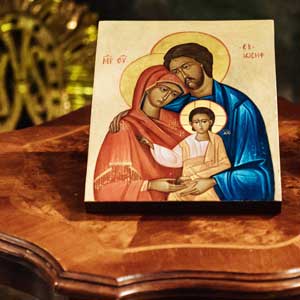
16. The Feast of the Holy Family: Jesus, Mary and Joseph, models of family life
The Feast of the Holy Family of Jesus, Mary and Joseph is celebrated on the Sunday within the octave of Christmas, or on 30 December when Christmas falls on a Sunday.
In 2026, the Feast of the Holy Family will be celebrated on Sunday 27 December.
This celebration invites Christians to reflect on the family life of Jesus in Nazareth.
The Holy Family in the Gospels
The Gospels recount several episodes from Jesus’ childhood.
In particular, they mention the flight into Egypt, the return to Nazareth and Jesus’ presence in the Temple in Jerusalem when he was twelve years old.
These accounts show that Jesus grew up in a human family, surrounded by the love and protection of Mary and Joseph.
Mary, a model of trust
The Virgin Mary accepts God’s will with faith.
She accompanies Jesus from his birth right through to the events of his public life.
She is a model of maternal love, fidelity and prayer.
Joseph, a model of protection and responsibility
Saint Joseph watches over Mary and Jesus.
He accepts the responsibilities entrusted to him and acts with courage.
He reminds us of the importance of work, fidelity and the protection of the family.
Jesus and family life
Growing up in Nazareth, Jesus shared in the daily life of a family.
The Feast of the Holy Family thus reminds us that the ordinary acts of family life can become paths to holiness.
Love, patience, forgiveness and mutual support are all essential values to be nurtured in Christian homes.
17. 31 December: Saint Sylvester and giving thanks for the past year
On 31 December, the Church commemorates Saint Sylvester I, Pope in the 4th century.
His pontificate took place at a significant time in the history of Christianity, following the legal recognition of the Christian faith within the Roman Empire.
Who was Saint Sylvester?
Saint Sylvester became Bishop of Rome in 314.
He carried out his ministry during the reign of Emperor Constantine.
This period was marked by profound changes in relations between the Church and the Roman Empire.
His pontificate notably coincided with the construction of major Christian buildings in Rome.
31 December: a time to give thanks to God
Beyond the commemoration of Saint Sylvester, the last day of the calendar year is often an occasion for celebrations of thanksgiving.
In some parishes, the faithful gather to thank God for the graces received during the year.
The singing of the Te Deum, a traditional hymn of praise, may accompany this prayer.
This day also invites us to entrust to God the difficulties we have faced and to prepare for the new year with confidence.
18. The calendar of the main Catholic feasts in December 2026
Here are the main celebrations for the month of December, including the dates of the Sundays of Advent and the Feast of the Holy Family for the year 2026.
Date | Feast or celebration |
|---|---|
3 December | Saint Francis Xavier |
6 December | Second Sunday of Advent |
6 December | St Nicholas (traditional commemoration) |
7 December | Saint Ambrose |
8 December | Immaculate Conception of the Virgin Mary |
9 December | Saint Juan Diego |
12 December | Our Lady of Guadalupe |
13 December | Third Sunday of Advent, Gaudete |
13 December | Saint Lucy (traditional commemoration) |
14 December | Saint John of the Cross |
17 to 23 December | ‘O’ Antiphons |
20 December | Fourth Sunday of Advent |
24 December | Christmas Eve and celebrations of the Nativity |
25 December | Christmas, Nativity of the Lord |
26 December | Saint Stephen, the first martyr |
27 December | The Holy Family of Jesus, Mary and Joseph |
27 December | Saint John, Apostle and Evangelist (feast superseded in 2026 by the Holy Family) |
28 December | Holy Innocents |
31 December | Saint Sylvester I |
Certain feasts of saints are not celebrated liturgically when they coincide with a Sunday in Advent or a celebration of higher rank.
19. How can we live the month of December in a Christian way?
December can become a true time of spiritual renewal.
Amidst the preparations for Christmas, it is important to set aside time for prayer, silence and charity.
Preparing one’s heart during Advent
Each day, a few minutes can be set aside for reading the Gospel or for personal prayer.
Preparing for Christmas should not be limited to decorations and presents.
Above all, it is an invitation to welcome Jesus into one’s life.
Taking part in the major celebrations
The Solemnity of the Immaculate Conception, Christmas Masses and the Feast of the Holy Family are special moments in the Christian calendar.
Taking part in these celebrations helps us to better understand the mysteries of the faith.
Rediscovering the sacrament of reconciliation
Advent is a particularly favourable time to receive God’s forgiveness.
Confession helps us prepare our hearts inwardly for the birth of the Saviour.
Living out charity within our families
Christmas calls us to generosity.
You can put together a parcel for someone in need, visit an elderly person or give a present to a disadvantaged child.
These gestures remind us that the Christian faith must be expressed through acts of love.
Passing on Christian traditions to children
The nativity scene, the Advent wreath, Christmas carols and Bible stories enable children to gradually discover the meaning of the Nativity.
Parents can explain that Christmas celebrates, above all, the birth of Jesus.
Family traditions then become genuine means of passing on the faith.
20. A prayer to live the month of December in faith
Lord Jesus,
In this month of December, we prepare our hearts to celebrate your birth.
Teach us to live through Advent with patience, prayer and hope.
Following the example of the Virgin Mary, grant us hearts open to your will.
With Saint Joseph, teach us faithfulness, courage and trust.
Following the example of Saint Nicholas, make us generous towards those in need.
May the light of Saint Lucy remind us of your presence amidst our difficulties.
Protect our families and be with those who are alone, ill or suffering.
During this Christmas season, help us to rediscover the true meaning of the festival.
May our homes become places of peace, forgiveness and charity.
And as we contemplate the Baby Jesus in the manger, let the joy of your love grow within us.
Amen.
Conclusion: December, a month to welcome the light of Christ
The month of December is one of the richest periods in the Catholic liturgical year.
It begins with the anticipation of Advent and gradually leads the faithful towards the joy of Christmas.
The feasts of Saint Nicholas, Saint Ambrose, Saint Lucy and Saint John of the Cross remind us of the importance of charity, fidelity and the interior life.
The major Marian feasts, particularly the Immaculate Conception and Our Lady of Guadalupe, highlight the essential role of the Virgin Mary in the history of salvation.
Then comes Christmas, when the Church celebrates the mystery of the Incarnation.
In the simplicity of a manger in Bethlehem, the Son of God comes to share in our human condition to bring us salvation.
The days that follow extend this joy through the remembrance of the first witnesses to Christ and the celebration of the Holy Family.
Finally, 31 December invites Christians to give thanks for the past year and to entrust the future to God.
Through all these feasts, December teaches us that the Christian faith is a path of hope.
The light of Christ shines through the darkness.
The birth of Jesus reminds us that God never abandons humanity.
And the saints show us that everyone can respond to this love through a life of prayer, faithfulness and charity.
To live the month of December as a Christian, therefore, means preparing one’s heart to welcome Jesus, rediscovering the joy of his birth and allowing his love to transform our daily lives.