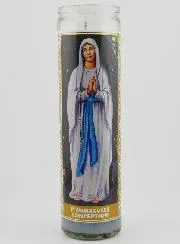
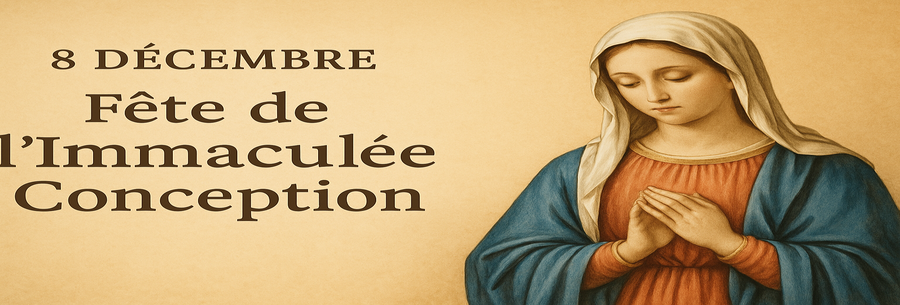
On 8 December, the Catholic Church celebrates one of the most luminous mysteries of the Christian faith: the feast of the Immaculate Conception. This solemnity, deeply rooted in Christian tradition and cherished by millions of faithful around the world, honours the unique privilege granted by God to the Virgin Mary: that of having been conceived without the stain of original sin.
A dogma at the heart of Marian faith
Although belief in Mary's perfect sanctity dates back to the first centuries of Christianity, it was on 8 December 1854 that Pope Pius IX solemnly proclaimed the dogma of the Immaculate Conception in the bull Ineffabilis Deus. In it, the Pope affirmed that Mary, "from the first moment of her conception, by a singular grace and favour of Almighty God, in view of the merits of Jesus Christ the Saviour of the human race, was preserved intact from every stain of original sin".
This dogma emphasises that God prepared Mary from the beginning for her exceptional mission: to become the Mother of Jesus, the Saviour. Thus, Mary is the icon of original holiness, the first created according to God's original design for humanity.
Mary, sign of purity and hope
The feast of 8 December is dominated by the theme of the light and beauty of the soul. Mary, all pure, is the perfect reflection of what God wishes for every human being: a unified, luminous life, free from evil. The faithful see in her not only a model, but also a maternal protector, always ready to guide them to her Son.
In many countries, this day is marked by processions, solemn masses, and great popular fervour. Marian hymns such as the Ave Maria or the Magnificat accompany the celebrations, expressing the joy of a people turned towards the Mother of God.
The connection with Lourdes
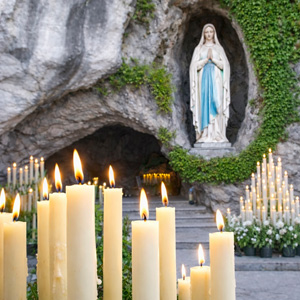
The feast of 8 December is particularly linked to the message of Lourdes. At the 16ᵉ apparition on 25 March 1858, the Virgin presented herself to Bernadette Soubirous, declaring:
"I am the Immaculate Conception."
This mysterious name confirmed the dogma proclaimed only four years earlier and anchored this feast even more deeply in contemporary Catholic spirituality. Today, Lourdes is one of the places where devotion to the Immaculate Conception is most alive.
Traditions around 8 December
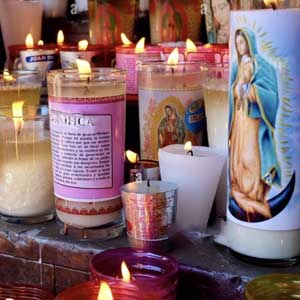
In some regions, such as Lyon, the festival of 8 December is also associated with illuminations. Inhabitants place luminous lights in their windows in honour of the Virgin, creating a light show that has become famous the world over: the Festival of Lights. This tradition, born of an ancient vow to Mary, expresses the gratitude of the people and their attachment to the Mother of God.
Other cultures mark this day with family prayers, Marian vigils, or acts of personal devotion such as reciting the rosary. Many take advantage of this feast to renew their consecration to the Immaculate Heart of Mary.
An invitation to conversion
Beyond the outward celebrations, 8 December is an inward call to allow oneself to be purified, renewed and guided by God. By contemplating Mary, Christians are encouraged to move towards greater goodness, purity and peace. She shows them that grace can transform the human heart and open up a luminous path in the midst of the world.
The message of this feast is profoundly topical: God's love is stronger than evil. In Mary, humanity rediscovers hope and sees the beginning of the victory of light over darkness.