Discover the miracles attributed to the Blessed Virgin in France, the major Marian shrines, the recognised apparitions and the Christian significance of healings and conversions.
The Miracles of the Blessed Virgin in France: healings, conversions and hope
France boasts an exceptional Marian heritage. From Lourdes to the Rue du Bac, from Pontmain to La Salette, from Pellevoisin to Le Laus, numerous shrines bear witness to the faithful’s trust in the Virgin Mary.
At these sites, pilgrims come to pray for a healing, to entrust a family trial to her care, to ask for peace, to embark on a journey of conversion, or to thank God for a grace received. Some testimonies are spectacular. Others are more subtle: a fear allayed, a family reconciled, a vocation rediscovered, a person returning to the path of faith.
When Catholics speak of the ‘miracles of the Blessed Virgin’, they are affirming above all that God acts in people’s lives through Mary’s intercession. The Virgin Mary is not the source of grace: she always leads us to Jesus Christ, her Son, and she prays for those who turn to her.
What does a miracle mean in the Catholic faith?
In the Christian faith, a miracle is neither a spectacle nor proof imposed on everyone. It is a sign that points towards God. It can reawaken faith, sustain hope or help a person to discover the presence of Christ in their life.
Certain physical healings may be recognised as miraculous following a lengthy process of medical investigation and ecclesial discernment. But miracles are not limited to healings.
A profound conversion, the peace found in the midst of bereavement, the strength to forgive after being hurt, a return to prayer, or the courage to endure an illness can all be welcomed as immense graces.
The Church always urges caution. It does not declare every happy or unexpected event to be miraculous. It distinguishes between personal testimonies, medically unexplained healings and officially recognised miracles.
This caution does not diminish faith. On the contrary, it reminds us that God acts freely and that true faith is not reduced to the search for extraordinary phenomena.
Lourdes: the great shrine of recognised healings
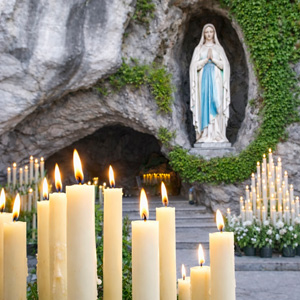
Lourdes is undoubtedly the best-known French Marian shrine in the world. In 1858, the Virgin Mary appeared to Bernadette Soubirous in the grotto of Massabielle. The young girl, then aged fourteen, experienced eighteen apparitions between 11 February and 16 July.
During one of these apparitions, Mary introduced herself with these words: ‘I am the Immaculate Conception.’ These words had a profound impact on the Church, as they echoed the dogma proclaimed four years earlier.
Very quickly, Lourdes became a place of pilgrimage. People who were ill, disabled, worn down by suffering or weakened by life came to pray near the grotto, drink the spring water or bathe in the sanctuary’s pools.
Since the apparitions, more than 7,000 reports of healings have been submitted to the Lourdes Medical Assessment Office. This office, founded in 1883, is unique: it receives reports of healings and organises rigorous medical examinations, open to doctors of all faiths.
To date, 72 healings have been officially recognised as miraculous by the Church. This number, which is relatively small compared with the vast number of pilgrims, demonstrates the rigour of the procedure.
A healing recognised as miraculous must be lasting, complete, unexplained by current medical knowledge and have occurred in a context of prayer. Following the opinion of the International Medical Committee of Lourdes, the bishop of the diocese to which the healed person belongs may decide to recognise the miracle.
But Lourdes is not limited to these recognised healings. For many pilgrims, the greatest miracle is regaining hope, feeling welcomed despite their illness, being able to pray with others, or discovering an unexpected inner peace.
Bernadette Soubirous: the miracle of a humble life
The life of Saint Bernadette reminds us that the message of Lourdes is, above all, a call to faith, prayer and conversion. After the apparitions, Bernadette sought neither wealth nor recognition. She entered the Sisters of Charity of Nevers and led a discreet life, marked by illness and service.
She herself summed up her mission with great humility: her task was not to convince, but to pass on what she had seen and heard.
Bernadette’s testimony invites believers not to seek only extraordinary signs. True grace also lies in learning to love, to serve, to forgive and to place one’s life in God’s hands.
Rue du Bac and the Miraculous Medal
In Paris, in 1830, the Virgin Mary appeared to Saint Catherine Labouré in the chapel of the Daughters of Charity on Rue du Bac. During the apparition on 27 November, Mary asked for a medal to be struck according to the model shown to Catherine.
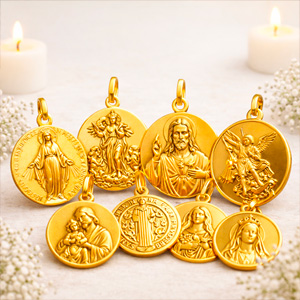
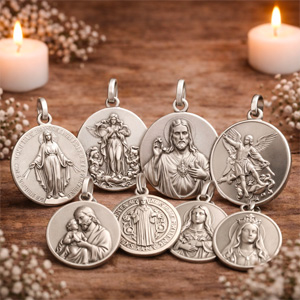
The first Miraculous Medals were distributed in 1832, notably at a time when Paris was struck by a severe cholera epidemic. Accounts of healings, protection, conversions and restored peace multiplied rapidly. It was thus that the medal came to be known as the ‘Miraculous Medal’.
Among the most famous testimonies is the conversion of Alphonse Ratisbonne in Rome in 1842. Although he had strayed far from Christianity, he agreed to wear a Miraculous Medal. Following an intense spiritual experience in the Church of Saint-André-des-Frattes, he asked to be baptised and subsequently became a priest.
The message of the Miraculous Medal remains deeply relevant today. The rays emanating from Mary’s hands symbolise the graces that God bestows upon those who ask for them with confidence. The medal reminds us that Mary carries the world in her prayers and that she leads everyone to Jesus.
Pontmain: the miracle of hope in the midst of war
On 17 January 1871, in the midst of the Franco-Prussian War, several children from the village of Pontmain, in Mayenne, claimed to have seen the Virgin Mary in the sky. The adults present did not see the apparition, but they prayed alongside the children.
Mary appeared smiling and brought a message of hope: ‘But pray, my children; God will answer your prayers in a short while. My Son is open to your prayers. ”
This apparition took place against a backdrop of great anxiety. The Prussian army was approaching, families were living in fear, and many young men had been called up. Yet the invasion came to a halt at the region’s borders, and the young soldiers from Pontmain returned safe and sound.
The apparition at Pontmain was officially recognised by the Bishop of Laval in 1872. Today, the shrine is a place of prayer for peace, for families and for those going through a time of anxiety.
The miracle of Pontmain is, above all, a miracle of hope. Mary does not promise a life free from difficulties. She reminds us that prayer is never in vain and that God remains close to his people even in the darkest of times.
La Salette: a call to conversion
On 19 September 1846, on the heights of La Salette in the Alps, two young shepherds, Mélanie Calvat and Maximin Giraud, reported having seen the Virgin Mary in tears.
The message of La Salette calls for prayer, respect for the Lord’s Day and a more faithful Christian life. Mary appears as a mother saddened by her children’s estrangement from her, yet ever eager to lead them back to God.
The apparition was recognised by the Bishop of Grenoble in 1851. Since then, La Salette has welcomed pilgrims who come to seek the grace of conversion, forgiveness and reconciliation.
The message of La Salette reminds us that the greatest miracle is that of a heart turning back to God. When we make peace with the Lord, when we ask for forgiveness, or when we choose to love despite having been hurt, a new life can begin.
Pellevoisin: the Virgin Mary and compassion
In 1876, in Pellevoisin, in the Indre department, Estelle Faguette, who was seriously ill, claimed to have received several apparitions of the Virgin Mary. She prayed with great confidence for her recovery and subsequently testified to a sudden recovery.
The message of Pellevoisin is characterised by Mary’s compassion. The Virgin Mary calls for trust, simplicity and prayer. She also encouraged Estelle to spread awareness of the Scapular of the Sacred Heart.
Pellevoisin has become an important place of pilgrimage, particularly for the sick, families and those seeking spiritual renewal. Pilgrims discover there a spirituality of consolation and surrender to God.
The story of Estelle Faguette reminds us that prayer is not about demanding a cure. It is a path of trust that enables us to place our suffering, our fears and our hopes in God’s hands.
Our Lady of Laus: the miracle of reconciliation
In the heart of the Alps, the shrine of Our Lady of Laus is linked to the apparitions reportedly experienced by Benoîte Rencurel from 1664 onwards. For several decades, this young shepherdess reported receiving visits from the Virgin Mary.
The message of Laus places particular emphasis on reconciliation, confession and mercy. Mary is invoked there as the ‘Refuge of Sinners’. She invites the faithful to turn to God with confidence, whatever their faults or wounds may be.
Official recognition of the supernatural nature of the apparitions at Laus was proclaimed by the Bishop of Gap and Embrun in 2008. The shrine remains today a special place for those who wish to receive the sacrament of reconciliation or to renew their journey of faith.
The miracle of Laus is one of mercy. God never abandons those who return to him with a sincere heart.
Why is the Blessed Virgin so present in French shrines?
The Virgin Mary is present in the Catholic faith because she is the mother of Jesus Christ. She welcomed the Saviour, accompanied him throughout his life and remained at the foot of the Cross.
In Marian apparitions, Mary does not offer a message that differs from the Gospel. She invites us to pray, to convert, to receive the sacraments, to trust in God and to love more deeply.
French Marian shrines have different messages, but they agree on the essentials:
- Lourdes reminds us of trust, prayer and compassion towards the sick.
- Rue du Bac reminds us of the graces God grants to those who ask for them with trust.
- Pontmain calls on us to pray in times of distress.
- La Salette invites us to return to God.
- Pellevoisin encourages trust and consolation.
- Le Laus opens a path to reconciliation and mercy.
Mary’s miracles today
The miracles of the Blessed Virgin in France are not merely events of the past. Every year, pilgrims come to offer a prayer intention at Lourdes, Rue du Bac, Pontmain, La Salette, Pellevoisin or Le Laus.
Some return home having been physically healed. Others return with something more subtle, yet just as precious: a renewed sense of peace, inner strength, a mended relationship, the courage to ask for forgiveness, or the desire to start afresh.
Mary continues to accompany those who pray to her. She does not distract believers from the reality of their problems, but she helps them to present them to God. She does not promise that all suffering will disappear, but she reminds us that no one suffers alone.
Frequently asked questions about the miracles of the Blessed Virgin in France
What is the best-known Marian shrine in France?
Lourdes is the best-known French Marian shrine in the world. Millions of pilgrims come there to pray every year, particularly those who are ill, disabled or suffering.
How many miracles at Lourdes have been recognised by the Church?
To date, 72 healings have been officially recognised as miraculous by the Church following a rigorous medical and ecclesiastical process.
Can one pray to the Virgin Mary for a healing?
Yes. It is possible to ask Mary to intercede for a physical, moral or spiritual healing. This prayer must be accompanied by trust in God and never replaces necessary medical care.
Are Marian apparitions obligatory for Catholics?
No. Apparitions recognised by the Church are not part of the obligatory faith. They are offered as possible aids to living out the Gospel, prayer and trust in God more deeply.
Prayer to the Blessed Virgin Mary to ask for a grace
Blessed Virgin Mary,
Mother of Jesus and our Mother,
we entrust to you our joys, our sorrows
and the intentions we hold in the secret of our hearts.
You who have visited so many places in France
to remind us of prayer, peace and conversion,
intercede for us with your Son.
Support the sick,
comfort those who are suffering,
bring back to God those who have strayed
and grant peace to divided families.
Teach us to believe,
to hope and to love
with a humble and trusting heart.
Our Lady of Lourdes,
Our Lady of Pontmain,
Our Lady of La Salette,
Our Lady of Pellevoisin,
Our Lady of Le Laus,
pray for us.
Amen.