
Divine Mercy Sunday, celebrated on the second Sunday of Easter, is like a door wide open to the heart of God. Established throughout the Church by John Paul II in the year 2000, on the occasion of the canonisation of Saint Faustina Kowalska, this day is an urgent invitation to plunge into the bottomless abyss of divine tenderness.
It is no coincidence that this feast falls at the heart of the Easter Octave. For eight days, the Church celebrates Christ’s victory over death as if it were a single day. And at the height of this Easter joy, Divine Mercy Sunday reveals the profound meaning of the Resurrection: if Jesus rose from the dead, it was to pour out mercy upon the whole world.
Mercy is not merely a quality of God; it is his very heart. As Jesus revealed to Saint Faustina, God never tires of forgiving, but it is man who tires of asking for forgiveness. This Sunday is therefore a response to the spiritual weariness of the modern world, an ever-flowing spring for those who doubt, fall, or feel far from God.
In today’s Gospel, the Church proclaims the passage where Jesus appears to his disciples, locked away in fear. He shows them his hands and his side, signs of his crucified love, and says to them: ‘Peace be with you’. This gesture is fundamental: mercy does not erase wounds, it transfigures them. Christ’s wounds become open doors through which God’s love enters our lives.
Then Jesus breathed on them and said: “Receive the Holy Spirit. Whose sins you forgive are forgiven.” Here lies the foundation of the sacrament of reconciliation, the true sacrament of mercy. Mercy Sunday is therefore deeply linked to confession, not as a burdensome obligation, but as a living encounter with a God who lifts us up and restores us.
Another figure stands out in this Gospel: Thomas. Absent at the first appearance, he doubts. He wants to see, to touch, to understand. And yet, Jesus does not reject him. Eight days later, he returns for him. He invites him to put his hand into his side. This gesture is deeply moving: mercy adapts to human weakness. It meets each person where they are. And Thomas, in a surge of faith, exclaims: ‘My Lord and my God’. Thus, doubt itself becomes a path to faith.
The message entrusted to Saint Faustina places particular emphasis on trust. Jesus tells her: “The more the soul trusts, the more it receives.” Mercy is offered to all, but it can only be received by an open heart. This Sunday is therefore a call to cast aside fear, paralysing guilt and despair, in order to enter into a living relationship with God.
One of the most powerful promises associated with this day is that of the extraordinary grace granted to those who go to confession and receive Communion with faith: a total purification of the soul, similar to that of Baptism. This shows just how much God desires to renew his children, to give them new life, to recreate them in his love.
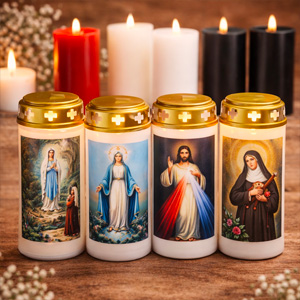
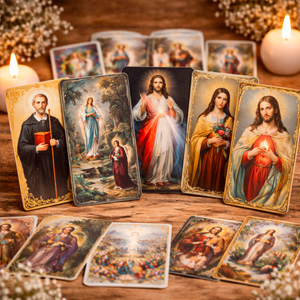
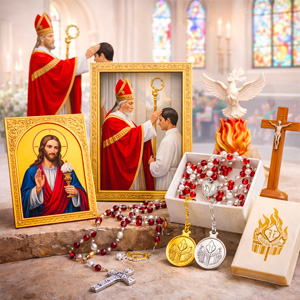
The best-known symbol of this feast is the image of the Merciful Jesus, with two rays streaming from his heart: one pale, the other red. These rays represent water and blood, signs of the sacraments, signs of life given. Beneath this image, a simple prayer: ‘Jesus, I trust in You’. That is all there is to it. Mercy is not a theory; it is a relationship.
But this feast is not limited to receiving. It also calls us to become merciful. As Jesus says in the Gospel: “Be merciful, just as your Father is merciful.” This means forgiving, lifting up, not judging, loving even when it is difficult. True devotion to mercy transforms the heart and enables it to love as God loves.
In a world marked by violence, indifference and division, Mercy Sunday is a prophetic light. It reminds us that love is stronger than sin, that forgiveness is more powerful than hatred, and that every person, whatever their history, can be reborn.
This day is therefore much more than a liturgical feast. It is a personal invitation. An invitation to enter into the heart of Christ, to lay down one’s burdens, to receive peace, and to set out again transformed.
For, ultimately, mercy is the name God gives to his love when he encounters our misery.