
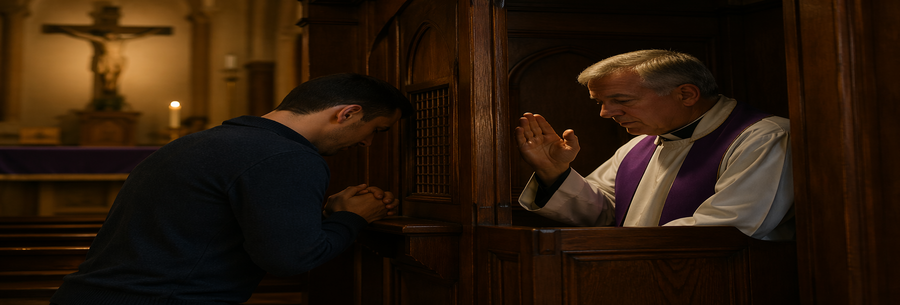
Confession, also known as the sacrament of reconciliation, is an essential practice in the spiritual life of Christians. It enables one to find inner peace, draw closer to God, and set out on a renewed path. However, many people hesitate or do not know how to go about it in practice. Here is a comprehensive guide to understanding why one should go to confession and how to do so sincerely and effectively.
Why go to confession?
Going to confession is not merely a religious obligation; above all, it is a deeply personal act.
Firstly, confession allows us to acknowledge our mistakes. In everyday life, it is easy to downplay our faults or ignore them. Naming them helps us to become aware of our actions and their consequences.
Secondly, it offers genuine inner relief. Expressing what is on one’s mind frees one from the burden of guilt and brings true peace. Many people speak of a feeling of lightness after a sincere confession.
Confession is also an act of trust in God. It shows a desire to change, to improve and to grow spiritually. It is not a judgement, but an encounter with mercy.
Finally, it helps us move forward. By acknowledging our weaknesses, we become more mindful of our behaviour and more committed to living a better life.
Preparing for confession
A good confession always begins with serious preparation. This should not be done in a hurry.
Examination of conscience
This is a fundamental step. It involves taking a moment of silence to reflect on one’s actions, words and thoughts.
You can ask yourself some simple questions:
Have I failed to show love towards others?
Have I lied or hurt someone?
Have I neglected my responsibilities?
Have I acted out of pride, jealousy or anger?
It is important to be honest with yourself, without trying to justify your actions.
Sincere regret
Confession is not merely a list of sins. It requires genuine regret. This means acknowledging that what one has done is wrong and wanting to change.
This regret may be accompanied by an inner prayer, asking for forgiveness and help to improve.
The decision to improve
Even before entering the confessional, it is essential to have the intention not to repeat the offence. This does not mean that one will be perfect, but that one is making a genuine effort to change.
The stages of confession
Once prepared, one can go to a priest to receive the sacrament.
The welcome
It usually begins with the sign of the cross. The priest may say a few words to put you at ease and remind you of God’s presence.
The confession of sins
This is the time to clearly state your faults. You do not need to recount your entire life, but you must be specific and sincere.
It is advisable to:
Speak simply
Avoid beating about the bush
Not deliberately conceal significant faults
The priest is there to listen without judging.
The priest’s advice
After the confession, the priest may offer advice to help you move forward. These words are important as they provide insight and spiritual guidance.
Penance
The priest suggests a specific act to perform, often a prayer or a gesture of reparation. This allows you to perform an act linked to conversion.
Absolution
This is the central moment. The priest says a prayer in the name of God to forgive sins. It is a moment of grace in which the faithful are reconciled.
Thanksgiving
After confession, it is recommended to take a moment to thank God. This may be a prayer or a time of silence.
Tips for making the most of confession
To ensure confession is truly beneficial, it is helpful to follow a few simple tips.
Going to confession regularly helps you stay attuned to your inner life
Do not wait until you have accumulated too many sins
Be simple and natural in your words
Trust in mercy rather than becoming discouraged
It is normal to feel a little fear or embarrassment, but this often disappears after the first few experiences.
Conclusion
Confession is much more than a ritual. It is an encounter, a path of transformation and a source of deep peace. By taking the time to prepare and living each stage with sincerity, it becomes a precious moment of inner renewal.
To go to confession is ultimately to accept growing, picking oneself up and moving forward with confidence.