
The ancient origins of repeated prayer
Long before the rosary took its current form, repeated prayer already existed in Christian tradition. From the earliest centuries, monks and worshippers recited psalms or short prayers repeatedly, often using pebbles or strings to keep count.
This practice responded to a deep desire: to pray constantly, even when one could not read or did not have access to books. Repetition thus became a simple and accessible way to remain focused on God.
The gradual emergence of the rosary
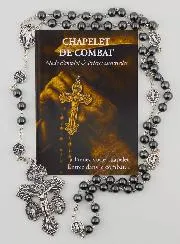
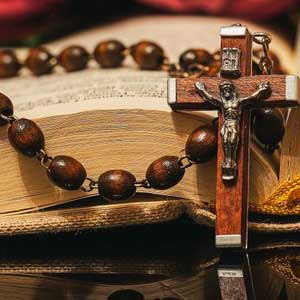
In the Middle Ages, reciting the 150 psalms was the main prayer of monks. For the faithful who could not read, this prayer was gradually replaced by the recitation of 150 Hail Marys. This form of prayer gave rise to what would later be called the rosary. The rosary, as we know it today, took shape gradually. The beads give rhythm to the prayer, while meditation on the mysteries helps us to contemplate the life of Christ through the eyes of the Virgin Mary. Saint Dominic and the spread of the rosary Tradition attributes an important role to Saint Dominic in the spread of the rosary in the 13th century. Faced with the spiritual difficulties of his time, he encouraged the recitation of the rosary as a simple, popular prayer deeply rooted in the Gospel. Thanks to religious orders and confraternities, the rosary spread widely throughout Europe and then throughout the world. It became a family, community and personal prayer, carried by the Christian people.
A spiritual heritage passed down through the generations
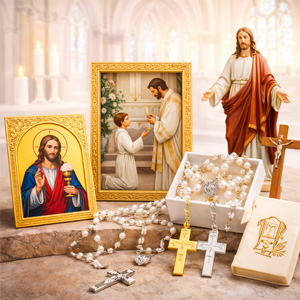
The rosary is not only a prayer, it is a heritage passed down. Given at a baptism or communion or kept in a family, it often bears the traces of those who prayed it before us. It accompanies joys, trials, times of peace and periods of crisis.
Over the centuries, the rosary has survived wars, persecutions and cultural changes without ever losing its place in the spiritual life of believers.
A universal language of prayer
The rosary is prayed in all languages, on all continents. Its simple and repetitive structure makes it a universal prayer, capable of bringing together people from very different cultures around the same core of faith.
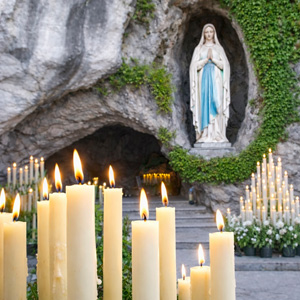
Even today, it is prayed in churches, homes, streets, shrines and even in the inner silence of each individual. It remains a bridge between generations, uniting believers of yesterday and today.
A prayer that is still alive today
Although the rosary is ancient, it does not belong to the past. It continues to touch hearts because it responds to a timeless need: to pray with simplicity, perseverance and confidence. It reminds us that faith is transmitted, lived and nourished over time.
The rosary thus remains a universal spiritual heritage, humble but deeply alive.