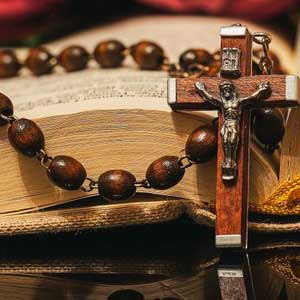
The Bible is much more than just a book: it is a veritable spiritual treasure, considered to be the Word of God by millions of believers around the world. Passed down from generation to generation, translated into hundreds of languages, it is at once a religious text, a historical record, a compendium of wisdom and an inexhaustible source of inspiration. But what exactly is the Bible? How is it structured and why does it occupy such a central place in the Christian faith?
A library of books
The word "Bible" comes from the Greek ta biblia, meaning "the books". In fact, the Bible is not a single work written in one piece, but a veritable library made up of many writings. These texts, written over several centuries, bring together a wide variety of literary genres: historical accounts, laws, poems, prophecies, prayers, parables and even letters.
The Christian Bible is divided into two main parts:
The Old Testament, which tells the story of the people of Israel, their covenant with God, the teachings of the Law and the promises of the prophets.
The New Testament, which presents the life, teachings, death and resurrection of Jesus Christ, as well as the birth of the Church through the apostles.
A text inspired by God
For Christians, the Bible is no ordinary book. It is considered to be a text inspired by God. This means that, even though it was written by human authors in a variety of cultural and historical contexts, it conveys a divine message. Each book of the Bible, each story and each prayer reflects the encounter between God and humanity, and carries a meaning that transcends its time.
Different traditions
The Bible is not identical in all Christian denominations.
The Catholic Bible contains 73 books.
The Protestant Bible has 66, as it does not include certain texts called "deuterocanonical".
The Orthodox Bible may include still other writings according to local traditions.
Despite these differences in canon, the heart of the message remains the same: the revelation of God and the proclamation of salvation in Jesus Christ.
A guide for life
Over the centuries, the Bible has nourished the prayer, meditation and reflection of believers. It offers universal wisdom: the Psalms express the joys and distresses of the human heart, the Proverbs offer advice for everyday life, and the Gospels reveal God's love and mercy manifested in Jesus.
The Bible is not simply to be read as a document of the past. It is seen as a living Word, which continues to speak to every reader today. Many Christians claim that it enlightens their choices, gives them strength in times of trial and guides them in their relationship with God and with others.
A universal influence
The Bible has not only left its mark on spiritual life. It has also profoundly influenced culture, art, literature and society. Numerous pictorial, musical and literary works draw their sources from biblical accounts: from Michelangelo to Bach, from Victor Hugo to Tolkien, biblical inspiration has nourished the collective imagination and continues to do so.
Conclusion
The Bible is therefore a unique work in the world: a collection of books written over time, which tell the story of God and humanity. It is not a fixed book, but a living Word, capable of transforming hearts and giving meaning to life. For believers, opening it means entering into an intimate dialogue with God, discovering his promises and walking in the light of his love.