The scapular is one of the best-known and most symbolically rich devotional objects in the Catholic tradition. Worn on the chest and back, it is at once a spiritual garment, a sign of covenant, and a constant reminder of the Christian's commitment to live under God's gaze, at the school of the Virgin Mary. Of the many scapulars in existence, that of Our Lady of Mount Carmel is the most widespread and the most steeped in history. Here is an in-depth look at the origin of the scapular, its theological significance, its link with Mary, and the right way to wear it.
Origin of the scapular: between history and tradition
The word scapular comes from the Latin scapulae, meaning shoulders. Originally, it was a long piece of cloth worn by monks on their shoulders, falling over the chest and down the back, and was part of their religious habit. It symbolised the yoke of Christ, the gentle and light burden freely accepted in order to follow him in humility and service.
But over the centuries, this monastic garment evolved into a reduced scapular, reserved for lay people wishing to share spiritually in the graces of a particular religious order, without living in a monastery. The oldest and most famous of these scapulars is that of Our Lady of Mount Carmel, also known as the Brown Scapular.
According to Carmelite tradition, the Virgin Mary appeared on 16 July 1251 to Saint Simon Stock, a Superior General of the Carmelite Order, which was in great difficulty at the time. She gave him a scapular and said:
"This is the sign of salvation. Whoever dies clothed in this scapular will not suffer eternal flames."
This is known as the promise of the scapular, which has since left a profound mark on Catholic spirituality.
A profound meaning: more than an object, a commitment
The scapular is not a talisman or a good-luck charm. It has no magical powers. It is a visible sign of an invisible reality: a covenant of love with Mary and with God.
Wearing the scapular means three essential things:
Living in the presence of Mary: Those who wear the scapular are placed under the maternal protection of the Virgin. He agrees to let himself be guided by her towards her Son, in trust and fidelity.
Imitating Mary in his interior life:The scapular calls for humility, purity of heart, faithful prayer, inhabited silence. It invites to a simple life centred on God, like that of the Mother of the Saviour.
Uniting with the spirituality of Carmel: Even without entering a convent, the faithful who wear the scapular enter into spiritual communion with the Carmelite Order. He or she is invited to participate in its mission of prayer, contemplation, and intercession for the world.
It is therefore a discreet and profound path of holiness, which transforms ordinary life into a continuous offering to God, in peace and fidelity.
The promise of salvation: what does it mean?
The famous promise made to Saint Simon Stock, that whoever dies wearing the scapular will not know the flames of hell, has been interpreted with nuance by the Church.
It does not mean that the scapular automatically guarantees salvation, without conversion or a Christian life. It means that the Virgin Mary intercedes in a special way for those who wear this sign with faith and live according to the Gospel. She watches over them at the hour of their death, supports them in their passage, and does not abandon them in their final struggle.
It is a promise of maternal assistance, mercy, and loving presence at the most decisive moment of life: the encounter with God.
How to receive and wear the scapular?
1. Blessing and imposition
The scapular must be blessed and imposed by a priest or deacon. It is not enough to buy it and put it on yourself. This blessing is a liturgical act, often accompanied by a prayer committing the faithful to live under Mary's protection.
The imposition is done once in a lifetime. Thereafter, if the scapular is damaged or lost, it may be replaced by another, without any further blessing necessary.
2. Material form
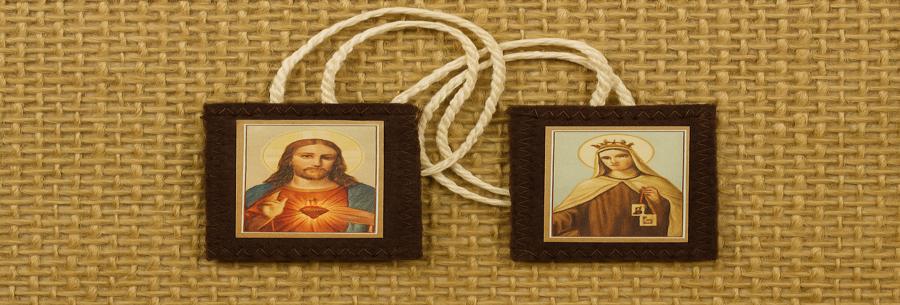
The scapular consists of two small pieces of brown cloth, often decorated with a religious image (Mary, the Sacred Heart, a cross...), joined by two cords to be worn on the chest and back. It can be worn discreetly under clothing.
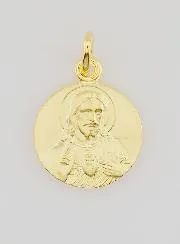
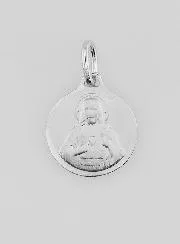
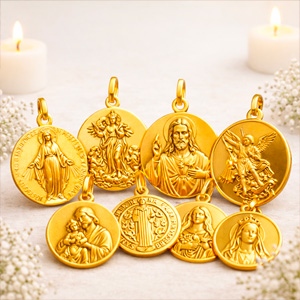
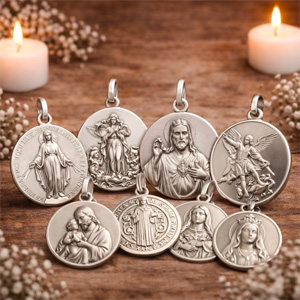
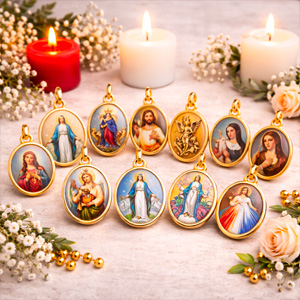
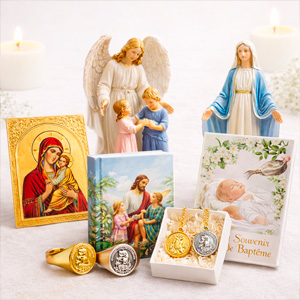
It is also possible, with Church authorisation, to replace it with a scapular medal, representing the Sacred Heart on one side and the Virgin Mary on the other.
3. Associated spiritual life
Wearing the scapular is accompanied by a personal commitment to:
Practise daily prayer, especially Marian prayer such as the rosary.
Participate in the sacraments, especially the Eucharist and reconciliation.
Lead a consistent Christian life, in charity, chastity (according to one's state of life), and service.
The most committed may also join a scapular confraternity or Carmelite community as a lay person.
The Sabbatine privilege: a traditional complement
According to a later tradition, cautiously approved by the Church, the Virgin Mary is said to have promised faithful wearers of the scapular that she would deliver them from purgatory on the Saturday following their death, provided they led a life of prayer, chastity and devotion to her.
This Sabbatine privilege, although not dogmatic, once again underlines Mary's maternal tenderness and the importance of a sincere commitment to the faith.
Conclusion: a humble path to holiness
The scapular is a spiritual treasure offered by the Virgin Mary to her children. It is simple, humble, yet profoundly powerful. Through it, Mary takes us by the hand to lead us to her Son, and reminds us every day that we are never alone.
This little piece of cloth can become a living link between earth and heaven, a source of peace in trials, a light in darkness, and a cloak of grace for the one who wears it with faith.
Our Lady of Mount Carmel, Mother of the Scapular,
protect us, teach us prayer,
and lead us on the path to eternal life.
Amen.