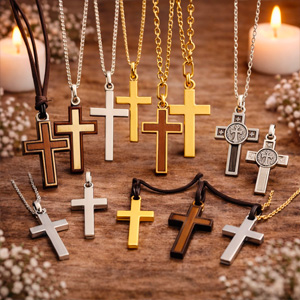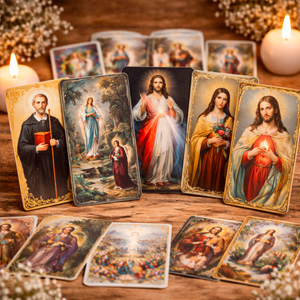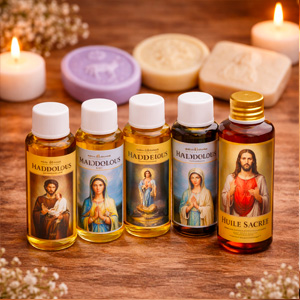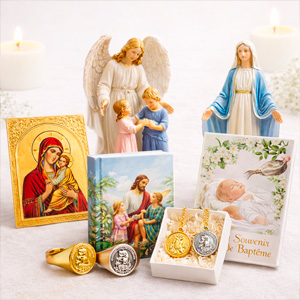
Among the oldest and most meaningful objects of piety in the Catholic tradition, the scapular occupies a special place. At once a symbol of Marian belonging, a sign of spiritual commitment and a means of sanctifying everyday life, the scapular is much more than a simple religious object: it is a call to live in communion with God through the Virgin Mary.
The word "scapular" comes from the Latin scapula, meaning "shoulder". Originally, it was a long cloth worn by monks over the religious habit, falling over the chest and back, symbolising the yoke of Christ, i.e. the gentle and light burden of his service.
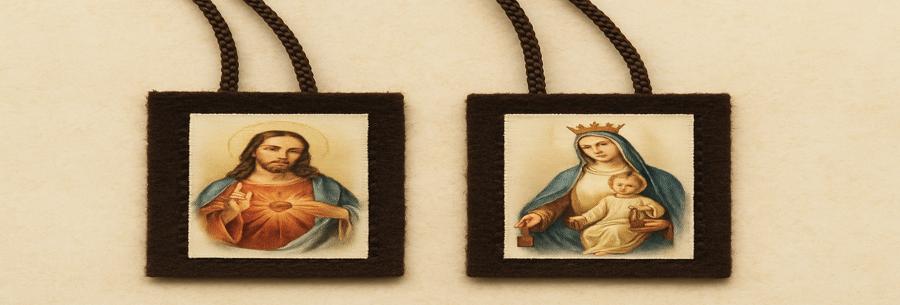
Over time, a reduced version intended for lay people appeared: two small pieces of blessed cloth, one for the back, one for the chest, linked by two cords. The best known is the brown scapular of Our Lady of Mount Carmel.
The origin of the scapular of Mount Carmel
The scapular of Mount Carmel originated in the 13th century. It is linked to the Order of Carmel, a contemplative religious order rooted on Mount Carmel in the Holy Land, then settled in Europe.
According to tradition, in 1251 the Virgin Mary appeared to Saint Simon Stock, Superior General of the Carmelites, and gave him the brown scapular with these words:
"This is the sign of salvation: whoever dies wearing this scapular will be saved."
This message had a profound effect on Carmelite and Marian spirituality. The scapular became a sign of protection, maternal intercession and covenant between the Virgin Mary and those consecrated to her.
A spiritual garment
The scapular is not an amulet or a good-luck charm. It is an outward sign of an inner commitment, rather like a wedding ring for spouses. It manifests a spiritual bond with the Virgin Mary, a desire to follow Christ in her own way: in humility, prayer, purity and fidelity.
Whoever wears the scapular commits to living a faithful Christian life, marked by:
Daily prayer, especially the rosary or the Office of Mary
Chastity according to one's state of life
A devotion to the Virgin Mary, drawing inspiration from her example and having recourse to her intercession
The promises of the scapular
The Carmelite tradition associates with the scapular two great promises, granted by the Virgin Mary:
Motherly protection in life and at the hour of death
The promise of salvation for those who die in a state of grace and in faith, faithful to their commitment
Another tradition linked to the scapular is the "Sabbatine privilege", according to which the Virgin Mary would quickly free from purgatory the souls of those consecrated to her by the scapular. This promise is based on faith in God's mercy and Mary's powerful intercession.
The different types of scapular
There are several scapulars in the Catholic Church, each associated with a particular spirituality:
The brown scapular: linked to Our Lady of Mount Carmel (the most common)
The green scapular: worn for healing and conversion
The red scapular: associated with Christ's Passion and reparation for sins
Black scapular: in honour of Mary's Seven Sorrows
Blue scapular: in honour of the Immaculate Conception
All are recognised as sacramental by the Church, i.e. blessed signs that prepare hearts to receive grace.
Conditions for wearing it
In order for the scapular to be worn as a sign of the covenant, it must be:
Benedit by a priest (ideally with the formula proper to the imposition of the scapular)
Imposed during a simple rite that introduces one to the spirituality of Carmel (this is only required once in a lifetime)
Worn with faith, not as a magical object, but as a call to live an authentic Christian life
After the imposition, if the scapular is damaged or lost, it can be replaced without a new blessing, provided the person has already been invested.
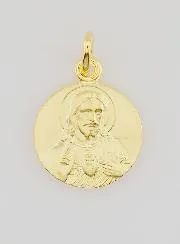
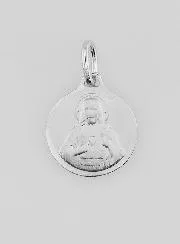
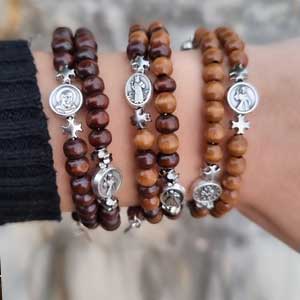
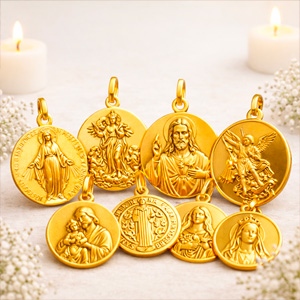
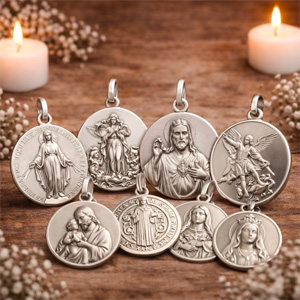
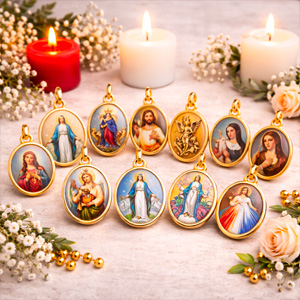
In some cases, it is also possible to wear a medal known as a "scapular medal", bearing the effigy of the Sacred Heart on one side and Mary on the other, as an equivalent to the traditional cloth.
A spirituality for today
The scapular is a simple yet profound tool for reminding us of God's presence in our daily lives. It invites us to live as sons of Mary, as children of light. It links us to a thousand-year-old tradition, but above all, it invites us to enter into a living relationship with Jesus, through the example and tenderness of his Mother.
Wearing the scapular is like placing yourself under Mary's mantle every day, to entrust your life, your struggles and your hopes to her. It's a concrete way of saying, "Mother, lead me to your Son."