In the Catholic faith, sacramentals play a discreet but essential role. They are part of the daily spiritual life of millions of believers, often without their deeper meaning being fully appreciated. Unlike the sacraments, which are at the heart of Christian life, sacramentals have a complementary function: they extend divine grace into the little things of life, into objects, gestures, places and times.
Definition of sacramental
A sacramental is a sacred sign instituted by the Church to prepare the faithful to receive the fruits of the sacraments and to sanctify the various situations of life. The Catechism of the Catholic Church (no. 1667) describes them as follows:
"They are sacred signs by which, according to a certain imitation of the sacraments, especially spiritual effects are signified and obtained through the prayer of the Church. "
In other words, they are blessed acts or objects, accompanied by liturgical prayers, which dispose the heart of the faithful to receive the graces of God, without, however, conferring sanctifying grace in the manner of the sacraments.
Differences between sacraments and sacramentals
The sacraments (such as baptism, confirmation, the Eucharist...) were instituted by Christ himself and transmit grace in a certain and direct way. There are seven of them and they are essential to the Christian life.
Sacramentals, on the other hand, are instituted by the Church to meet more varied needs in the daily spiritual life. They do not act ex opere operato (i.e. by the sheer force of the rite performed), but their efficacy depends on the faith and inner disposition of the faithful.
They are therefore more flexible, more numerous, and fit into every moment of life: morning prayer, blessing a meal, protection on a journey, comfort in illness, etc.
The different forms of sacramentals
Sacramentals come in several categories. Here are some of the best known:
1. Blessings
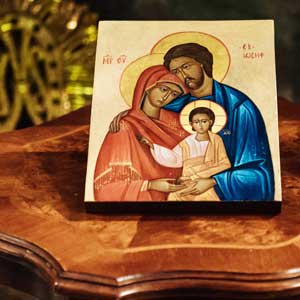
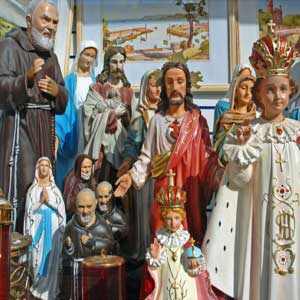
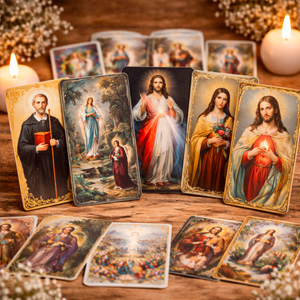
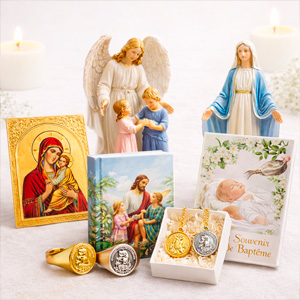
This is the most common form of sacramental. They may involve people (the sick, children, couples, etc.), objects (crucifixes, holy images, statues, religious books, etc.) or places (house, church, field, car, etc.). They call down God's presence and protection on what is blessed.
2. Blessed objects
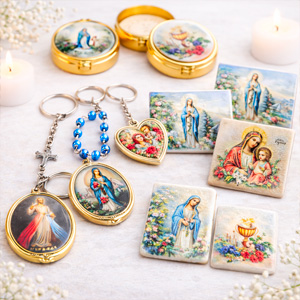
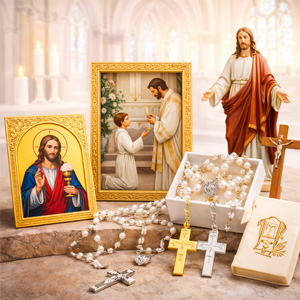
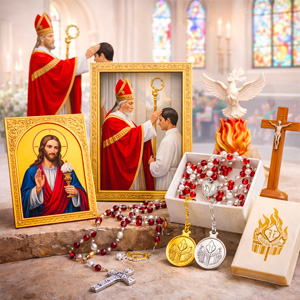
Once blessed, certain objects become sacramentals. Their use helps the faithful to pray, to turn towards God, to remember the presence of Christ or the saints. Among them:
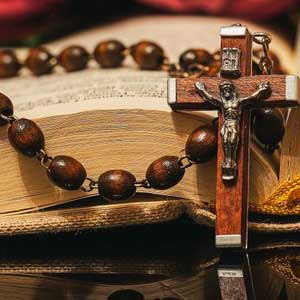
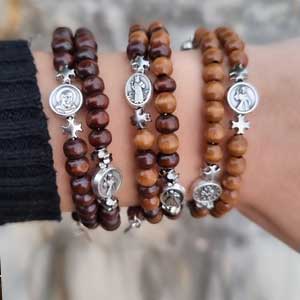
The rosary: to meditate on the mysteries of the life of Christ and Mary.
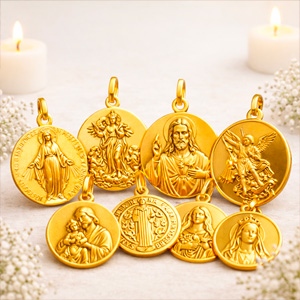
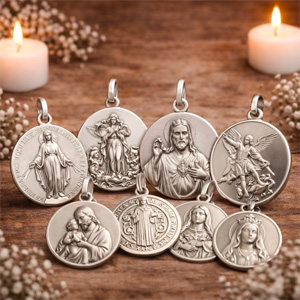
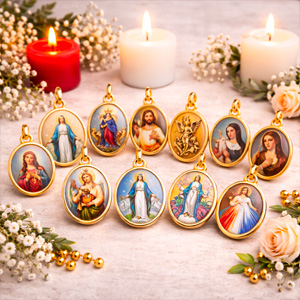
The miraculous medal: to recall the maternal protection of the Virgin Mary.
The scapular: a sign of union with the Immaculate Heart of Mary and a commitment to live according to the Gospel.
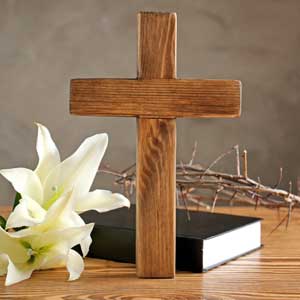
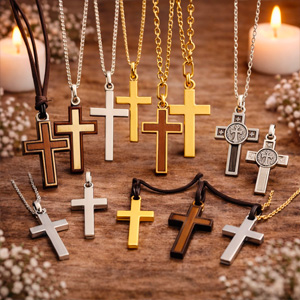
The cross or crucifix: to remember Christ's sacrifice and carry one's faith with strength.
Holy water: used to sign oneself, it recalls baptism and drives away evil.
3. Exorcisms and prayers of deliverance
In particular circumstances, the Church uses specific prayers, such as exorcisms, which are also sacramentals. There is nothing magical about them, but they rely on the authority of the Church and the faith of the faithful to ask God to free a person from the influence of evil.
4. Simple rites
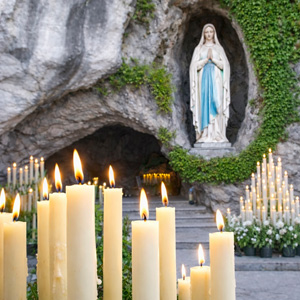
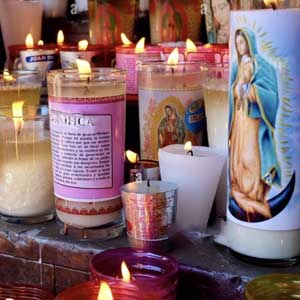
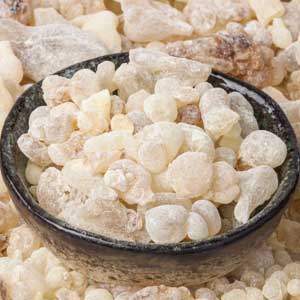
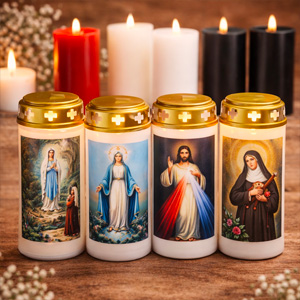
Simple gestures, such as tracing the sign of the cross, signing oneself with holy water, burning incense, lighting a candle, reciting a prayer from the heart, can also be sacramentals. They are ways of sanctifying everyday life, of bringing God into ordinary gestures.
Their usefulness in the Christian life
Sacramentals have a pedagogical and spiritual role:
They nourish faith by making the supernatural visible.
They remind us of God's presence in every aspect of life.
They strengthen the prayer life and the bond with the saints, the Virgin Mary, and the Church.
They protect spiritually against temptations and the attacks of evil.
They sanctify the material world, showing that all reality can be offered to God.
They must never be used superstitiously or mechanically. Their effectiveness derives from the prayer of the Church, but above all from the living faith of the person who receives or uses them.
An ancient and still living practice
The use of sacramentals dates back to the first centuries of the Church. Christians have always sought to sanctify their homes, their meals, their dead, their work tools... Today, throughout the world, they are still used with fervour: solemn blessings, objects carried on one's person, family rituals... They bear witness to an incarnate, simple and profound faith.