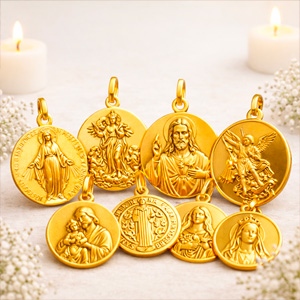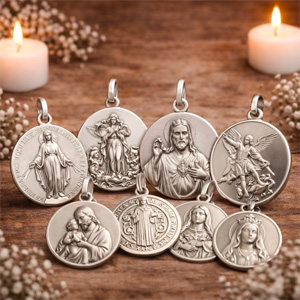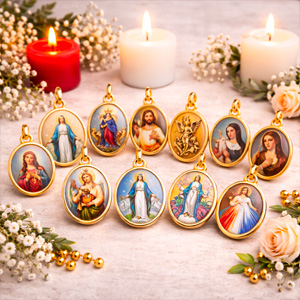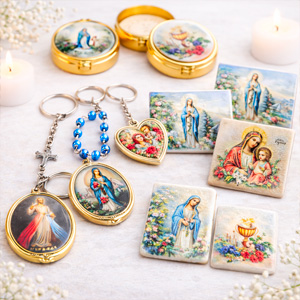
For several centuries, the month of May has been dedicated to the Virgin Mary in Catholic tradition. But why this particular month? Where does this Marian devotion so strongly linked to this time of year come from? Over the centuries, spiritual practices, cultural influences and the symbolism of nature have shaped this beautiful springtime tradition dedicated to the Mother of God.
A tradition with ancient roots
Devotion to Mary dates back to the origins of Christianity. Very early on, Christians honoured Mary as the Mother of Christ, the woman blessed above all others. While the Church celebrates several Marian feasts throughout the year (the Annunciation in March, the Assumption in August, the Immaculate Conception in December...), the link between Mary and the month of May was born later, from the end of the Middle Ages.
In ancient times, the month of May was already associated with femininity and fertility. Among the Romans, May was the month of the goddess Flora, goddess of flowers and spring. When Christianity spread to territories of Greco-Roman culture, many traditions were "Christianised": thus, the symbols of life, beauty and springtime renewal were associated with Mary, whom the Church also calls the "Queen of Flowers" or the "Mystic Rose".
The development of the tradition over the centuries
It was from the 13th century onwards that certain practices linked to Mary appeared in May, particularly among monks and students. But it was in the 16th century that this custom took a more structured turn, particularly in the Jesuit schools of Europe, which began to organise special prayers in honour of the Virgin during this month. The practice gradually spread, encouraged by the Church and religious communities.
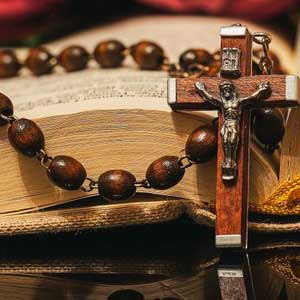
In the 18th century, Marian devotion to the month of May was officially recognised and promoted by many popes. Pius VII, at the beginning of the 19th century, blessed this tradition and encouraged the recitation of the Rosary, the litanies of Loreto, processions and altars decorated with flowers in honour of the Virgin throughout the month. Pius IX and Leo XIII continued this momentum, seeing in Mary a figure of peace, unity and consolation for the faithful, particularly in times of crisis.
Mary and spring: a natural link
In the northern hemisphere, the month of May marks the return of life after winter. The trees bud, the fields are covered in flowers, the sunlight intensifies and the days grow longer. It's a month of beauty, renewal and fertility.
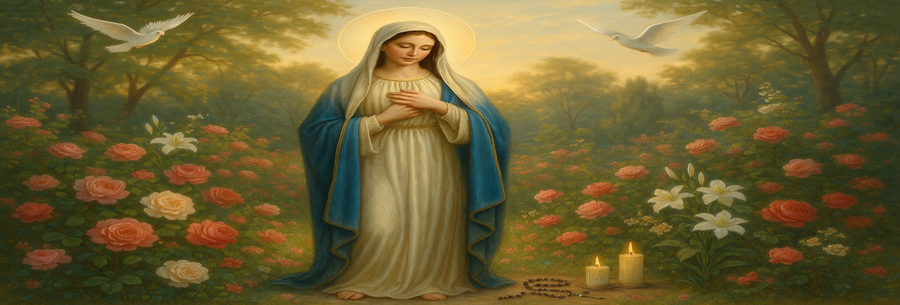
Mary, too, is associated with life, purity and hope. Like nature reborn, she is a source of joy and sweetness. She is the "flower of the field and the lily of the valley", as the Song of Songs puts it. By dedicating this month to Mary, the faithful celebrate the beauty of Creation and thank her for her maternal and calming presence.
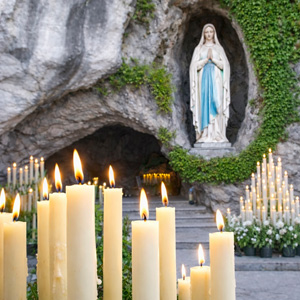
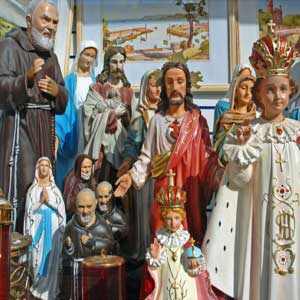
Flowered altars, crowned statues, Marian gardens, torch-lit processions, Marian novenas, meditated rosaries... are all simple and profound gestures to honour the one whom the faithful recognise as their spiritual mother.
A month of offerings and prayer
During the month of May, many families and parishes set up specific devotions: recitation of the rosary each evening, community prayers, Marian meditations or small sacrifices offered to the Virgin.
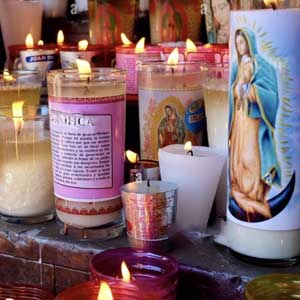
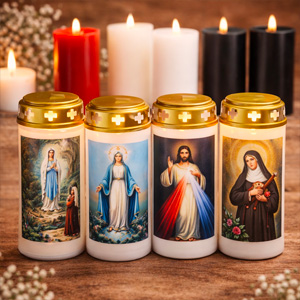
Children, in particular, are invited to make gestures of love for Mary: picking flowers, saying a prayer, learning a Marian song, or placing a candle. These small gestures have great symbolic value: they show that Mary is alive in the hearts of believers.
In some popular traditions, a "crown" is also offered to Mary: a daily prayer, an act of charity, a particular effort in the life of faith... Everything becomes an offering to honour her who said "yes" to God with trust.
An invitation to live at the school of Mary
Consecrating the month of May to Mary is not just about offering her flowers or prayers. It also means wanting to follow in her footsteps, to live at her school. Mary is a model of faith, silence, service and humility. She listens, she intercedes, she consoles. By praying to her, we learn to love Jesus more deeply. We also learn to love the Church, because Mary is the mother of Christ and the mother of believers.
The month of May is therefore a privileged time to rediscover Mary's central role in our spiritual lives. She accompanies us in our struggles, protects us in our distresses, guides us on the path to holiness. Her maternal presence reassures us, pacifies us and gives us direction.
Conclusion
It's no accident that May has become the month of Mary. It is the fruit of a long spiritual tradition, rooted in the beauty of spring, in the simple gestures of believers, and in the filial love that Christians have for the Mother of Jesus. Each year, this Marian month is an invitation to turn to her with confidence, to entrust her with our joys as well as our sorrows, and to allow ourselves to be guided by her gentle and luminous heart towards her Son, the risen Christ.
Remember, O most sweet Virgin Mary, that never has it been heard that any of those who have had recourse to you have been abandoned...