A light in the night of humanity
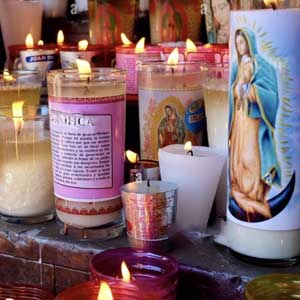
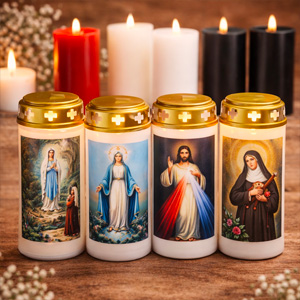
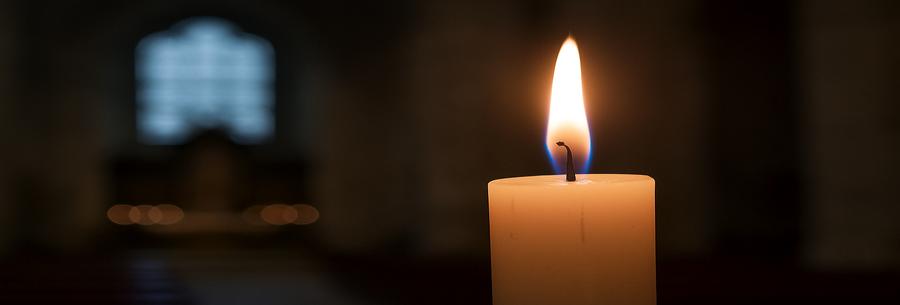
Lighting a candle may seem trivial. A small fire in the silence of a church, a trembling flame in the half-light of an oratory, a night-light in front of a statue of Mary or Jesus. And yet this gesture carries immense spiritual weight. It is one of the most universal and timeless gestures of the Christian faith.
From the earliest centuries, Christians have used light to signify God's presence. The candle, humble and fragile, has become the discreet symbol of a faith that watches, prays and hopes.
A tradition rooted in the Bible
The Bible is full of images of light:
"Your word is a lamp to my feet, a light to my path." (Psalm 118:105)
"The people who walked in darkness have seen a great light arise." (Isaiah 9:1)
"I am the light of the world, says Jesus. Whoever follows me will not walk in darkness." (John 8:12)
In the Old Testament, light is already associated with the presence of God in the Temple, in the luminous cloud in the desert, in the prophecies. In the New Testament, Jesus Himself is the light that has come into the world. In the Christian faith, candles are a reminder that God is light, that He illuminates the path, warms the heart and casts out fear.
A gesture of offering and prayer
Lighting a candle is not just symbolic. It is a concrete act of faith. The person who lights it makes a gesture:
Of offering: "I give you this light, Lord, as a sign of my prayer."
Of trust: "I entrust to you this intention, this name, this suffering."
Of presence: "Even if I leave, my prayer remains there, alive in this flame."
Of silence: "I don't know what to say, so I light this candle for you."
It's an embodied gesture, often emotional, sometimes with tears in my eyes, always inhabited by an intention: a request, thanksgiving, forgiveness, intercession.
A light for the living and for the dead
Christians light candles for the living, during prayers of petition, vigils, celebrations. But also for the dead, in cemeteries, at All Saints' Day and at funerals. The light then becomes a sign of hope, a silent message: "You are not forgotten. I am praying for you. The light of Christ accompanies you."
This flame lit for a deceased person also says: "My faith does not die with your death. On the contrary, I continue to love you in prayer."
A flame that speaks to everyone
You don't need to be a theologian to light a candle. Young and old, poor and rich, strong or fragile believers: everyone understands this gesture. It's a universal language, a bridge between the visible and the invisible, a gentle offering that ascends to God.
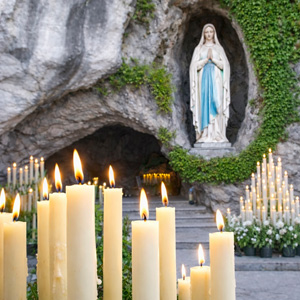
In shrines, the thousands of lit candles form a sea of prayer, a silent echo of God's people. Each has its own weight of love, pain, gratitude and intercession.
A light that changes us
It's not just a gesture turned towards God. By lighting a candle, I transform myself. I stop, I meditate, I humble myself. I open my heart. I accept that I am small before God, like this fragile flame that trembles and yet enlightens.
The candle then becomes an incarnate prayer, an act of hope, a simple but profound response to the mystery of God.
Lighting a candle is...
To say "I believe".
To say "I wait for you".
To say "I love you".
To say "I entrust you".
To say "I no longer have the words".