The month of May is now recognised throughout the Catholic Church as the "month of Mary", a special time when the faithful turn to the Virgin with particular affection.
This devotion was not born of an official decree, but of a slow spiritual and liturgical development, rooted in history, the symbolism of spring, and a deep impulse of the Christian heart towards the Mother of God.
Ancient times: a month dedicated to female divinities
Well before the Christian era, the month of May was already associated with femininity, maternity and fertility. In ancient Rome, the month of May was dedicated to Maia, the goddess of renewal and fertility. Rites were celebrated to honour the forces of nature and reborn life. With the arrival of spring, flowers, fields and songs accompanied these celebrations.
When Christianity spread throughout the Roman world, it often "transfigured" local traditions to give them new meaning. Thus, this month that once exalted nature and fertility gradually became a month turned towards Mary, the most beautiful of women, Mother of God and figure par excellence of spiritual fecundity.
From the Middle Ages to the Renaissance: the beginnings of a springtime Marian devotion
From the Middle Ages onwards, devotion to Mary gained momentum in the Church. She was honoured with hymns, processions, prayers and artistic works. Poets, mystics and theologians sang of her purity, gentleness and role as mediator.
At this time, there was not yet a month specifically dedicated to the Virgin, but May was often chosen for flower-filled celebrations in her honour. In monasteries and villages, altars were raised, wreaths were woven and Marian songs were sung to honour "the Rose without thorns".
In the 15th century, we find increasingly frequent references to the Virgin in prayers linked to nature and springtime beauty. The floral and luminous symbolism of the month of May was naturally associated with Mary, the "all beautiful one" whose heart was open to divine light.
The 18th century: the official birth of the "Month of Mary"
It was in 18th-century Italy that the structured devotion to the month of Mary really came into being. Jesuit Father Alfonso Muzzarelli (1749-1813) codified the practice in a work entitled Il Mese di Maria, published in 1785. This booklet proposed daily meditations, prayers and spiritual exercises for each day of the month of May, dedicated to Mary.
The idea quickly spread to Jesuit congregations, then throughout Italy, before crossing borders. The month of Mary became a popular and fervent spiritual practice, supported by bishops, parishes, and families.
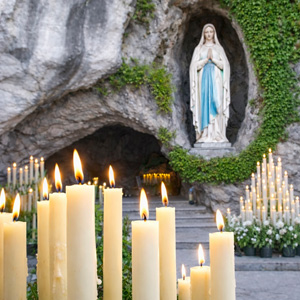
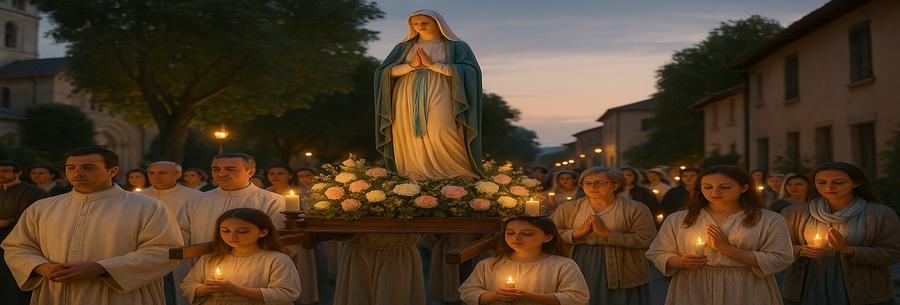
It was also during this century that the custom of "crowning" a statue of the Virgin in May with flowers developed, a gesture that has become emblematic in many parts of the world.
The 19th century: spread throughout the Church
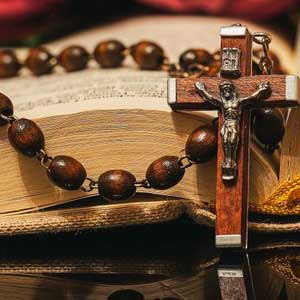
Under the impetus of Popes Pius VII, Pius IX, Leo XIII and Pius XII, the month of Mary became firmly established in Catholic piety. Indulgences were granted to the faithful who took part in the prayers of the month of May. Pope Leo XIII, in particular, encouraged family recitation of the rosary throughout the month.
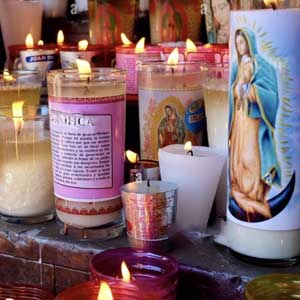
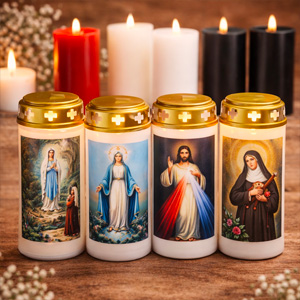
In the countryside as well as in the towns, devotion took many forms: public recitation of the rosary, Marian songs, vigils, flower-decked processions, domestic altars adorned with flowers and candles.
This popular piety affected all social classes, and became a real pillar of Christian spirituality in the spring.
The month of Mary today
Still today, in parishes, families, schools and religious communities, the month of May remains a high point in Christian life. It provides an opportunity to live the faith simply and wholeheartedly, and to rediscover Mary not as a distant figure, but as a close and attentive mother.
In a world sometimes marked by dispersion, noise and indifference, the month of Mary offers a space for gentleness, silence and prayer. It is a time to refocus on what is essential, to grow in faith and trust in God, at the school of Mary.