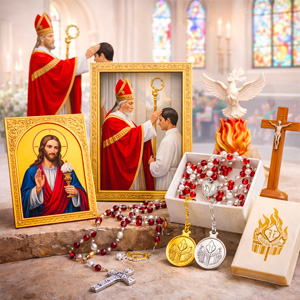

Lent is an essential liturgical period in the Christian tradition, marking a time of spiritual preparation before the celebration of Easter. This period of forty days symbolises the forty days Jesus Christ spent in the desert in prayer and fasting, facing the devil's temptations before beginning his public ministry. For Christians, Lent is a time for reflection, conversion and spiritual renewal.
The origins and meaning of Lent
The origins of Lent go back to the first centuries of Christianity. As early as the fourth century, the Church officially instituted this period of forty days as an echo of the many biblical passages in which the number 40 has an important spiritual significance: the forty days of the flood, the forty years of wandering by the people of Israel in the desert, or the forty days spent by Moses and Elijah in the presence of God.
The word "Lent" comes from the Latin "Quadragesima", meaning "fortieth" and referring to this forty-day duration. It begins on Ash Wednesday and ends on Holy Saturday, the eve of Easter, although the Holy Week preceding Easter is considered to be the culmination of Lent.
The practices of Lent
During Lent, Christians are called upon to observe three fundamental pillars:
Fasting and abstinence: Fasting involves reducing one's food intake, particularly on Ash Wednesday and Good Friday, days on which only one main meal and two snacks are allowed. Abstinence, on the other hand, involves a ban on eating meat on the Fridays of Lent.
Prayer: Lent is a time of intensified prayer, both individual and communal. The faithful are invited to take part in religious services, read the Scriptures and meditate on the Passion of Christ.
Sharing and charity: Lent is also a time of solidarity. Almsgiving, i.e. giving to those most in need, is encouraged. Many churches organise charitable actions, collections of donations and initiatives to support the poorest.
The importance of Lent for Christians
Lent is not simply a period of deprivation, but a time of inner transformation. It allows the faithful to refocus on their faith, examine their conscience and make resolutions to draw closer to God. It is an invitation to abandon harmful habits and cultivate virtues such as patience, humility and forgiveness.
From a community perspective, Lent unites Christians in a common spiritual journey. Religious services, the Stations of the Cross and collective confessions strengthen the bond between believers and remind us that faith is lived not only individually, but also in a community of sharing.
Holy Week and the Resurrection
The high point of Lent is Holy Week, which begins with Palm Sunday and continues with Maundy Thursday (celebration of the Lord's Supper), Good Friday (commemoration of Christ's Passion and death), and finally the Easter Vigil, which culminates in the celebration of Christ's Resurrection.
Christian Easter symbolises the victory of life over death, of light over darkness. This is why Lent is such an important period: it prepares Christians to welcome the joy of Easter with a renewed heart.
In conclusion, Lent is a time of purification, prayer and sharing, enabling believers to draw closer to God and renew their spiritual commitment. Through its practices and profound meaning, it is a key stage in the Christian liturgical year, in the run-up to Christianity's greatest feast: the Resurrection of Christ.