Find out how you can help your parish prepare for and celebrate Christmas: decorating the church, the nativity scene, the choir, volunteering, community outreach, Christmas Mass and welcoming the congregation.
How can you get involved and help your parish prepare for and celebrate Christmas?
As Christmas approaches, churches are preparing to welcome worshippers who have come to celebrate the birth of Jesus Christ. Nativity scenes are being set up, Christmas trees are being placed near the chancel, choirs are rehearsing traditional carols and parish teams are organising the various Nativity celebrations.
Behind these preparations are often unsung volunteers, committed parishioners and people who generously give of their time to ensure that everyone can enjoy a wonderful Christmas.
Taking part in the Christmas preparations in your parish is a practical way to live out your faith, serve others and contribute to the joy of the Christian community.
You don’t need any special skills or to set aside several hours each week to help out. Everyone can get involved according to their age, availability and abilities.
Decorating the church, setting up the nativity scene, joining the choir, welcoming families, helping those who are isolated, or simply taking part in the celebrations are all ways of bringing the parish to life.
But how can you get involved in practical terms? What services can you offer? How can families get involved? And why does this involvement hold a special spiritual significance during Advent?
Let’s find out how everyone can help prepare for Christmas in their parish and make this festive season a true time of faith, fellowship and sharing.
1. Why is it important to take part in parish life at Christmas?
The parish is much more than just a building where Christians gather to attend Mass.
It is a community of believers gathered around Christ.
Throughout the year, it supports the major milestones of Christian life: baptisms, first communions, confirmations, weddings, funerals and Sunday services.
During Advent and Christmas, this community takes on a particularly visible role.
Christmas is a festival that brings the whole Christian community together
The birth of Jesus Christ is one of the fundamental events of the Christian faith.
At Christmas, the faithful celebrate the mystery of the Incarnation: the Son of God became man to come and meet humanity.
Christmas Masses often bring together people who regularly take part in parish life, as well as families who attend church more occasionally.
Some people return to their home villages for the festive season.
Others step through the church doors after a long absence.
The parish must be able to welcome everyone with kindness.
A celebration that requires careful organisation
Christmas celebrations require a great deal of preparation.
Mass timetables must be organised, readings prepared, hymns rehearsed, the church cleaned and decorated, the nativity scene set up, and arrangements made to welcome the congregation.
In small parishes, these tasks sometimes fall to a limited number of volunteers.
Any extra help can therefore be invaluable.
Living out one’s faith through service
In the Gospel, Jesus teaches the importance of service and love for one’s neighbour.
Taking part in parish life allows us to put this teaching into practice.
Giving your time to prepare for a service, welcoming someone or helping a family in need becomes a tangible way of living out the spirit of Christmas.
Parish involvement is not just a matter of organisation.
It can become a genuine spiritual journey.
2. Helping to clean and prepare the church before Christmas
One of the first ways to get involved is to offer to help with the practical preparations for the church.
As Christmas approaches, many parishes organise a day of cleaning or preparation.
These tasks are essential for welcoming the congregation into a clean, pleasant and contemplative space.
Taking part in the big Christmas clean-up
Volunteers can help dust the pews, clean the floors, look after the reception areas or tidy up the various parts of the church.
Some tasks take very little time and can be carried out as a team.
In older churches, however, it is important to follow the parish leader’s instructions, particularly when it comes to caring for fragile items or historic furnishings.
Preparing the spaces for services
Christmas Masses sometimes attract a larger congregation than usual services.
It may be necessary to rearrange certain areas, prepare hymn booklets or ensure that the entrances remain accessible.
Volunteers can also help prepare areas designated for children and families.
A discreet but essential service
Cleaning and preparing the church are sometimes tasks that go largely unnoticed.
Yet they play a direct part in ensuring a warm welcome.
They enable the congregation to experience the service in the best possible conditions.
These acts remind us that Christian service does not necessarily seek recognition.
Its value lies in the love with which it is carried out.
3. Helping to decorate the church for Christmas
Decorating the church is one of the most enjoyable parts of the preparations.
It helps to create a festive atmosphere whilst highlighting the religious significance of Christmas.
Putting up Christmas trees
In some parishes, one or more Christmas trees are put up near the chancel or in other suitable areas.
Volunteers can help to set them up and decorate them.
The lights symbolically recall the coming of Christ, the light of the world.
It is important to ensure that the decorations respect the sacred nature of the church and to follow the instructions of the parish priest or the liturgical team.
Preparing floral arrangements
Flowers play an important role in Christmas decorations.
During Advent, simplicity is generally favoured in the liturgy.
At Christmas, floral arrangements can more fully express the joy of the Nativity.
Those who love flowers may offer their help to the team responsible for liturgical floral arrangements.
Setting up candles and lights
Candles symbolise the light brought into the world by Jesus Christ.
They also help to create an atmosphere of contemplation.
However, they must be set up in accordance with safety regulations, particularly when placed near plant decorations.
Observing the liturgical seasons
It is important to distinguish between the season of Advent and that of Christmas.
Advent is a time of preparation and anticipation.
Fully festive decorations may therefore be reserved for the immediate run-up to Christmas, in accordance with parish customs.
This progression helps to better understand the meaning of the liturgical calendar.
4. Helping to set up the Christmas nativity scene in the church
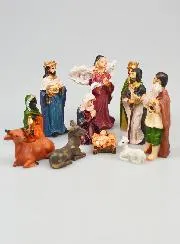
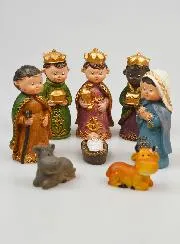
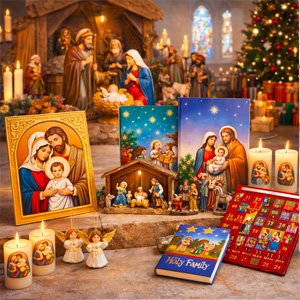
The nativity scene is one of the most important symbols of the Christmas celebrations.
It represents the birth of Jesus in Bethlehem and invites the faithful to contemplate the mystery of the Incarnation.
Setting it up can sometimes take several hours’ work.
Preparing the Nativity scene
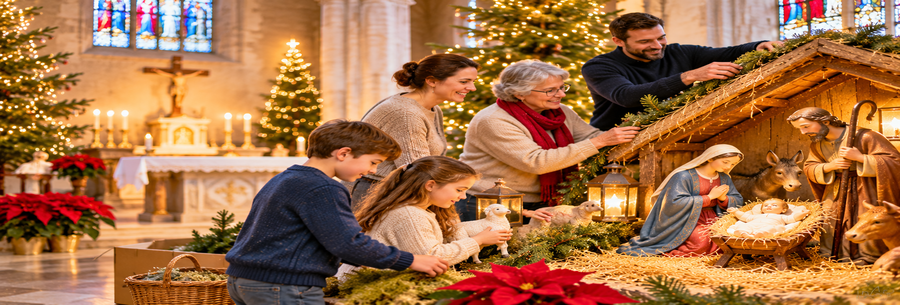
Volunteers can help set up the stable, the figures and the scenery.
Depending on local traditions, the nativity scene can be simple or particularly elaborate.
In some regions, particularly in Provence, it includes numerous ‘santons’ representing the villagers.
Placing the biblical figures
The Virgin Mary, Saint Joseph, the shepherds and the angels play a central role.
The Baby Jesus may be placed in the manger during the Christmas celebrations.
The Three Wise Men are often placed near the nativity scene to mark Epiphany.
Involving the children
Setting up the nativity scene can be a wonderful activity for children attending catechism classes.
Under adult supervision, they can arrange certain figures or help create the scenery.
This activity provides an opportunity to explain the biblical story of the Nativity to them.
A tradition that brings generations together
In many parishes, nativity scenes are set up by volunteers who have been familiar with local traditions for several decades.
Involving new people helps to pass on this expertise.
Setting up the nativity scene thus becomes an opportunity for different generations to come together.
5. Join the parish choir for Christmas carols
Music plays a vital role in Christian celebrations.
Christmas carols express the joy of the Saviour’s birth.
They accompany prayer and enable the whole congregation to take part in the liturgy.
Taking part in Advent rehearsals
Many parish choirs organise special rehearsals in the run-up to Christmas.
Anyone who enjoys singing is welcome to join in.
It is not always necessary to be able to read music.
Some choirs are happy to welcome beginners.
Preparing traditional carols
Among the carols frequently associated with Christmas are ‘Il est né le divin Enfant’, ‘Les anges dans nos campagnes’ and ‘Douce nuit, sainte nuit’.
The choice of music depends on the parish and the celebrations.
Liturgical hymns must be suited to the different parts of the Mass.
Taking part as a musician
People who play an instrument can also offer their help.
The organ holds a special place in the Catholic liturgical tradition.
Depending on local circumstances and customs, other instruments may accompany the singing.
Music as a form of prayer
Singing in church is not merely an artistic activity.
In the liturgy, singing becomes an expression of faith.
It enables the congregation to praise God and celebrate the birth of Christ together.
6. Helping to prepare for Christmas Masses
Christmas celebrations require careful liturgical organisation.
The Midnight Mass, often called the Midnight Service, holds a special place in Christian traditions.
But parishes may also offer a Mass on Christmas Eve, a dawn Mass or a Mass on Christmas Day.
Offer to help with the readings
Those accustomed to proclaiming the Word of God can make themselves available for the readings.
This service requires serious preparation.
It is not simply a matter of reading a text, but of proclaiming the Word of God before the congregation.
Taking part in altar service
Children and young people who are altar servers can take part in the Christmas celebrations.
They assist the priest and help ensure the liturgy runs smoothly.
A rehearsal may be organised before major celebrations.
Helping to prepare the hymn booklets
Some parishes hand out sheets or booklets to enable the congregation to follow the hymns.
Volunteers can help to prepare them, print them or lay them out at the entrance.
Working with the liturgical teams
Anyone wishing to help with the organisation can contact the parish priest or those in charge of the liturgy.
Roles are allocated according to needs, skills and the specific rules governing the various ministries and services.
7. Welcoming the congregation at Christmas Masses
Welcoming people is one of the most important services during the Christmas celebrations.
Many people come to church on these occasions.
Some are very familiar with the premises.
Others are visiting for the first time.
Welcoming people with a smile
A simple smile and a few words of welcome can make a big difference.
Volunteers in charge of welcoming can guide families, hand out hymn sheets and point out available seats.
Assisting elderly people
Elderly people may need help getting into the church or finding a seat.
Volunteers can offer them appropriate assistance.
Care should also be taken to ensure that people with reduced mobility can take part in the services in comfort.
Welcoming families with children
Christmas Masses attract many families.
Children are not always used to long services.
A warm welcome helps parents feel at ease.
Some parishes organise services specially tailored to families.
Welcoming those returning to church
Christmas is sometimes an opportunity for some people to reconnect with parish life.
It is important to welcome them without judgement.
A warm word can make them want to come back.
The parish should be a place where everyone can feel welcome and respected.
8. Take part in charity initiatives organised by the parish
Christmas is a time of joy, but this period can also be difficult for people living in loneliness or precarious circumstances.
The birth of Jesus in the simplicity of Bethlehem reminds us of the importance of caring for the most vulnerable.
Taking part in food collections
Some parishes organise food collections before Christmas.
Volunteers can help collect donations, prepare parcels and assist with their distribution.
These initiatives are often carried out in collaboration with charitable organisations.
Preparing presents for children
Initiatives can be organised to ensure that children from families in need receive a present.
Parishioners can get involved by donating toys or helping to organise the distribution.
Helping the homeless
Some Christian communities take part in initiatives aimed at helping the homeless.
These may involve distributing meals, clothing or essential items.
These initiatives require appropriate organisation and are usually carried out in collaboration with specialist charities.
Giving your time
Solidarity is not limited to material donations.
Someone with limited financial means can still provide valuable help.
Packing parcels, driving someone to an appointment or helping with a distribution are all useful ways to help.
9. Visiting people who are lonely, elderly or unwell during Advent
The Christmas period can heighten feelings of loneliness.
The elderly, the sick or those who are isolated cannot always take part in parish celebrations.
The Christian community can show them special care.
Organising friendly visits
Some parishes have teams of visitors.
These volunteers take the time to visit people who are no longer able to leave their homes.
A conversation, a listening ear or simply being there can bring great comfort.
Delivering a Christmas card
Children attending catechism classes can prepare cards for people who are isolated.
These messages can be distributed by volunteers or sent to care homes for the elderly.
Enabling those who are ill to experience Christmas
Parish teams can liaise with those responsible for pastoral care in healthcare settings.
Depending on the circumstances, it may be possible to organise a visit or to arrange for a person to receive Holy Communion from an authorised minister.
A presence that bears witness to Christian love
In the Gospel, Jesus calls on his disciples to care for the least and the most vulnerable.
Visiting those who are isolated is a practical way of responding to this call.
It serves as a reminder that no one should be forgotten at Christmas.
10. Supporting your parish financially for the Christmas celebrations
The life of a parish also depends on material resources.
Building maintenance, heating, electricity, supplies and pastoral activities all involve regular expenditure.
At Christmas, some of these needs may be greater.
Contributing to the costs of preparations
Decorations, flowers, hymn books and certain equipment can incur costs.
Parishioners who wish to do so can contribute towards these costs.
Supporting the day-to-day running of the parish
Donations also help to fund the community’s day-to-day activities.
It is important to distinguish between the different forms of support, notably collections, parish donations and the Church Tax, depending on how the diocese is organised.
Giving according to one’s means
Christian generosity is not measured solely by the amount given.
A small contribution offered sincerely has real value.
It is also possible to contribute in other ways, by offering time or skills.
Offering a material donation
Some parishes may need supplies, decorations or equipment.
Before buying or bringing anything, it is best to ask those in charge what would actually be useful.
11. Involving children and young people in the preparations for Christmas
Christmas is a wonderful opportunity to involve children in parish life.
The activities organised during Advent can help them understand the Christian significance of this festival.
Helping to set up the nativity scene
Children can help arrange certain figures and decorative elements.
This activity provides an opportunity to tell them the story of Jesus’ birth.
Preparing a Christmas celebration
Some parishes organise vigils or celebrations suitable for families.
Children can take part in readings, songs or dramatisations of the Nativity story, depending on the pastoral team’s choices.
Making decorations
Catechism groups can prepare simple decorations.
These activities can be accompanied by an explanation of the Christian symbols of Christmas.
Taking part in a charitable initiative
Children can be invited to donate a toy, make a card or take part in a collection.
In this way, they discover that Christmas is also a festival of sharing.
Involving teenagers
Young people can help set up the equipment, take part in the music, prepare communication materials or look after the younger children.
Their involvement helps to strengthen their sense of belonging to the parish community.
12. Helping to publicise Christmas timetables and events
A parish must also inform local residents about the celebrations organised during Advent and Christmas.
This communication work is particularly important in areas where several churches belong to the same parish.
Preparing posters and announcements
Volunteers can help produce posters showing the timetables for Masses, confessions and other celebrations.
The information must be checked with parish leaders before it is published.
Informing local residents
Posters can be displayed in authorised locations.
Timetables can also be communicated to elderly people or those who do not use the internet.
Contribute to digital communication
Some parishes have a website, a Facebook page or other means of communication.
Those who are computer-literate can offer their help.
Inviting those who have drifted away from the Church
Christmas is a special opportunity to invite loved ones to take part in a celebration.
This invitation should be simple and respectful.
It may enable some people to rediscover parish life.
13. Taking part in times of prayer and Advent celebrations
Helping your parish is not just about carrying out practical tasks.
Taking part in prayer and celebrations is also essential.
Attending Sunday Masses
The four Sundays of Advent are key stages in the preparation for Christmas.
Each Sunday has its own readings and spiritual themes.
Attending Mass allows us to gradually experience this time of anticipation.
Taking part in times of adoration
Some parishes organise times of Eucharistic adoration during Advent.
These moments of silence and prayer invite the faithful to prepare themselves inwardly.
Receiving the sacrament of reconciliation
Advent is a favourable time to ask for forgiveness and renew one’s relationship with God.
Parishes sometimes offer additional times for confession.
Taking part in prayer vigils
Prayer vigils may be organised before Christmas.
They provide an opportunity to meditate on the biblical texts announcing the coming of the Messiah.
Pray for priests and volunteers
Priests and parish teams are often very busy during the festive season.
Praying for them is also a way of supporting their mission.
14. How can you help your parish when you have little time?
Not everyone can take part in parish activities on a regular basis.
Work, family or personal commitments can sometimes limit your availability.
However, it is still possible to contribute to the Christmas preparations, even with limited time.
Volunteer for an hour
An hour can be enough to help put up decorations, prepare booklets or clean part of the church.
Take part in a single activity
You don’t need to commit for the whole year.
Some parishes are looking for one-off volunteers for major festivals.
Offer a particular skill
You can help by using your knowledge of IT, music, DIY or decoration.
Take part through prayer
Those who are unable to attend in person can support the community through prayer.
In this way, those who are ill or elderly continue to play a valuable role in the parish’s spiritual life.
A commitment suited to each individual
The important thing is not to do everything.
It is better to offer realistic help and to keep one’s commitments.
A modest but regular contribution can be particularly valuable.
15. Why does volunteering in the parish hold special significance at Christmas?
Volunteering in a parish is not simply a community activity.
For Christians, it can become a way of responding to Christ’s call.
Serving others following the example of Jesus
In the Gospel according to Saint Mark, Jesus declares that he came not to be served, but to serve.
These words give a special meaning to Christian commitment.
Preparing a church, welcoming the faithful or helping those who are isolated becomes a way of putting this teaching into practice.
Rediscovering the humility of Bethlehem
At Christmas, Christians contemplate Jesus born in the simplicity of a manger.
This birth reminds us that God does not seek honour or power.
Even the most unassuming acts of service can therefore hold great spiritual value.
Building a fraternal community
Volunteering also helps to forge bonds.
People who work together get to know one another.
They discover each other’s talents and develop a spirit of solidarity.
The parish thus becomes a vibrant community.
Giving without expecting a reward
Christian commitment is based on selflessness.
It is not a matter of seeking personal recognition, but of contributing to the common good.
This attitude is deeply in keeping with the spirit of Christmas.
16. How can you offer your help to your parish in practical terms?
It is not always easy to know who to contact when you want to become a volunteer.
However, the process is usually straightforward.
Contact the parish office
The office can advise you on the community’s needs.
They can also put you in touch with those in charge of the various activities.
Speak directly to the parish priest
After Mass, you can ask the priest if any specific help would be useful for Christmas.
Meet the volunteer coordinators
The people in charge of the decorations, the choir, the nativity scene or welcoming visitors can explain the tasks involved.
Offer specific help
Rather than simply asking if the parish needs help, it can be useful to specify your availability.
For example, offering two hours to set up the nativity scene or to help welcome people at Christmas Mass makes organisation easier.
Respect the parish’s actual needs
It is important not to make any changes to the church without the organisers’ consent.
Decorations, the rearrangement of furniture and liturgical arrangements must be co-ordinated.
Volunteering is based on cooperation and mutual respect.
17. A vibrant parish is built on the commitment of everyone
Parish life does not rely solely on the priests.
It also depends on the participation of the faithful.
Everyone has talents that can be put to use for the community.
Some enjoy singing.
Others are good at organising, DIY, cooking or welcoming people.
Still others are excellent listeners.
All these talents can help to bring the parish to life.
A community where everyone finds their place
The Church is often compared to a body whose members have different functions.
St Paul develops this image in his First Letter to the Corinthians.
Every member is important.
This comparison reminds us that the Christian community needs a diversity of talents.
A commitment that can continue after Christmas
Taking part in the Christmas preparations can be an opportunity to discover parish life.
Some people then choose to continue their involvement.
They join a welcome team, a choir, a prayer group or a charity.
Christmas can thus become the starting point for more regular participation in the life of the Church.
18. A prayer for volunteers and parishes preparing for Christmas
Lord Jesus,
As Christmas approaches, we entrust to you our parish and all those involved in preparing for your birth.
Bless the priests, deacons and all those committed to serving our community.
Be with those who decorate the church, set up the nativity scene and prepare the celebrations.
Support the choir members, musicians, readers and altar servers.
Grant patience and generosity to those who welcome the faithful.
Watch over the volunteers who visit those who are lonely, sick or elderly.
Teach us to serve with simplicity, without seeking honours or rewards.
Following the example of the Virgin Mary, grant us a heart open to your will.
Following the example of Saint Joseph, teach us faithfulness and a sense of responsibility.
May our parish be a place of peace, fellowship and hope.
Help us to welcome everyone with kindness, especially those who feel distant from the Church.
And when we celebrate your birth, grant that we may recognise in you the true light of the world.
Amen.
Conclusion: helping your parish at Christmas means sharing in the joy of the Nativity
Preparing for Christmas in a parish involves many tasks, sometimes simple and unobtrusive, but always valuable.
Cleaning the church, setting up the nativity scene, preparing the decorations, joining the choir, welcoming families or taking part in a charity initiative are all ways of contributing to the life of the Christian community.
Everyone can find their place according to their abilities and availability.
You don’t need any special skills or to devote a great deal of time to be of help.
A smile at the church entrance, an hour’s voluntary work or a visit to someone who is isolated can bring real joy.
But beyond the practical arrangements, involvement in parish life has a profound spiritual significance.
It enables us to put the love of our neighbour into practice and to put our talents at the service of others.
It also reminds us that Christmas is a festival of sharing, simplicity and fellowship.
In Bethlehem, Jesus was born in the humility of a manger.
This birth teaches us that the simplest of gestures can convey immense love.
Taking part in the preparations for Christmas in your parish is therefore much more than simply helping to organise a celebration: it is contributing to the life of a Christian community and preparing together to welcome the Saviour.
This year, everyone can take a small step.
Offer your help, join a team, take part in a celebration or reach out to someone who is alone.
For perhaps the most beautiful way to prepare for Christmas is to make our parish a true family, united in faith, prayer and charity.