In the Catholic tradition, sacramentals occupy an important place in the spiritual life of the faithful. Less well known than the sacraments, they are no less powerful and significant. Sacramentals are sacred signs instituted by the Church, by which the faithful are disposed to receive the fruits of the sacraments and by which various circumstances of life are sanctified.
The Catechism of the Catholic Church (no. 1667) defines them as follows: "They are sacred signs by which, according to a certain imitation of the sacraments, especially spiritual effects are signified and obtained through the prayer of the Church." They are therefore closely linked to prayer, faith and the daily life of the Christian.
What is the difference with sacraments?
In contrast to sacraments, which were instituted directly by Christ (such as baptism, the Eucharist or confession), sacramentals are instituted by the Church. They do not confer sanctifying grace like the sacraments, but they dispose the heart to receive it, strengthen piety, and bring present graces for the good of the soul.
They do not depend on the disposition of the ordained minister alone, but also on the personal faith of the one who receives them. Moreover, sacramentals more broadly concern all aspects of a Christian's life: home, meals, travel, health, work...
The different types of sacramental
Sacramentals come in different forms: blessings, blessed objects, gestures, prayers or ritual actions. Here are some concrete examples:
Blessings
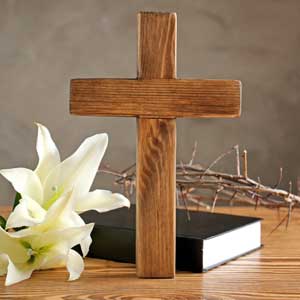
A blessing is one of the most widespread sacramentals. It can be the blessing of a person (a sick person, a child, engaged couples), an object (water, cross, medal, house, vehicle), or a place. Through these blessings, the Church asks God to spread his graces, to protect, to sanctify.
Holy water
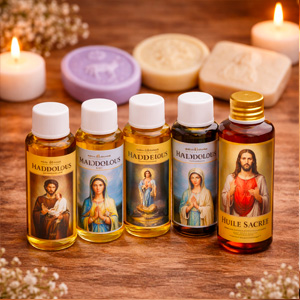
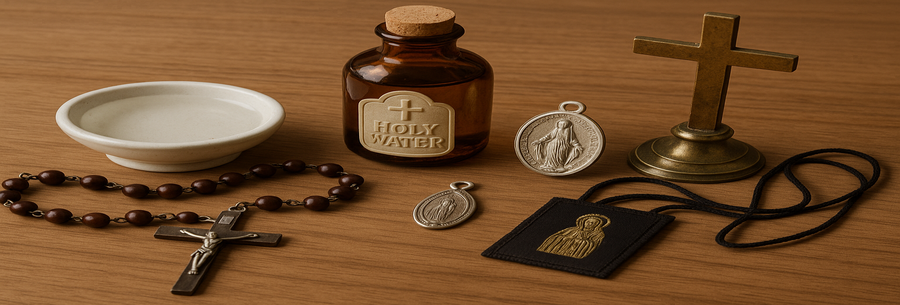
Used to make the sign of the cross as you enter a church, holy water is a reminder of baptism. It is also used to bless people or objects, dispel evil influences and purify hearts. It is a particularly powerful sacramental in spiritual warfare.
Blessed religious objects
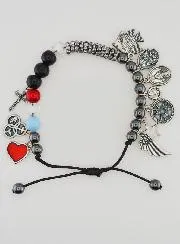
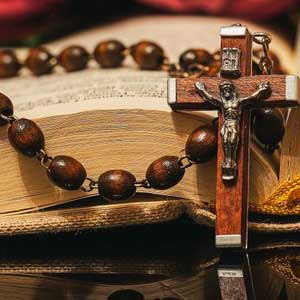
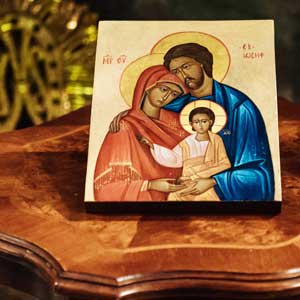
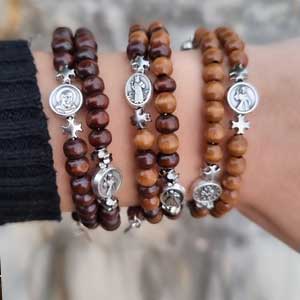
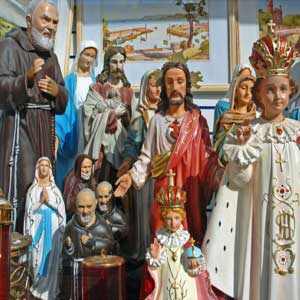
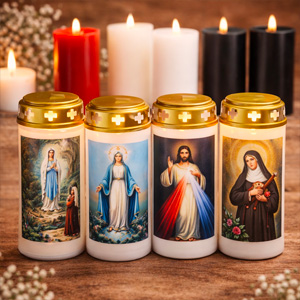
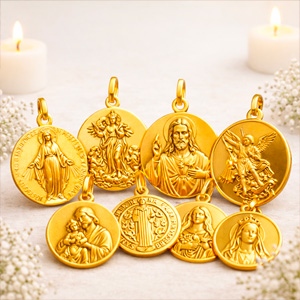
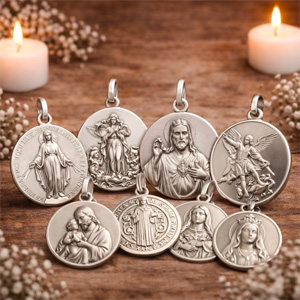
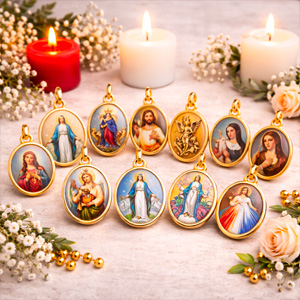
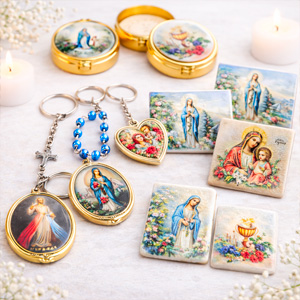
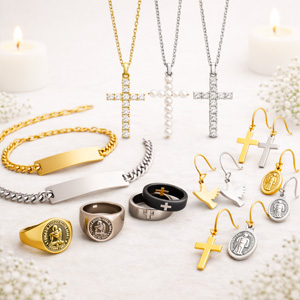
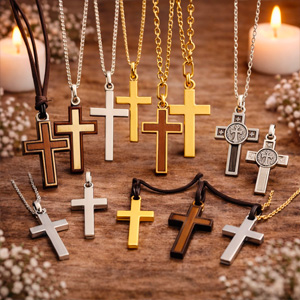
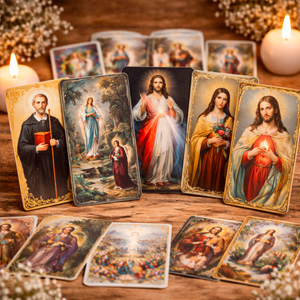
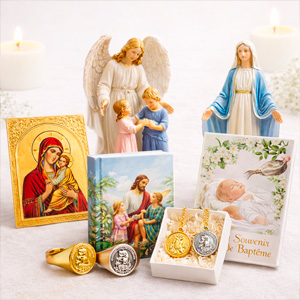
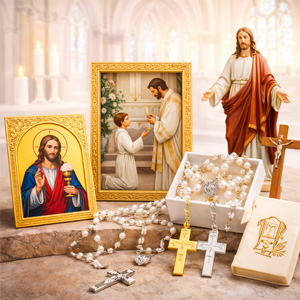
Medal, rosary, scapular, cross, holy image... Once blessed by a priest, these objects become instruments of prayer and protection. They are not magical, but their use, combined with sincere faith, helps the believer to turn to God with confidence.
For example:
The miraculous medal is worn with faith to ask for the Virgin Mary's protection.
The Mount Carmel scapular is a sign of Marian covenant and commitment to live according to the Gospel.
Once blessed, the rosary becomes a powerful tool for praying and meditating on the mysteries of Christ's life.
Specific exorcisms and blessings
There are also more solemn sacramentals such as prayers of exorcism or blessings of protection against demonic influences. These sacramentals are used as part of a specific ecclesial discernment, and are never independent of prayer and faith.
Religious rites in daily life
The Church proposes blessings for key moments in life: blessing of homes, meals, fields before sowing, animals, working tools... All of this manifests a desire to sanctify the whole of human existence, in its most concrete aspects.
A spiritual pedagogy
Sacramentals remind us that God acts in the visible world. They are a form of spiritual pedagogy that touches the senses: sight (sacred objects), touch (laying on of hands), hearing (prayers, blessings). This enables the faithful to unite body and soul in their relationship with God.
They also help to better experience the sacraments: for example, signing oneself with holy water before Mass helps to better prepare oneself to receive the Eucharist. Wearing a medal of Saint Michael can strengthen faith in divine protection and stimulate prayer.
A practice to be lived with faith
It is essential to remember that sacramentals are not talismans. Their effectiveness depends on the faith of the person who uses them. They do not replace the sacramental life (such as going to Mass or confession), but accompany, nourish and support it.
The use of sacramentals is a call to live with God every moment of the day. They are a way of staying in touch with the sacred in an often profane world.