
The Sacred Heart of Jesus is not just a familiar image in Christian iconography; it is one of the most powerful, richest and most intimate symbols of the Catholic faith. In a single representation, it condenses the entire mystery of Christ's love for humanity, a love that is at once burning, suffering, open and merciful. To contemplate it is to enter the living centre of the Gospel message: God loves, and his love has a heart.
A heart that loves without measure
At the heart of this symbol lies an essential truth: God is not an abstract idea, but a Being who loves, who gives of himself, who desires to be in relationship with everyone. In Jesus Christ, God became man, and his heart became a heart of flesh. The Sacred Heart therefore represents this love incarnate, human and divine at the same time. It is the focus of tenderness of a God who wept, who had pity, who was moved, who loved to the extreme.
The image of the Sacred Heart often shows it surrounded by flames: these do not symbolise anger, but the intensity of an ardent love, ready to consume itself for the other. The fire of the Heart of Jesus is a purifying fire, a gentle light that enlightens, warms and transforms. It invites us to let ourselves be loved without fear.
A heart wounded by indifference
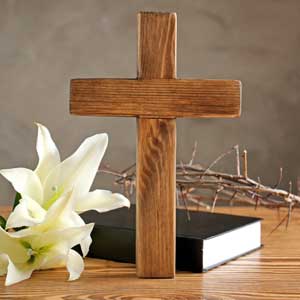
But this heart is not simply glorious: it is also pierced. In almost all his representations, the Sacred Heart is surrounded by a crown of thorns, a reminder of the Passion, but also a sign of human ingratitude. Jesus shows a heart that suffers, not out of weakness, but out of love. He suffers rejection, indifference, sin, not in order to accuse, but in order to continue to love in spite of everything.
This wounded heart reveals to us an overwhelming mystery: God suffers with man. He does not remain distant in the face of our sorrows, but takes them upon himself, passes through them, inhabits them. The Sacred Heart is thus the heart of the immolated Lamb, of Christ crucified, who transforms his wound into a source of grace.
A heart open to all
The Sacred Heart is also a symbol of welcome. At the crucifixion, Jesus' heart was literally opened by the soldier's lance, from which blood and water gushed out (John 19:34). The Church has seen this as a sign of the sacraments of baptism and the Eucharist, but also as an invitation to enter this open heart as a refuge.
Christ excludes no one from his love. The Sacred Heart is a shelter for weary souls, sinners, broken hearts. He is the heart of the Good Shepherd who goes in search of the lost sheep, of the Prodigal Son who welcomes the return of the sinner. He says to everyone: "This is the place where you can rest. I love you just as you are. Come to me."
A heart to imitate
Finally, the Sacred Heart is not just an object of contemplation or devotion: it is a model of Christian life. It teaches us to love as Jesus loves: with patience, gentleness, mercy and truth. To be a devotee of the Sacred Heart is to desire to be like him. It means asking for a new heart, purified of selfishness, capable of loving others in truth.
The Heart of Jesus urges us to go beyond appearances, to forgive, to serve, to give of ourselves. It is the heart of Christ the Servant, Christ the Friend, Christ the Brother. It is a school of holiness in the ordinariness of our lives.
A living symbol in the Church
Since the apparitions to Saint Margaret Mary Alacoque in the 17th century, the Sacred Heart has become a great popular devotion in the Church. But beyond the images and prayers, this heart continues to beat in the sacraments, in Eucharistic adoration, in gratuitous gestures of love, in the hidden fidelity of believers.
Even today, in a world that is often cold, individualistic or wounded, the Sacred Heart remains a shining sign. It reminds us that love is stronger than hate, that mercy has the last word, that every life counts infinitely.