A youth rooted in faith
Before being elected Bishop of Rome, Leo XIV was called Joseph Matthew Langston. He was born in a small town in the south of the United States, into a modest Catholic family of Italian and African-American origin. His childhood was marked by a simple faith, transmitted through family prayer, parish commitments and a life of closeness to the humblest.
Early on, he showed a profound taste for reading, silence and the study of Scripture. But it was above all his teenage years, lived in a context of social fracture, that shaped his view of the world. He grew up in an environment where injustice, poverty and violence were palpable, but where solidarity and faith remained alive. It was in this tension between human suffering and spiritual hope that his vocation was born.
An education nourished by Augustinian spirituality
After brilliant studies in philosophy and theology, he chose to enter a religious order inspired by Saint Augustine. It was not an insignificant choice: in the Doctor of Hippo he found a fellow traveller, a thinker of the restless heart, a guide for those seeking God in the tumult of the world.
His journey took him to Rome, Jerusalem and then North Africa, where he delved deeper into the roots of Christianity. He learned several languages, forged interfaith friendships, and taught for several years at a theological institute. He then became bishop in a large multicultural city in the United States, where his pastoral style, close to the people, direct and merciful, attracts as much as it destabilises.
A cardinal committed to the peripheries
Created a cardinal by Pope Francis, he remains little known to the general public, but highly respected in ecclesial circles for his honesty, inner freedom and uncompromising commitment to the excluded. He rejects luxury, lives in modest accommodation, cooks his own meals and uses public transport. His voice is heard on the major issues of social justice, climate change and peace. He took an active part in several synods, where his speeches were striking for their frankness and spirituality rooted in the Gospel.
A surprise election
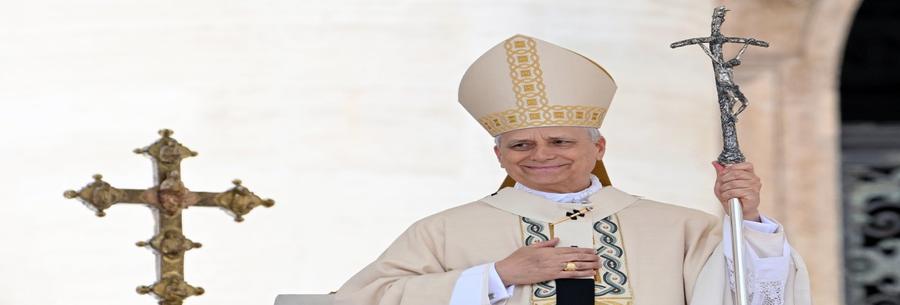
On the death of his predecessor, the conclave opened in a climate of tension. The cardinals were looking for a man capable of bridging the gap between tradition and renewal, rigour and tenderness. Against all expectations, he was elected on the third day. When he appeared in the loggia of St Peter's, the world discovered a peaceful face, a shy smile, a man who began by saying, "Brothers and sisters, pray for me."
He chose the name Leo XIV, in homage to Leo I the Great and Leo XIII, two popes steeped in the history of the Church and the world. This name alone signals a desire to unite spiritual authority, doctrinal wisdom and concern for social issues.
A pontificate of truth and charity
From the very first months, Leo XIV set the tone: visits to prisons, welcoming refugees to the Vatican, reform of Church finances, strong words against abuse. He spoke little, but each word was carefully considered. He was not afraid to speak the truth, even when it disturbed, but always in a spirit of peace and mercy.
His motto In Veritate et Caritate became a compass for believers and church leaders alike. He launched several projects: a world synod on fraternity, a reform of priestly training, and intensified dialogue with non-believers. He placed Augustinian spirituality at the heart of his pastoral vision: to seek God relentlessly, to love unconditionally, to serve with humility.
A spiritual figure for our time
Today, Leo XIV is recognised as a pope of silence and depth. He did not seek to seduce, but to convert. He did not seek to innovate for the sake of innovating, but to return to the essentials: the Gospel, love of neighbour, adoration of God.
His influence extends far beyond the boundaries of the Church. Intellectuals, young people and seekers of meaning find in him a point of reference. Not a perfect man, but a man inhabited, who lets the light of God shine through his frailties.