A pope from the New World
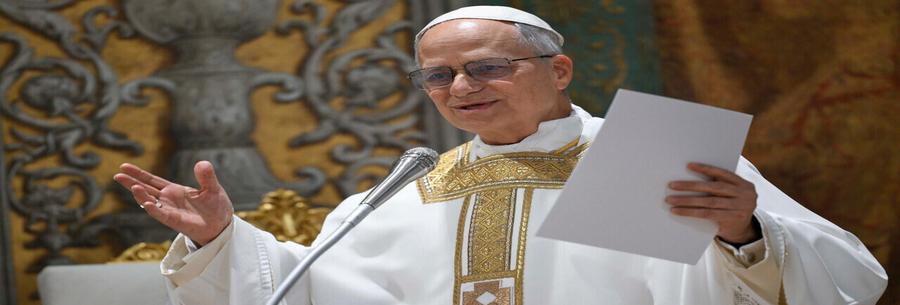
Leon XIV made history by becoming the very first pope to hail from the American continent. Born into a modest Catholic family in the southern United States, he grew up in an environment deeply rooted in faith and community service. His career, atypical for a pope, bears witness to the growing diversity of the Catholic Church and its global roots. Before being elected Bishop of Rome, he had already made his mark through his pastoral commitment to the poorest of the poor and his outspokenness on the major social issues of our time.
His appointment was seen as a symbolic turning point: a Church open to new voices, different sensibilities and a renewed understanding of the world. Leo XIV embodies both continuity in the faith and a break with Vatican habits.
A man of faith with a direct style
From his earliest speeches, Leo XIV imposed a more direct tone, sometimes even abrupt, but always sincere. He rejected overly diplomatic formulas, preferred to call things by their name, and placed the witness of the Gospel at the heart of all his actions. His central message remains deeply rooted in the Gospel: mercy, social justice, respect for creation and defence of human dignity. But it does not hesitate to tackle head-on the Church's internal scandals or political compromises. In this sense, he continues some of the impetus of Pope Francis, while asserting his own voice, more direct, sometimes disturbing, but authentic.
A pontificate turned towards the peripheries
Leon XIV chose to begin his pontificate with strong gestures. In his first weeks, he visited a prison, a favela and a reception centre for migrants. For him, the Church should not wait for the poor to come to her, but should go towards them, unconditionally.
He also insisted on the role of the laity, women and young people in Church life. He encourages a Church that is less clerical, more participative, more in touch with local realities. His outlook on the future was lucid: he knew that the Church was going through a crisis, but he firmly believed in its capacity for rebirth from below, in living communities and simple gestures of fraternity.
A new face for the Church
Leon XIV was not a revolutionary, but a pastor deeply attached to the essentials of the faith. What is striking about him is his humility, his ability to listen and his courage to face painful truths. He rejects decoration, lives soberly and insists on being called "Brother Bishop of Rome" rather than "Holy Father".
He represents a figure of hope for many Catholics in search of authenticity. While his style is not universally admired, he nonetheless awakens a desire for renewal in the Church, reminding us that faith is not a fixed heritage, but an ever-new impetus inspired by the Spirit.