On 18 November, the Church celebrates the dedication of the Basilicas of St Peter and St Paul in Rome. Discover the spiritual significance of this feast day dedicated to the Apostles and to the unity of the Church.
Dedication of the Basilicas of St Peter and St Paul: two apostles at the heart of the Church
On 18 November, the Catholic Church observes the optional memorial of the dedication of the Basilicas of Saints Peter and Paul, Apostles. This celebration, deeply rooted in Rome, is not merely a commemoration of the history of two major Christian buildings. It invites us to contemplate the faith of the apostles Peter and Paul, their witness even unto martyrdom, and the unity of the Church founded on Christ.
On this Wednesday of the 33rd week in Ordinary Time, this memorial reminds us that the Church is never merely a collection of buildings or institutions. It is, first and foremost, the people of God gathered by Christ, nourished by his Word and sent forth to proclaim the Gospel to the whole world.
St Peter’s Basilica in the Vatican and St Paul’s Outside the Walls in Rome are two places of pilgrimage that bear the living memory of two very different apostles, yet united by the same love for Christ.
Why celebrate the dedication of a basilica?
The dedication of a church is a particularly important moment in Christian life. Through this celebration, a place is consecrated for prayer, for listening to the Word of God, for the celebration of the sacraments and for the gathering of the community of believers.
A church is no ordinary place. It is an open house, where the baptised gather to give thanks to God, to bring the world’s intentions before Him and to celebrate the Eucharist. But it is also a visible sign of a deeper reality: every Christian, through their baptism, is called to become a dwelling place of God.
When the Church celebrates the dedication of the Basilicas of St Peter and St Paul, she is therefore not merely celebrating the beauty of their architecture or the significance of their history. She gives thanks for the apostolic faith that has been expressed there for centuries. She contemplates the work of God accomplished through fragile human beings who were open to his grace.
This feast reminds us that the most important stone of the Church is not a stone of marble or travertine. The true foundation is Jesus Christ. It is upon him that the whole Christian faith rests. The apostles Peter and Paul, each in his own way, gave their lives to proclaim this living Christ.
St Peter’s Basilica: a memorial to the apostle called to strengthen his brothers
St Peter’s Basilica stands in the Vatican, on the hill where, according to an ancient and deeply revered tradition, the apostle Peter was buried after his martyrdom. It is one of the best-known sites in the Christian world, but its significance far exceeds its artistic or historical importance.
Peter was one of the first disciples called by Jesus. A fisherman from Galilee, a straightforward and generous man, he answered the Lord’s call without always fully understanding its implications. His journey was marked by trust and enthusiasm, but also by fear and fragility.
Peter recognised in Jesus the Christ, the Son of the living God. Yet, at the time of the Passion, he denies his Master. This fall is not the end of his story. After the Resurrection, Jesus comes to lift him up again. He entrusts him once more with a mission: to love, serve and care for his brothers.
This is why Peter is so close to each and every one of us. He is not portrayed as an unapproachable hero. He is a man transformed by mercy. His story teaches us that no failure, no weakness and no denial is stronger than the love of Christ when we return to him with a sincere heart.
St Peter’s Basilica is therefore a sign of communion. It reminds us of the mission entrusted to Peter to strengthen his brothers in the faith and to keep the Church united around the Lord.
St Paul’s Basilica Outside the Walls: the missionary power of the Gospel
St Paul’s Basilica Outside the Walls is situated in Rome, on the site traditionally associated with the tomb of St Paul. It is named after the Apostle to the Nations, the man who travelled the roads of the Mediterranean world to proclaim Jesus Christ.
Paul did not know Jesus during his public life. Initially opposed to the Christians, he persecuted those who followed Christ. But his encounter with the Lord on the road to Damascus turned his life upside down. The man who had sought to silence the Gospel became one of its most ardent witnesses.
This conversion did not make Paul a perfect man, nor did it spare him from difficulties. It did, however, give him a new direction: to live for Christ and to proclaim his Good News to all. Paul understood that no one should be excluded from God’s love. Jews and Gentiles, rich and poor, men and women, peoples near and far: all are called to receive the grace of salvation.
Through his travels, his preaching and his letters, Paul became one of the great messengers of the Gospel. He founded communities, supported the early Christians through their difficulties and reminded them that faith must be expressed through concrete acts of love.
The basilica that bears his name invites us to rediscover the Church’s missionary zeal. Being a Christian does not mean keeping the joy received from God to oneself. It means bearing witness, through one’s words and deeds, that Christ is alive and that he comes to lift up every person.
Peter and Paul: two different paths, one faith
Peter and Paul are very different. Peter is a fisherman from Galilee, close to people’s everyday lives, characterised by a simple and spontaneous faith. Paul is a learned man, a Roman citizen, trained in the Jewish tradition and driven by a passionate understanding of the Gospel.
Their temperaments are not alike. Nor are their missions. Peter is called to be a sign of unity at the heart of the nascent Church. Paul is sent far afield, to peoples who have not yet heard of Christ.
Yet both have the same centre: Jesus Christ. Both experienced weakness, inner struggle and conversion. Both chose to give their lives for the Gospel. Both shed their blood in Rome, in the supreme witness of martyrdom.
Their unity is a precious message for our time. The Church is not built on uniformity. It brings together different sensibilities, cultures, vocations and life journeys. Christian unity does not mean that we are all the same; it means remaining united in Christ, seeking the truth with humility and practising charity with patience.
Peter and Paul teach us that our differences can become a source of richness when they are placed at the service of the same mission.
Rome, city of the Apostles and place of pilgrimage
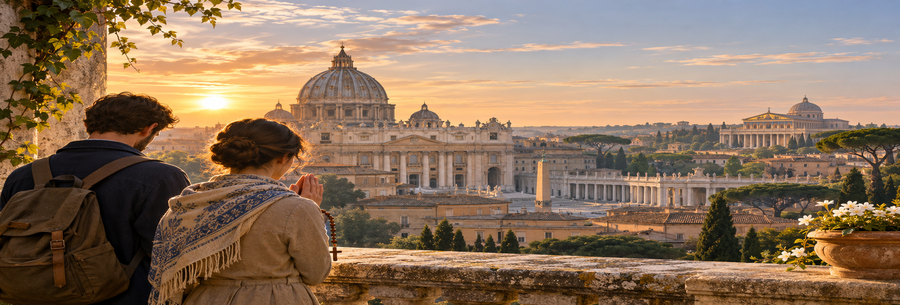
The celebration on 18 November leads us spiritually to Rome. This city preserves the memory of the early Christians, the martyrs and the apostles. It reminds us that the Christian faith developed at the heart of an often hostile world, thanks to men and women who chose not to deny Christ.
The Basilicas of St Peter and St Paul are places of prayer that welcome pilgrims from every continent. There we discover a universal Church, made up of diverse peoples, languages and cultures, yet united in a single profession of faith.
A pilgrimage is not merely a geographical journey. It can be an inner journey. To go to a basilica, a village church, a shrine or a chapel is to make oneself available to God. It is to take the time to lay aside what weighs on one’s heart, to ask for guidance, to entrust those we love and to renew our trust.
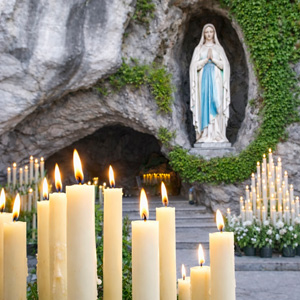
Even without travelling to Rome, everyone can experience this feast by entering a church, pausing for a few moments before the tabernacle, lighting a candle or praying for Christian unity.
A particularly significant anniversary in 2026
The year 2026 lends special significance to this celebration. It marks the fourth centenary of the dedication of St Peter’s Basilica in the Vatican. This anniversary reminds us that generations come and go, but the apostolic faith endures.
For four centuries, countless pilgrims have passed through the doors of this basilica to pray, give thanks, ask for forgiveness or entrust an intention to the Lord. These stones have witnessed the passing of families, religious, priests, the sick, heads of state, seekers of God and believers from all over the world.
This anniversary does not invite us merely to look to the past. It encourages us to ask ourselves: how can we pass on today the faith we have received from the Apostles? How can we make our parishes, our families and the places where we live spaces of prayer, fellowship and hope?
The Church remains alive when every baptised person agrees to become, wherever they are, a humble and faithful witness to Christ.
How can we celebrate the feast of Saints Peter and Paul?
This feast can be observed in a very simple way. First and foremost, it invites us to pray for the Church, for the Pope, for the bishops, for the priests, for consecrated persons and for all the baptised.
It is also a wonderful opportunity to give thanks for our parish church. However modest it may be, a church is a precious place: generations have been baptised there, have celebrated weddings there, have prayed there in times of joy and sorrow, and have entrusted their departed loved ones to God’s mercy.
We can also ask for the grace of a stronger faith. Like Peter, we can acknowledge our weaknesses and ask Christ to lift us up. Like Paul, we can ask for the courage not to keep our faith locked away in silence, but to translate it into acts of peace, justice and charity.
Finally, this feast calls us to unity. In a world that is often divided, marked by violence, loneliness and conflict, the Gospel invites us to become builders of communion. A word of forgiveness, a listening ear, an act of reconciliation or a helping hand offered to someone who is isolated can become true apostolic witness.
Prayer for the Church, with Saints Peter and Paul
Lord Jesus,
you who called Saints Peter and Paul
to become witnesses to your Gospel,
strengthen your Church in faith, hope and love.
Through the intercession of Saint Peter,
teach us to return to you
when fear or weakness lead us away from your light.
Through the intercession of Saint Paul,
grant us the desire to proclaim your love
through our words, our choices and our acts of kindness.
Make our families, our parishes and our communities
homes open to prayer, peace and brotherhood.
May we remain united in you,
so that the world may recognise
the power of your living love.
Amen.