
Saint Lucia, celebrated on 13 December, is one of the most venerated figures in Christianity. A Sicilian martyr from the IVᵉ century, she is known for her unshakeable faith, her purity and her symbolic role as a bearer of light in the darkness. Her name, derived from the Latin lux (light), reflects her spiritual mission and the impact of her story on Christian and popular traditions down the centuries.
The life of Saint Lucy
Origins and background
St. Lucy was born around 283 in Syracuse, Sicily, into a noble and Christian family. From an early age, she showed a deep faith and sincere love for Jesus Christ. Fatherless, she was brought up by her mother Eutychia, who suffered from a chronic illness.
At a time when Christianity was still being persecuted under the Roman Empire, Lucia decided to devote her life to God, refusing arranged marriages and worldly riches.
A heroic act of faith
According to tradition, Lucia took a vow of chastity and dedicated her life to serving the poor. She is said to have persuaded her mother to give their wealth to the needy after a miracle attributed to Lucia's prayer at the tomb of Saint Agatha, another Sicilian martyr.
Her refusal to marry a pagan suitor provoked his anger, who denounced her to the Roman authorities. Lucia was arrested and ordered to renounce her faith. Despite the torture, she remained faithful to Jesus Christ.
Martyrdom
Accounts vary as to the details of her martyrdom, but all agree that she underwent great suffering. One legend has it that an attempt was made to deliver her to a whorehouse to break her will, but her body miraculously became immobile, preventing her from being transported. She was finally executed by a blow from a sword or spear.
Lucie died in 304, during Diocletian's persecutions, confessing her faith and praying for the Church.
Symbolism and legends
1. Patroness of light
Lucia's name, meaning "light", has led to her association with the spiritual light that guides believers in darkness. She is often depicted carrying a lamp or wreath of candles, symbols of her guiding role.
2. The story of the eyes
A late legend has it that Lucia gouged out her own eyes to preserve her chastity, or that they were gouged out during her martyrdom. God is said to have miraculously restored them, making her the patron saint of the blind and visually impaired.
3. Light in the darkness
Her feast day, celebrated close to the winter solstice in the northern hemisphere, reinforces her symbolism as a bringer of light. In many traditions, she is invoked to enlighten spirits and bring hope in times of difficulty.
Saint Lucia in the Christian tradition
1. Veneration in the Church
Saint Lucia is one of the most popular saints, particularly in Italy, Scandinavia, and the Christian countries of Europe. She appears in the canon of the Tridentine Mass, underlining her importance in Catholic liturgy.
2. Relics
His relics are preserved in several churches around the world, including Venice, where his body rests in the church of San Geremia. These relics attract thousands of pilgrims every year.
3. Influence in literature and art
Saint Lucia is a recurring figure in Christian art, often depicted with her attributes: the lamp, the crown of candles, or a tray bearing her eyes. Dante Alighieri mentions her in The Divine Comedy as a symbol of light and grace.
Traditions associated with Saint Lucia
1. The feast of Saint Lucia (13 December)
Her feast is celebrated with fervour in many parts of the world, where she is seen as a figure of light and hope.
In Scandinavia: The feast of Saint Lucia is an important celebration, particularly in Sweden. Processions are organised in which a young girl, wearing a white dress and a crown of candles, embodies Saint Lucia. She is followed by children singing traditional hymns.
In Italy: In Syracuse, her birthplace, a spectacular procession accompanies her statue through the city.
In Eastern Europe: She is invoked as a protector against disease and to bring divine light into homes.
2. Candle symbolism
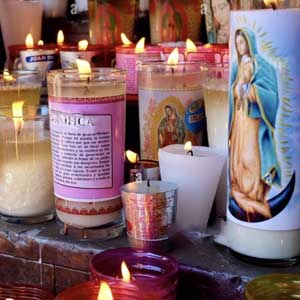
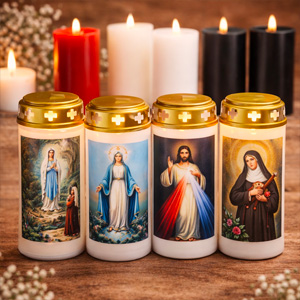
Candles lit in her honour recall the light of faith and hope in Jesus Christ. They also mark the transition to increasing light after the dark days of winter.
Saint Lucia's spiritual legacy
1. A model of unshakeable faith
Saint Lucia is an example of fidelity and courage in the face of persecution. She reminds believers that faith can overcome the greatest trials.
2. Light in the darkness
Her symbolism as a bearer of light invites us to keep hope even in times of doubt or difficulty. She is a source of inspiration for those seeking a spiritual path.
3. Patroness of the Blind and Oppressed
As patroness of the blind and visually impaired, she is invoked to bring clarity and vision, both physical and spiritual. She is also a support to those who suffer persecution or injustice.
Conclusion
Saint Lucia is much more than a martyr of the early Church: she is a universal symbol of light, hope and unshakeable faith. Her life and martyrdom continue to inspire millions of believers around the world, reminding us that the light of Christ shines even in the deepest darkness. His feast day, celebrated with joy and fervour, is a special time to renew our faith and let the divine light illuminate our lives.