First Communion is an essential stage in the life of a Catholic. It marks the first conscious reception of the Eucharist, the Body and Blood of Christ, a central sacrament of the Christian faith. But at what age is a child ready to make his or her First Communion? The answer to this question involves theological, pedagogical and pastoral reflection, as it concerns both the child's spiritual maturity and his or her journey in the faith.
1. The age of reason: an essential benchmark
a) A canonical rule
In the Catholic Church, the age for First Communion is generally set at the age of reason, considered to be around 7 years old. This threshold is based on the idea that the child is capable of understanding:
The notions of good and evil, the meaning of the Eucharist as the real presence of Jesus Christ.
b) An ability to discern
The age of reason marks the moment when the child can: Distinguish the Eucharistic bread from simple food, appreciate the spiritual importance of receiving Jesus in the Eucharist.
2. Preparation criteria
a) Appropriate catechesis
Before receiving First Communion, the child undergoes catechetical training that enables him or her to:
Understand the basics of the Christian faith (the Trinity, the life of Jesus, the sacraments).
Learn the essential prayers, such as the Our Father and the Hail Mary.
Know the liturgical gestures and respect towards the Eucharist.
b) Spiritual preparation
Children are also invited to:
Participate regularly in Sunday Mass.
Receive the Sacrament of Reconciliation before First Communion, in order to be in a state of grace.
c) Parental involvement
Parents play a crucial role in this preparation by accompanying their child in prayer and living an active faith themselves.
3. The importance of spiritual maturity
a) Progressive understanding
First Communion does not require exhaustive theological understanding, but an ability to grasp the real presence of Jesus in the Eucharist. The child must be able to express his or her desire to receive Christ.
b) A personal experience
Preparation focuses on the child's spiritual experience, helping him or her to have a personal encounter with Jesus.
c) Possible exceptions
In some cases, the age of First Communion may be adjusted:
Earlier: If the child shows exceptional spiritual maturity.
Later: If the child needs more time to understand or to be comfortable in a liturgical setting.
4. The key moments of First Communion
a) A joyful celebration
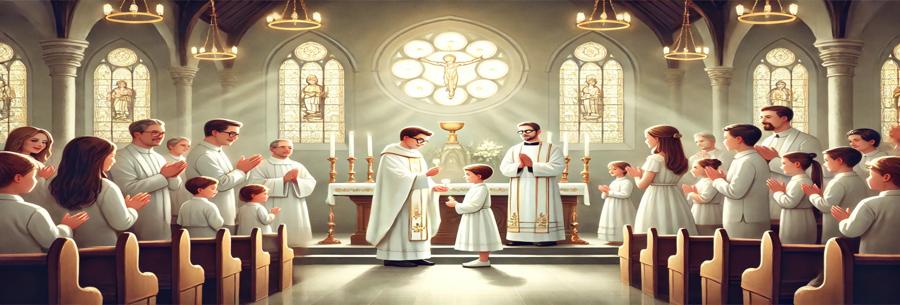
First Communion is often celebrated in spring or early summer, as part of a solemn Mass. It brings together families, godparents and the parish community.
b) The symbols of the celebration
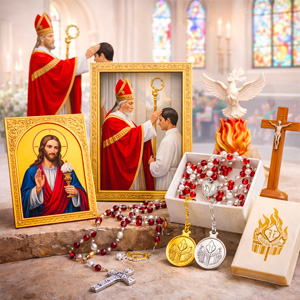
The white garment: Symbol of purity and baptism.
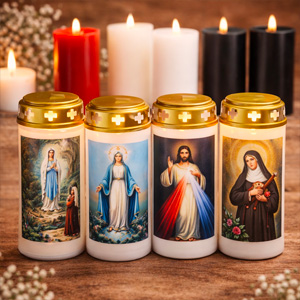
The candle: Representing the light of Christ.
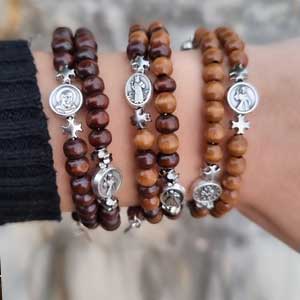
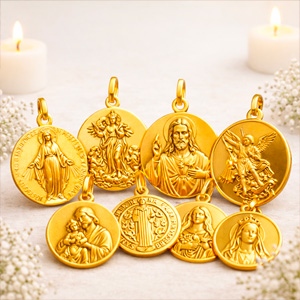
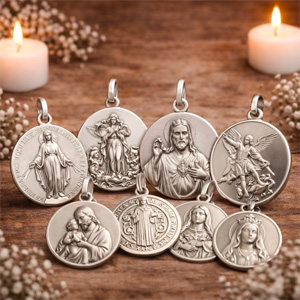
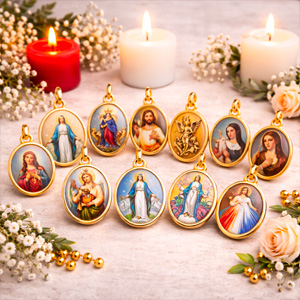
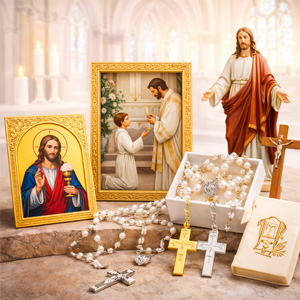
The religious medal: Spiritual remembrance of this moment.
c) A community experience
First Communion is a moment when the child feels fully integrated into the Christian community, sharing the Eucharistic banquet for the first time.
5. The spiritual fruits of First Communion
a) A union with Christ
By receiving the Eucharist, the child experiences a profound communion with Jesus, who gives himself to him in his Body and Blood.
b) A growth in faith
First Communion is a key stage in the child's spiritual journey, helping them to deepen their relationship with God.
c) A source of grace
The Eucharist nourishes the child's soul, giving them the strength to live according to the Gospel.
6. Changes in practice
a) Cultural practices
In some cultures, First Communion is celebrated later, sometimes in adolescence, due to local or family traditions.
b) A rediscovery of the Eucharist
Today, the Church is encouraging a rediscovery of the profound meaning of the Eucharist, so that First Communion is seen not just as a cultural milestone, but as a sacramental encounter with Christ.
7. Conclusion : A pathway to the Eucharist
The age of First Communion, generally set at around 7 years old, is above all a benchmark to help children experience a meaningful encounter with Jesus in the Eucharist. This stage, carefully prepared by the Church, families and catechists, enables children to grow in faith and deepen their relationship with God. First Communion is much more than a rite of passage: it's an open door to a life nourished by the grace and love of Christ, an invitation to continue walking alongside him throughout life.