A jubilant people... for how long?
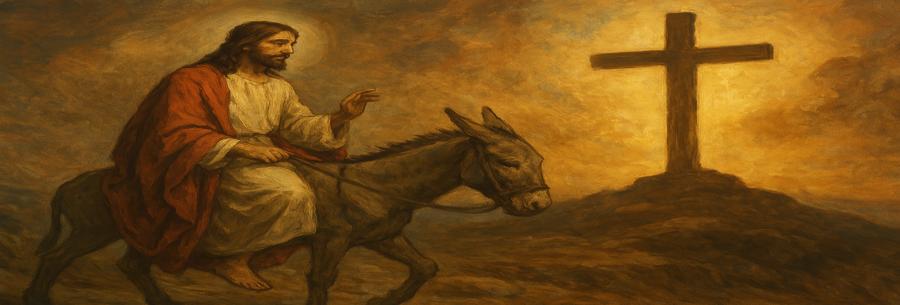
Palm Sunday begins with joy. Jesus enters Jerusalem to acclaim. The crowd is there, gathered, enthusiastic. Branches are cut, cloaks are spread, "Hosanna!" is shouted, and Jesus is recognised as the one who comes in the name of the Lord. The atmosphere is triumphant and luminous. Expectation is high. We believe that something great is about to happen. And yet...
A few days later, that same crowd shouts, "Crucify him!" She turns away. They remain silent. They watch, without saying a word, as the king they were cheering for is led off to be crucified. It is here, in this brutal reversal, that the fragility of our "Hosanna" is revealed. A human, universal fragility. And which, if we have the humility to recognise it, can become a path to conversion.
Our sincere impulses... but unstable
When we read this passage, it's easy to judge the crowd. To accuse them of being fickle, hypocritical, treacherous. But if we are honest, that crowd is also us. How many times have we acclaimed Jesus with all our heart... only to forget him a few days later? How many times have our prayers been strong, sincere, burning... before dying out in everyday life or being diluted by distractions?
Our "Hosannas" are often sincere. But they are fragile. They are carried by emotion, the moment, the desire to believe. But they do not always stand the test, the test of time, the silence of God. Like Peter, who promised never to betray, then denied. Like the disciples who follow ardently, then flee to the Garden of Gethsemane. Faith is a journey. Not a fleeting emotion. And it is in this acknowledged fragility that God comes to meet us.
Jesus does not shrink from fickleness
What is deeply moving about the Gospel is that Jesus knows the hearts of men. He knows that these acclamations will not last. He knows that his friends will fall asleep just when he needs them most. He knows that the crowd will change sides. And yet, he goes forward. He enters Jerusalem with open eyes. He does not let himself be seduced by easy glory. He comes to love to the end.
He does not turn away from those who will abandon him. He does not condemn those who will forget him. He continues to give. To forgive. To love. His faithfulness does not depend on ours. He is faithful, even when we are not. And that's what saves. That is what lifts us up. What makes our fragile "Hosannas" a starting point, not a condemnation.
And me, what do I do with my "Hosannas?"
Every Christian is invited to ask themselves this question. Am I a disciple only in enthusiasm? Do I recognise Christ when he is acclaimed, but walk away when he is humbled? Do I stay close to him when he is on the cross, or do I prefer to forget him when he disturbs?
This is not an invitation to guilt. It is an invitation to truth. To humility. To silent fidelity. Our impulses are precious. Our prayers are sincere. But faith needs depth, perseverance, roots. It is not measured by the number of branches we hold in our hand, but by the space we leave for Christ in the dark areas of our lives.
From the "Hosanna" to the silence of the tomb... and the morning light
Holy Week is a journey. It begins with celebration, passes through betrayal, suffering and death... and ends with the Resurrection. Jesus does not refuse our acclaim, but he invites us to follow him to the end.
Our fragile "Hosanna" can become, by God's grace, solid prayers. Our unstable promises can be transformed into profound commitments. It's not about being perfect. It's about staying the course. Keep walking. It's about getting back up. And to believe that, even when our faith falters, he never turns away.
Conclusion
Palm Sunday highlights the fragility of the human heart. It reveals that our "Hosanna's" are sometimes volatile, but that they can become true if we anchor them in love. To follow Christ is not just to acclaim him in the light, it is to choose him in the dark. And it is precisely there that the light of Easter begins to dawn. In a heart that, despite its weaknesses, continues to say, "Lord, I want to follow you."