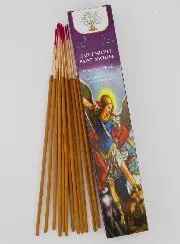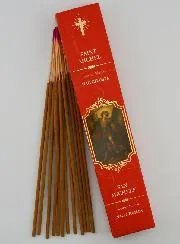
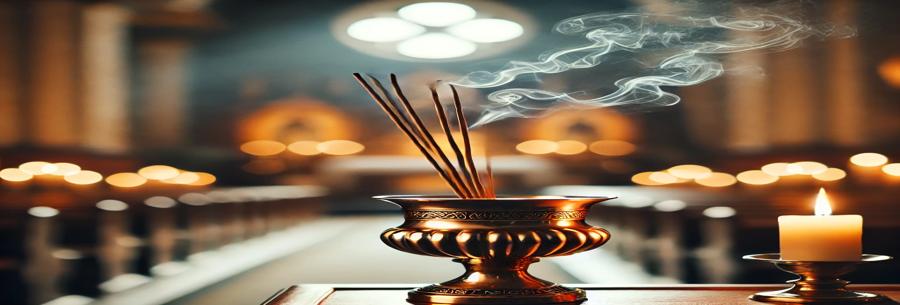
Saint Michael Incense is a sacred, spiritual incense named after the archangel Saint Michael, one of the most revered archangels in Christian tradition. Saint Michael is often depicted as the protector against the forces of evil and the guide of souls towards divine light. Saint Michael's Incense is therefore associated with spiritual protection, elevating prayers and purifying places. This incense is particularly used in Catholic rituals and religious practices to strengthen the divine presence, ward off negative influences and sanctify prayer spaces.
The use of Saint Michael's Incense dates back to the first centuries of Christianity, when incense was burnt in churches and monasteries as a symbol of prayer, purification and adoration. Its composition, often combined with natural resins and essential oils, aims to uplift thoughts and create an atmosphere of peace and serenity.
Origine and History of Saint Michel Incense
The archangel Saint Michael is a central figure in the Christian faith, often depicted in the Scriptures as the warrior angel who defends the kingdom of God against the forces of evil. In the Apocalypse of Saint John, he is described as the angel who leads the heavenly armies against Satan and his demons. This image of protector and spiritual guide has been cultivated over the centuries, particularly in Catholic liturgy, where Saint Michael is prayed to intercede on behalf of believers and protect them from evil influences.
The use of incense in Catholic rituals was instituted as early as the first centuries of the Church. Although incense is used for a variety of purposes (such as purifying places and elevating prayers), Saint Michael's Incense has been specially designed to accentuate the protective and purifying aspect of rituals in honour of this archangel. The purpose of using this incense in churches, during prayers, masses and blessings is to invoke divine protection and sanctify the space to encourage prayer and devotion.
Composition and Properties of Saint Michael Incense
Saint Michael Incense is composed of a specific blend of natural resins, essential oils and aromas that promote purification, protection and spiritual uplift. Although exact formulas may vary, this incense generally contains the following elements:
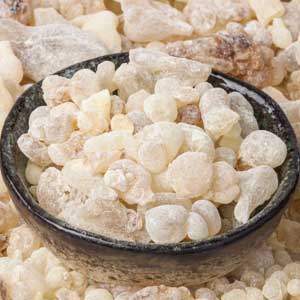
Olibanum (Frankincense): Frankincense is the main ingredient in most liturgical incense. It is used for its purifying fragrance and to help raise prayers to the divine.
Myrrh: A symbol of purification and sacrifice, myrrh reinforces the spiritual aspect of incense. It is often used in Catholic rituals to symbolise devotion and adoration.
Benjoin: Benjoin, with its sweet, slightly vanilla scent, adds a soothing and comforting note, contributing to the serenity of the sacred space.
Cedar: Used to reinforce the protective aspect of incense, cedar is also known for its purifying properties. It helps to create a calm and sanctified space.
Palo Santo or sacred wood: Depending on the incense variant, palo santo may be added for its purifying and energetic protection properties.
The properties of this incense make it a powerful spiritual tool. It is at once purifying, protective and soothing, and its gentle, deep aromas create a peaceful atmosphere conducive to prayer and meditation.
Use of Saint Michael's Incense in the Catholic Religion
In the Catholic tradition, Saint Michael's Incense is used primarily in liturgical ceremonies where a blessing or divine protection is requested. It is often burnt during prayers and masses dedicated to Saint Michael, as well as during special blessings or requests for protection from negative influences.
Masses in honour of Saint Michael: Incense is used during celebrations in honour of the archangel, particularly on 29 September, the feast day of Saint Michael and the Archangels.
Blessings and prayers of protection: Saint Michael's Incense is often used during prayers asking for divine protection against the forces of evil. Priests may use it to bless a house, a workspace or a person seeking spiritual healing.
Processions and devotions: During certain processions, incense is used to sanctify the path taken and protect the participants.
Eucharistic adoration: Saint Michael's Incense is also used during moments of adoration, particularly in churches, to emphasise the sacredness of the Blessed Sacrament and invoke divine protection.
Burning Saint Michael's Incense in these contexts not only purifies the space, but also lifts the spirit towards God and engages in a spiritual dialogue with the protective archangel.
How To Use Saint Michael Incense At Home
Saint Michael Incense can be used at home to create a spiritually purified and protected environment. To use it correctly, you can follow these steps:
Prepare a censer: Use a heat-resistant censer, ideally metal or ceramic, to place the incense grains.
Light a glowing coal: Using a lighter or candle, light a piece of coal. Let it heat until it becomes incandescent.
Placing Saint Michael's Incense: Place a few grains of Saint Michael's Incense on the coal. The resin will begin to melt, releasing a fragrant smoke that will fill the room with its sacred aromas.
Purification and blessing: You can direct the smoke around the room or object you wish to bless, while reciting prayers of protection or invoking Saint Michael's protection.
Conclusion
St Michael's Incense is much more than just an incense. It is a means of invoking divine protection, purifying sacred spaces and lifting the spirit in prayer. Its balanced composition of natural resins and essential oils makes it a powerful tool for purifying the atmosphere, warding off negative influences and sanctifying places. Whether in a liturgical setting or a private home, Saint Michael's Incense helps you connect with the Archangel, obtain his protection and deepen your devotion to God. By burning this incense, believers invite Saint Michael to defend their faith and guide them on their spiritual path.
.