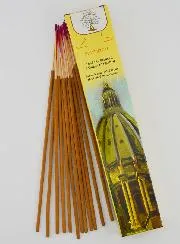
Pontifical Byzantine Incense is an emblematic liturgical incense used in the religious celebrations of the Churches of Byzantine tradition, particularly in the Orthodox Church and the Eastern Rite Catholic Churches. Known for its powerful, sacred fragrance, it accompanies divine services, prayers and processions, symbolising the spiritual elevation of the faithful and their connection with the divine. Its use dates back to antiquity and has been perpetuated through the centuries, enriched by monastic tradition and Eastern spiritual influences.
Origins and History of Byzantine Pontifical Incense
The use of incense in Christianity has its roots in Jewish tradition, where it was burnt in the Temple of Jerusalem as a sign of offering and sanctification. After the destruction of the Temple, incense was gradually incorporated into the Christian liturgy, particularly in the Byzantine Empire, where it took on a central role in religious rites.
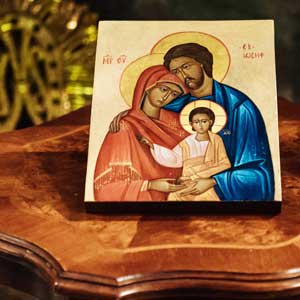
Under the Byzantine Empire, incense became an essential part of imperial and religious ceremonies. Byzantine iconography often depicts deacons incensing the faithful, icons and the altar, underlining the importance of this practice in Orthodox spirituality. In Constantinople, incense is used extensively in the Basilica of Saint Sophia, imbuing the sacred space with its mystical fragrance and transporting the faithful into a heavenly atmosphere.
In the Byzantine tradition, incense is not only an element of the liturgy, but also a means of purifying and sanctifying places of worship. It is seen as a link between the earthly world and the heavenly realm, an olfactory offering that ascends to God along with the prayers of the faithful.
Composition and Characteristics
Byzantine Pontifical Incense is distinguished by a rich and varied composition, inherited from ancient monastic recipes and oriental influences. Unlike other simpler incenses, it is often made from natural resins and essential oils, which give it a unique aromatic depth.
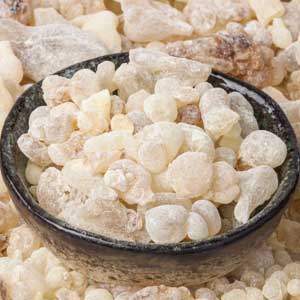
Olibanum, or frankincense, is the main ingredient. Harvested from the Boswellia tree, it is renowned for its white smoke and resinous, slightly lemony fragrance. It symbolises prayer to God and encourages meditation.
Myrrh is often added for its purifying properties and woody, spicy fragrance. It reinforces the sacred aspect of the blend and recalls the offerings made to the Christ Child by the Three Wise Men.
Benjoin adds a sweet, slightly vanilla note, softening the more intense aromas of frankincense and myrrh. Its soothing scent is appreciated for encouraging a state of recollection and serenity.
Styrax, with its smoky, woody notes, is often included to enrich the composition and reinforce the intensity of the fragrance.
Some varieties of Pontifical Byzantine Incense also contain essential oils of rose, lavender, jasmine or cedar, offering a complex and refined olfactory palette.
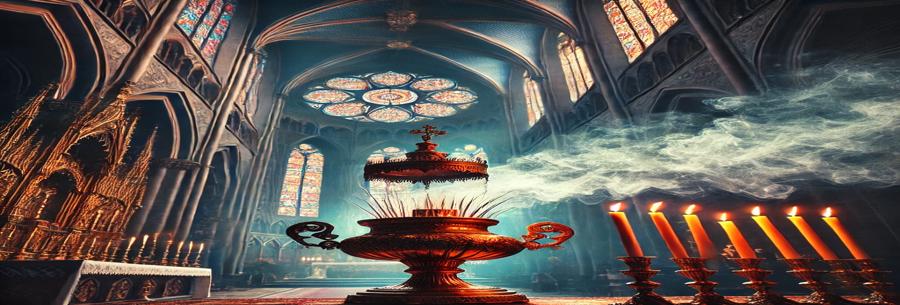
Visually, this incense takes the form of small grains or pieces of resin, sometimes covered with a fine layer of white powder to preserve their freshness. When burnt, it releases an abundant smoke that fills the space with an enveloping and spiritual fragrance.
Its Use in the Liturgy
Byzantine Pontifical Incense plays an essential role in Orthodox and Eastern liturgy, where it is used with solemnity and respect. Its use is codified and follows precise rites that vary according to the celebrations and the times of the office.
During the Divine Liturgy, the priest incenses the altar, the iconostasis, the faithful and the icons, marking the sanctification of the place and the ascent of prayers to God. Incensing is often accompanied by prayers and liturgical chants, reinforcing the mystical aspect of the ceremony.
In religious processions, incense is used to honour icons and the relics of saints. It accompanies processions on major liturgical feasts such as Easter and Christmas, underlining the solemnity of these sacred moments.
Byzantine Pontifical Incense is also used in personal and monastic prayers. In Orthodox monasteries, it is often burnt during night services, creating an atmosphere conducive to contemplation and meditation.
In Orthodox funerals, incense is used to accompany the soul of the deceased on its passage to eternity. It is spread around the coffin and over the body of the deceased, as a sign of purification and prayer for salvation.
Byzantine Pontifical Incense and its Contemporary Use
Although it is mainly used in Churches of Byzantine tradition, Byzantine Pontifical Incense has won over a wider audience thanks to its olfactory and spiritual qualities. It is appreciated in homes to create an atmosphere of contemplation and serenity.
Many believers use it in their personal prayers, burning a few grains on a glowing coal to accompany their meditation. Its enveloping fragrance helps to refocus and immerse oneself in a spiritual atmosphere.
In certain wellness practices, Byzantine incense is used for its relaxing and purifying properties. It is reputed to promote inner peace and dispel negative energies.
Its use also extends to sacred music concerts, historical re-enactments and cultural events linked to Orthodox spirituality. It immediately evokes the atmosphere of Byzantine churches and transports the listener to a mystical, contemplative world.
How to use Byzantine Pontifical Incense at Home
To enjoy the full benefits of Byzantine Pontifical Incense, we recommend using a suitable censer and burning charcoal.
Light a piece of charcoal and leave it to redden for a few minutes. Then place a few grains of incense on the charcoal and watch the smoke rise slowly, filling the space with its sacred fragrance.
It is advisable to air the room slightly after use to avoid excessive concentration of smoke.
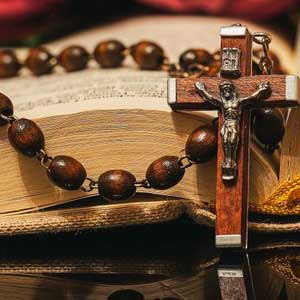
For a more intense spiritual experience, incense can be accompanied by Bible readings, prayers or liturgical chants.
Conclusion
Pontifical Byzantine Incense is a treasure of Eastern liturgical tradition, a symbol of prayer, purification and connection with the divine. Its unique fragrance and enveloping smoke make it an essential part of Orthodox celebrations and Byzantine rites.
Whether in a great basilica, an isolated monastery or a home in search of spirituality, it continues to leave its mark on souls and accompany believers in their quest for contemplation and transcendence. Its use, imbued with tradition and solemnity, remains a bridge between the visible and the invisible, between earth and heaven.