The choice of incense according to liturgical traditions
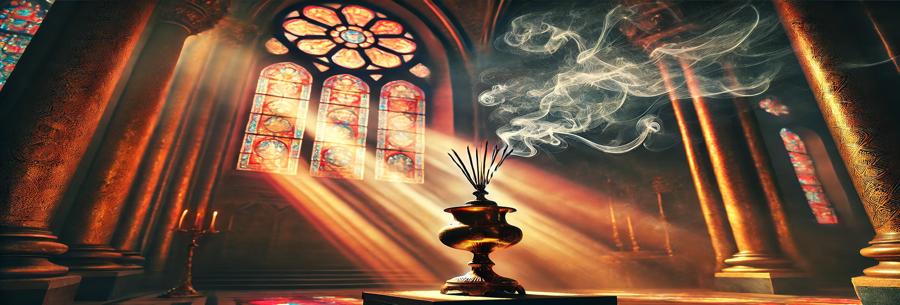
Incense occupies an essential place in the Christian liturgy. Its fragrance symbolises prayer ascending to God, while the smoke evokes the divine presence. However, its use varies according to liturgical tradition, whether Catholic, Orthodox or Anglican. Each Church favours certain types of incense according to its history, rites and symbolism.
Incense in the Catholic tradition
In the Catholic Church, incense is used during major celebrations, such as solemn mass, processions and funerals. It is often used in a suspended censer, swung by the priest or deacon according to codified gestures.The choice of incense is based on several criteria:
The intensity of the fragrance: a balanced mix of resinous and floral notes is preferred, to create an atmosphere conducive to prayer.
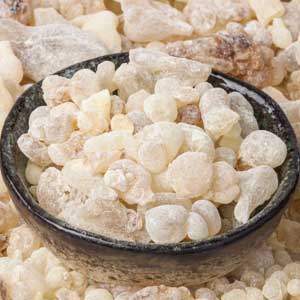
The purity of the ingredients: the Church favours natural resins such as frankincense (or olibanum), sometimes mixed with other aromatic substances such as benzoin or myrrh.
Smoke: an abundant but gentle smoke is sought, evoking the presence of the Holy Spirit without being too stifling for the congregation.
Pontifical incense, often used at important celebrations, is a rich blend of frankincense and benzoin, with balsamic and slightly vanilla notes.
Incense in the Orthodox tradition
In Orthodox churches, incense occupies a central place in the liturgy and is used at almost every service. Unlike the Catholic tradition, where incense is reserved for major celebrations, the Orthodox use it daily, particularly for blessing icons and the faithful.Orthodox incense is distinguished by:
Its intense, enveloping fragrance: the Orthodox use incense with a more pronounced scent, often enriched with essential oils with floral notes (rose, jasmine, lavender).
Incense in the Anglican and Protestant tradition.
In the Anglican Church, the use of incense varies according to stream. Parishes in the Anglo-Catholic tradition (high church) use incense in a similar way to Catholics, particularly for major liturgical feasts. On the other hand, communities in the Evangelical or Reformed tradition make little or no use of it.
Anglican incense shares similarities with Catholic incense:
Blends rich in frankincense and myrrh
Usage mainly reserved for major celebrations
Symbolism close to rising prayer to God
In Protestant churches, particularly Lutheran and Reformed, incense is often absent from celebrations, considered too ritualistic an element. Some communities, however, use it in more personal contexts, such as prayer or meditation.
How to choose your incense according to your liturgical tradition
The choice of incense depends above all on the purpose for which it is intended. For a solemn Catholic celebration, a balanced, smoky incense will be preferred, while for personal use in prayer, a softer, floral incense may be preferable.If you wish to respect Orthodox tradition, it is advisable to opt for incense enriched with essential oils, offering a stronger, enveloping scent. Finally, for a more meditative or private approach, natural and handcrafted blends can be chosen according to personal preference.
Whatever the tradition, incense remains a powerful symbol of the elevation of the soul and the divine presence, linking the faithful to an ancestral spiritual practice.
Incense occupies an essential place in the Christian liturgy, both through its spiritual symbolism and its ritual use. Each tradition, whether Catholic, Orthodox or Anglican, has developed its own preferences in terms of scents, resins and methods of use, reflecting its heritage and spiritual sensibility. Whether to accompany prayer, mark the solemnity of a celebration or symbolise the elevation of the soul towards God, the choice of incense is not made at random. It is an invitation to contemplation and connection with the divine, uniting the faithful to an age-old tradition that spans the ages.