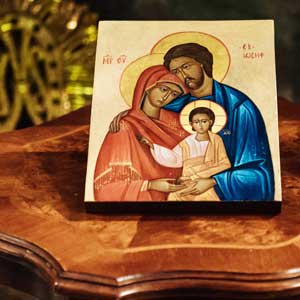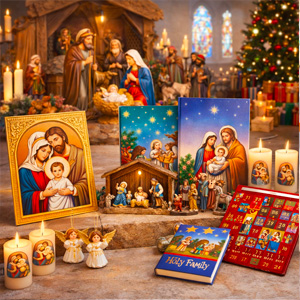
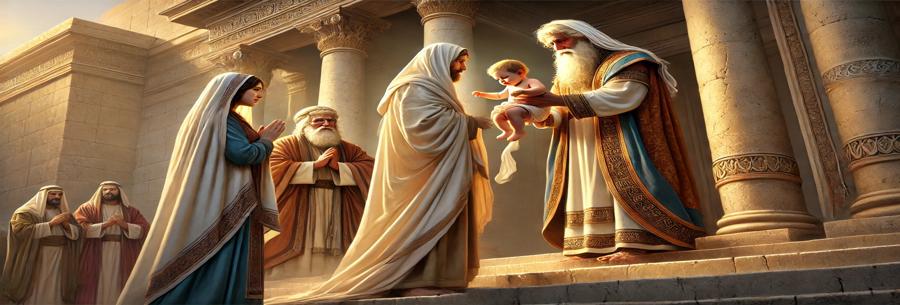
The Presentation of Jesus in the Temple is a fundamental event in the life of Christ, recounted in the Gospel according to Saint Luke (Lk 2, 22-40). It is an act of obedience to the prescriptions of the Law of Moses, but also a moment of revelation when Jesus is recognised as the Messiah. This episode features Mary and Joseph, the old man Simeon and the prophetess Anna, who play an essential role in the recognition of Christ. It also foreshadows Jesus' future mission and the suffering of his mother.
Celebrated on 2 February, this feast is known as Candlemas, meaning the "feast of candles", in reference to the light of Christ revealed to the nations. But what really happened on that day? Let's delve into the story and its significance.
The Holy Family goes to the Temple in Jerusalem
Respect for the Law of Moses
According to Jewish tradition, every first-born male child had to be consecrated to the Lord forty days after birth (Exodus 13, 2). This consecration was accompanied by a ritual of purification for the mother, prescribed in Leviticus (Lev 12, 1-8).
Mary and Joseph, faithful to the Law, therefore go to Jerusalem with Jesus, although Mary, having conceived by the Holy Spirit, does not really need purification. They bring the offering of the poor: two turtledoves or two young doves. This detail underlines the humility and simplicity of the Holy Family.
The Temple of Jerusalem
The Temple of Jerusalem, the religious centre of the Jewish people, is a sacred place where sacrifices are offered to God. It is in this sacred space that Jesus, still a baby, is presented to the Lord, marking a passage between the Old and New Covenants.
The encounter with Simeon: recognition of the Messiah
Who is Simeon?
Simeon is a righteous and pious man, elderly and filled with the Holy Spirit. He was awaiting the coming of the Messiah, the one who would bring "consolation to Israel". It had been revealed to him by the Holy Spirit that he would not die until he had seen the Lord's Christ.
Guided by the Spirit, he goes to the Temple just as Mary and Joseph enter with the Christ Child. As soon as he sees Jesus, he takes him in his arms and utters a famous prayer, the Nunc dimittis:
"Now, O sovereign Master, you may let your servant go in peace, according to your word,
For my eyes have seen your salvation,
You have prepared in the sight of all peoples,
A light to enlighten the nations,
And the glory of Israel, your people." (Lk 2:29-32)
This hymn expresses the fulfilment of God's promises. Simeon recognises in Jesus the Light of the nations and the Saviour of the world. This moment marks the revelation of Christ not only to Israel, but to all humanity.
Simeon's prophecy
After this praise, Simeon addresses Mary with disturbing prophetic words:
"Behold, this child will cause the fall and rise of many in Israel.
He will be a sign of contradiction - and you, your soul will be pierced with a sword -
so that the innermost thoughts of many hearts will be revealed." (Lk 2:34-35)
Simeon announces that Jesus will be a sign of division: some will accept him as Saviour, others will reject him. He also prefigures the Passion of Christ and the suffering of Mary, who will see her Son die on the Cross.
The intervention of the prophetess Anna
Who is Anna?
Anna is an 84-year-old prophetess, widowed from her youth. She lives in the Temple, in prayer and fasting.
Her testimony about Jesus
When she sees Jesus, she praises God and speaks about him to all those who are waiting for Israel's deliverance. In this way, she announces to the faithful that the Messiah has arrived. Her role is to proclaim publicly what Simeon has already revealed: Jesus is the long-awaited Redeemer.
Signification of the Presentation of Jesus in the Temple
An act of humility and obedience
The Holy Family shows their obedience to the Law, even though Jesus, as the Son of God, has no need of it. This episode underlines the humility of God, who submits to human laws.
Jesus, Light of the nations
Simeon's canticle proclaims Jesus as the Light for all nations, Jewish and Gentile. This message already announces the universality of the salvation brought by Christ.
The announcement of the Passion
Simeon's words to Mary foreshadow the Cross. Jesus will be rejected and suffer, and Mary will be deeply affected by the fate of her Son.
The Presentation in Christian tradition
The feast of Candlemas
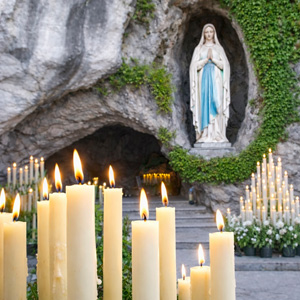
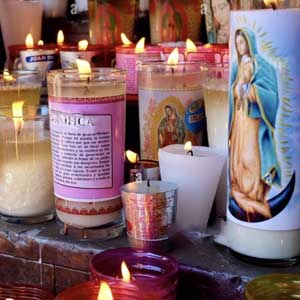
The Church celebrates the Presentation of Jesus on 2 February under the name Candlemas (from the Latin festa candelarum, "feast of candles"). This festival highlights the light of Christ and purification.
Blessed candles
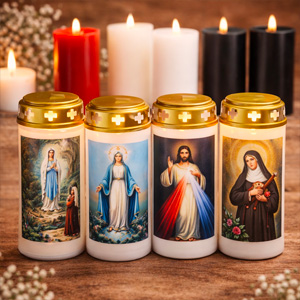
The tradition of blessing candles on Candlemas is a reminder that Jesus is the Light of the world. The faithful take these candles home to symbolise Christ's presence in their homes.
A link with the Virgin Mary
This festival is both a Marian festival and a Christological festival:
It honours Mary, who offers her Son to God.
It glorifies Christ, the light of salvation.
Conclusion
When Jesus is presented in the Temple, Mary and Joseph perform a rite prescribed by the Law, but this event takes on a much greater dimension. Jesus is recognised as the Messiah, the Light of the world and the Saviour by Simeon and Anna.
This episode teaches us the importance of faith, of trusting in God and of Christ's light illuminating our lives. It also invites us to follow Jesus on his journey, even when he passes through the Cross, to reach the Resurrection.