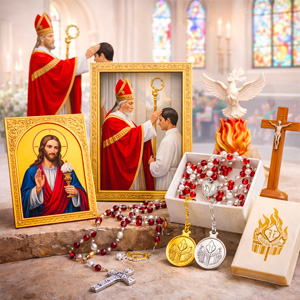

Baptism is the first of the seven sacraments of the Catholic Church, marking the entry into the Christian life. The question of the appropriate age for receiving this sacrament gives rise to debate, as it involves theological, pastoral and family considerations. The Catholic Church allows baptism at any age, but practice and motivations may vary depending on whether it is an infant or adult baptism.
1. Infant baptism: a tradition rooted in the Church
a) An ancient practice
Infant baptism dates back to the first centuries of Christianity. Christian parents have always wished to offer divine grace to their children from the very beginning of their lives:
In Scripture: although the Bible does not explicitly mention infant baptism, passages such as Acts of the Apostles (16:33) mention that whole families, including children, were baptised.
The Church Fathers: Saint Augustine and Saint Irenaeus supported the practice, claiming that it protects children from original sin.
b) Theological reasons
Effacement of original sin: According to Catholic theology, baptism purifies from original sin, making it a precious gift for children from birth.
Participation in divine life: By receiving baptism, the child becomes a child of God and a member of the Christian community.
Spiritual protection: Baptism is seen as a spiritual shield that accompanies the child throughout his or her life.
c) The role of parents and godparents
Parents and godparents play a crucial role in infant baptism: They promise to pass on the faith to the child and educate him or her in Christian values. They act as spiritual guides, helping the child to grow in their relationship with God.
d) Objections and responses
Some believe that children should wait until they are older to understand the sacrament. However, the Church maintains that baptism is a free gift from God, which does not depend on intellectual understanding, but on the faith of parents and the community.
2. Adult baptism: a conscious conversion
a) A personal process
Adults who were not baptised as children can choose to receive this sacrament at any time in their lives. This choice involves a conscious and free process, often accompanied by a profound spiritual conversion.
b) The catechumenate
Adults preparing for baptism follow a spiritual journey called the catechumenate:
Doctrinal formation: Catechumens learn the foundations of the Christian faith.
Prayer and rites: They take part in progressive rites of initiation, reinforcing their commitment to God.
Community accompaniment: The parish community plays an important role in their preparation.
c) Appropriate times for baptism
Adult baptism is usually celebrated at the Easter Vigil, highlighting their entry into the light of the Resurrection.
3. The age of reason: a pivotal moment
a) Conscious understanding
From the age of reason, generally set at 7, children are considered capable of understanding the fundamental truths of the faith and of personally consenting to receive baptism.
b) Appropriate preparation
Children not baptised at this age undergo specific preparation, often similar to the catechumenate for adults. They learn:
The teachings of Jesus Christ, the meaning of the sacraments, the importance of prayer and the Christian life.
4. Pastoral and practical considerations
a) Pastoral flexibility
The Church welcomes requests for baptism at any age, recognising that each person has a unique path to God. Parishes offer programmes adapted to children, young people and adults.
b) Respect for family situations
Some families choose to postpone baptism for various reasons:
Waiting for the child's maturity, religious differences within the family, desire to involve the child in the decision.
The Church always encourages open dialogue with families to accompany them in their discernment.
5. The spiritual benefits of early baptism
a) A lifetime in grace
Children baptised at an early age have the opportunity to grow in faith from their earliest years, surrounded by a supportive community.
b) A family commitment
Infant baptism strengthens parents' commitment to living their faith and passing on Christian values within the family.
6. Late baptism: a witness to conversion
a) A profound faith experience
For adults, late baptism is often the fruit of a personal encounter with Christ. It becomes a powerful witness to faith and spiritual transformation.
b) A sign of hope
Adult baptism shows that God's call is universal and timeless. It is a reminder that everyone can enter into communion with God, whatever their age or background.
7. Conclusion : A response to God's call
Baptism, whatever the age at which it is received, is an act of faith and a response to God's call. For children, it is a precious gift that accompanies them from the beginning of their lives. For adults, it is a conscious decision and a commitment to Christ. The Church joyfully welcomes all those who wish to receive this sacrament, because she knows that, in baptism, each person becomes a member of God's great family, called to live in his light and grace for eternity.